
Map of All the Premier League Teams for 2025/26


Table of Contents
- The 2025/26 Premier League features 20 clubs spread across England, from Bournemouth on the south coast to Sunderland and Newcastle in the northeast.
- Leeds United, Burnley, and Sunderland return as promoted sides, replacing the relegated Leicester City, Ipswich Town, and Southampton.
- Everton open the Hill Dickinson Stadium at Bramley-Moore Dock this season, making it the 62nd ground to host a Premier League match.
Where Every Premier League Club Plays in 2025/26
Seven of the 20 Premier League clubs are based in London, giving the capital more top-flight representation than any other city in Europe. Two clubs share Liverpool, two share Manchester, and the remaining nine are spread across England’s Midlands, North, and South Coast.
The geographic spread of the division stretches roughly 350 miles from AFC Bournemouth’s Vitality Stadium on the Dorset coast to Newcastle United’s St James’ Park and Sunderland’s Stadium of Light in the northeast. That distance creates one of the longest away-day travel corridors in European football.
London (7 clubs)
Arsenal play at the Emirates Stadium in Holloway, north London, with a capacity of 60,704. It has been the club’s home since 2006 after the move from Highbury.
Brentford’s Gtech Community Stadium holds 17,250 in west London. The club moved there from Griffin Park in 2020, and it remains the smallest purpose-built ground in the division.
Chelsea continue at Stamford Bridge (40,341), their home since 1905. Long-discussed redevelopment plans have stalled repeatedly, leaving the ground largely unchanged in structure.
Crystal Palace play at Selhurst Park in south London (25,486). A partial rebuild of the Main Stand is underway, part of a wider plan to increase capacity to around 34,000.
Fulham sit on the banks of the Thames at Craven Cottage (25,700). The Riverside Stand redevelopment, completed in stages, brought the capacity above 25,000 for the first time.
Tottenham Hotspur Stadium (62,303) in north London opened in 2019 and is the largest club stadium in London. Its retractable pitch also hosts NFL games annually.
West Ham United play at the London Stadium (62,500) in Stratford, the venue built for the 2012 Olympics. It is the largest ground in the Premier League by capacity.
Northwest England (4 clubs)
Burnley return to the top flight at Turf Moor (21,944), a ground the club has called home since 1883. They secured automatic promotion by finishing second in the Championship on 100 points, level with Leeds United, who took the title on goal difference.
Everton’s move to the Hill Dickinson Stadium (52,769) at Bramley-Moore Dock on the Liverpool waterfront is the biggest stadium story of the season. The club left Goodison Park after 132 years, and the new ground becomes the 62nd different venue to host a Premier League fixture. Capacity is expected to rise to roughly 57,700 ahead of Euro 2028.
Liverpool’s Anfield (61,276) completed its Anfield Road Stand expansion in March 2025, adding roughly 7,000 seats. That makes it the fifth-largest club ground in the country.
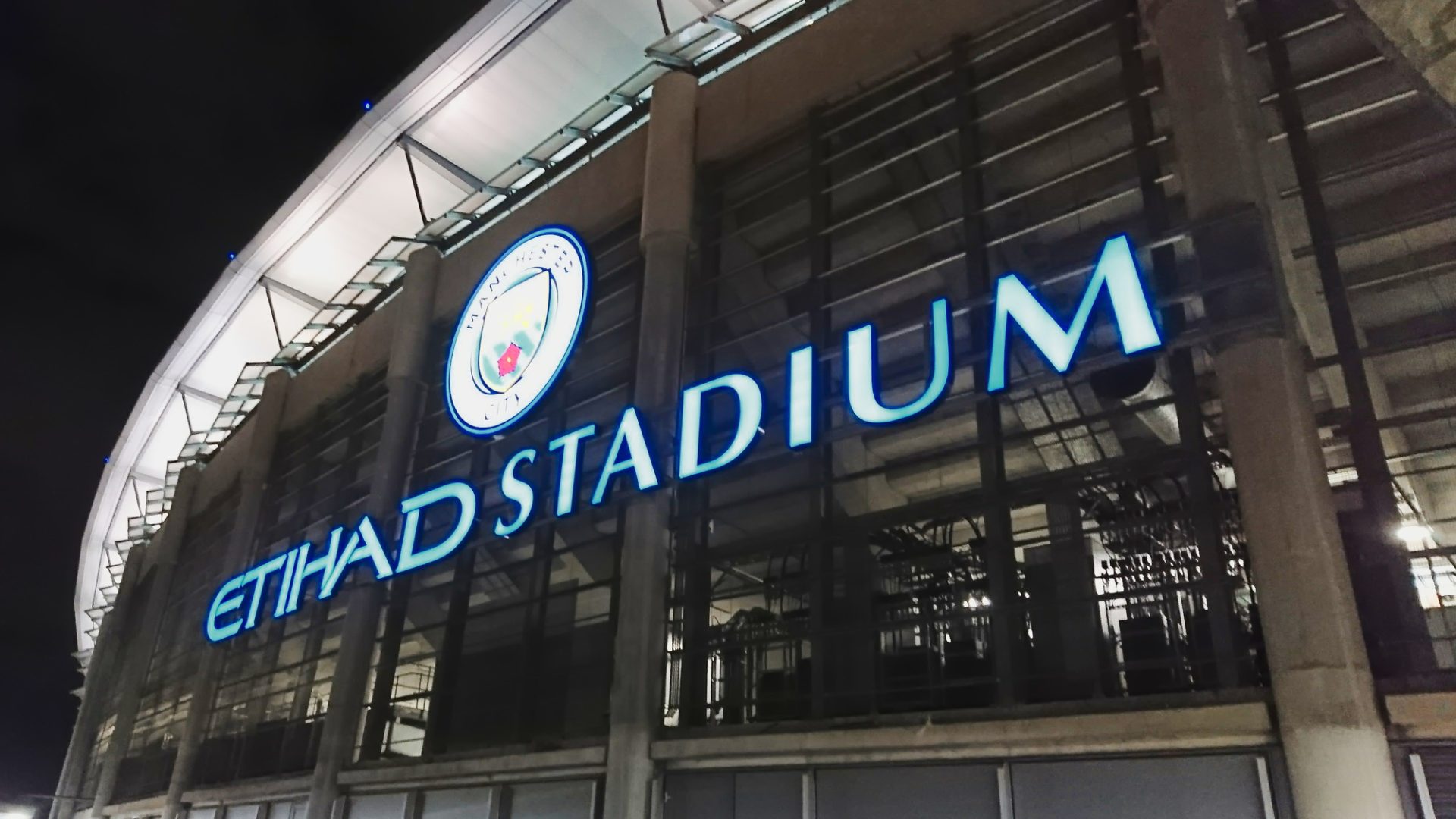
Manchester City play at the Etihad Stadium, currently listed at 53,400. The North Stand expansion is set to open during the 2025/26 season, taking capacity to around 62,000 and making it the fourth-largest club ground in England.
Manchester United remain at Old Trafford (74,310), the largest club stadium in the country. A full redevelopment or rebuild has been under discussion since the Ratcliffe-led INEOS group took a minority stake in 2024, but no concrete timeline has been confirmed.
Northeast England (2 clubs)
Newcastle United play at St James’ Park (52,354), which sits in the city center overlooking Newcastle upon Tyne. Plans for an expansion to around 60,000 have been discussed under the club’s Saudi-backed ownership.
Sunderland return to the Premier League for the first time since 2016/17, playing at the Stadium of Light (48,707). The ground, opened in 1997, remains one of the largest in the division and will see top-flight football again after an eight-year absence.
Midlands (3 clubs)
Aston Villa play at Villa Park in Birmingham (42,657). The club has been a fixture in the Premier League since returning in 2019 and qualified for the Champions League in 2024/25.
Nottingham Forest’s City Ground (30,445) sits on the south bank of the River Trent. Forest have been in the Premier League since promotion in 2022 and have consolidated their place in the top flight.
Wolverhampton Wanderers are based at Molineux Stadium (31,750), one of the oldest professional grounds in England, with roots dating back to the 1880s.
Yorkshire (1 club)
Leeds United return to the Premier League at Elland Road (37,890) after a two-year absence. Promoted from the Championship, they bring one of the most vocal supporter bases in English football back to the top division.
South Coast (2 clubs)
AFC Bournemouth’s Vitality Stadium (11,364) is the smallest ground in the Premier League by a significant margin. It holds fewer than half the supporters of the next smallest ground, Brentford’s Gtech Community Stadium.
Brighton and Hove Albion play at the Amex Stadium (31,876) in Falmer, just outside Brighton. The club has established itself as a consistent top-half side since arriving in the Premier League in 2017.
Full Stadium List by Capacity
- Manchester United, Old Trafford: 74,310
- West Ham United, London Stadium: 62,500
- Tottenham Hotspur, Tottenham Hotspur Stadium: 62,303
- Liverpool, Anfield: 61,276
- Arsenal, Emirates Stadium: 60,704
- Manchester City, Etihad Stadium: 53,400 (expanding to ~62,000)
- Everton, Hill Dickinson Stadium: 52,769
- Newcastle United, St James’ Park: 52,354
- Sunderland, Stadium of Light: 48,707
- Aston Villa, Villa Park: 42,657
- Chelsea, Stamford Bridge: 40,341
- Leeds United, Elland Road: 37,890
- Brighton and Hove Albion, Amex Stadium: 31,876
- Wolverhampton Wanderers, Molineux Stadium: 31,750
- Nottingham Forest, City Ground: 30,445
- Fulham, Craven Cottage: 25,700
- Crystal Palace, Selhurst Park: 25,486
- Burnley, Turf Moor: 21,944
- Brentford, Gtech Community Stadium: 17,250
- AFC Bournemouth, Vitality Stadium: 11,364
Sources
Everton’s new stadium: Capacity, location, when it opened (TNT Sports)
Anfield expansion officially completed with safety certificate (StadiumDB)
Manchester City Etihad Stadium North Stand expansion and hotel development (StadiumDB)

Leave a Comment
More in News
Manchester City Found Guilty of £830m Financial Scheme as Carragher Demands Titles Be Stripped

Jack Hendry’s Red Card Inside Ten Minutes Wrecked Sebastien Pocognoli’s First Home Game as Scotland Boss

Cristian Kily Gonzalez Once Lined Up Beside Lionel Messi For Argentina, Now He Is Coaching Him

Cristiano Ronaldo Was an Unused Substitute for Portugal for Only the Third Time in His Career, and Jorge Jesus Has Now Called a Meeting to Calm Him Down

Manchester City Have Until Friday to Appeal Guilty Verdict on 114 of 115 Charges
Trending on Futbol Chronicle

The Best World Cup YouTubers to Follow in 2026

Michael Carrick points to lack of sharpness after Manchester United draw with West Ham
Celta Vigo postpones LaLiga opener after fungus outbreak damages stadium pitch

Josef Martinez Returns to MLS Spotlight With Columbus Crew Signing