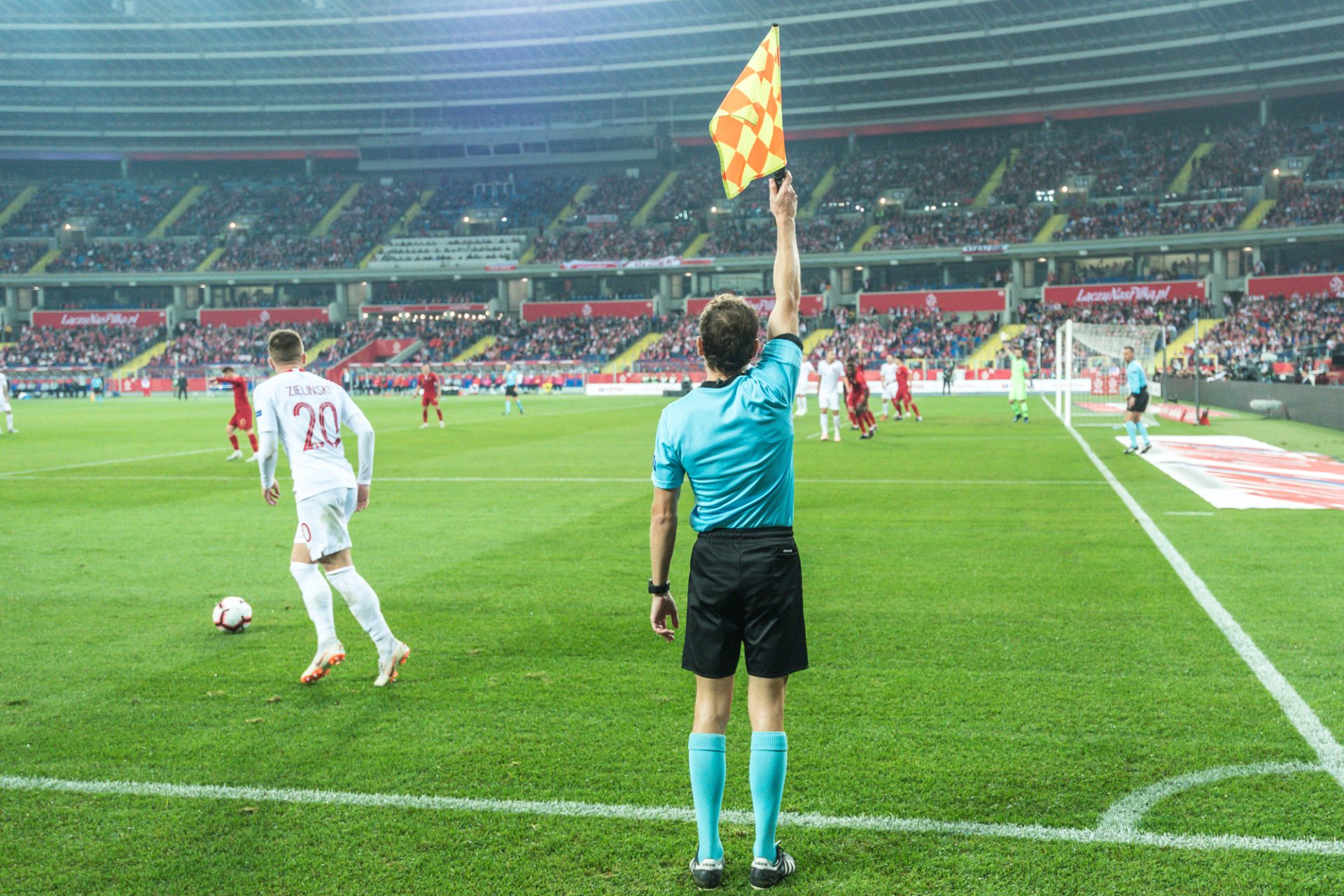
FIFA to Introduce Faster Offside Technology at 2026 World Cup


- FIFA will implement advanced semi-automated offside technology at the 2026 World Cup, allowing officials to identify clear offsides more quickly.
- A real-time audio alert will notify assistant referees when a player is more than 10cm offside, reducing the need for delayed flags.
- FIFA will also create AI-powered 3D avatars of all 1,248 players at the tournament to improve the accuracy and clarity of offside decisions.
FIFA has unveiled new offside technology that could significantly reduce delayed flag decisions at the 2026 World Cup, with advanced semi-automated systems set to be introduced throughout the tournament.
The upgraded technology will provide real-time audio alerts to assistant referees whenever a player is more than 10 centimetres offside, allowing officials to make quicker decisions and potentially stop play earlier.
Under the current system, assistant referees are often instructed to keep their flags down until an attacking move is completed, enabling VAR to review any close decisions. The new technology is designed to speed up that process and reduce unnecessary passages of play.
Previous versions of FIFA’s semi-automated offside technology, which were tested at the FIFA Club World Cup and Intercontinental Cup, only alerted officials when players were more than 50 centimetres offside. The latest upgrade greatly increases the system’s sensitivity.
Despite the technological improvements, assistant referees will remain responsible for deciding when to raise the flag. Officials may choose to keep play moving if they suspect a technical issue, although FIFA says multiple failsafe measures have been incorporated to minimise the risk of malfunctions.
The system is not expected to eliminate all offside reviews. Extremely close calls, situations involving players on the ground, and crowded attacking phases may still require manual analysis. The technology can also only be used for positional offsides and cannot determine subjective decisions involving player interference or obstructing opponents.
FIFA hopes the changes will reduce frustration among players, coaches and supporters, while also lowering the risk of injuries occurring during passages of play that would ultimately be ruled offside.
Concerns over delayed flags intensified following an incident in May 2025 involving Nottingham Forest striker Taiwo Awoniyi. The forward was placed in an induced coma after colliding with a goalpost during a move that was later ruled offside, with the assistant referee having delayed raising the flag.
In addition to the offside technology upgrade, FIFA confirmed it will use AI-generated 3D player models to improve decision-making and broadcast presentations.
All 1,248 players expected to participate in the tournament across the 48 competing nations will undergo a digital body scan during pre-tournament media sessions. FIFA says the process will take approximately one second per player and only needs to be completed once.
The scans will create highly detailed digital avatars, enabling more accurate player tracking and clearer offside visualisations for officials, broadcasters and fans.
As a result, viewers can expect enhanced offside animations at the 2026 World Cup, providing greater transparency and understanding of decisions during matches.
FIFA believes the combination of advanced tracking technology and AI-generated player models will represent a major step forward in officiating accuracy as the tournament expands to 48 teams across the United States, Canada and Mexico.

Leave a Comment
More in News

Pierre Sage Booed by Palace Fans After Fifth Defeat in Eight Games

Las Vegas server waits on man during lunch shift. Then he hands her several $100 bills during his meal as a tip. Then he hands her an envelope

Alexander Isak Repays £125m Fee After Broken Leg and Four-Goal Debut Year

Michael Carrick Enters Sacking Season as Departing Managers Averaged 310 Days

Tony Pulis Says Man Utd Should Copy Arsenal’s Patience With Carrick
Trending on Futbol Chronicle

The Best Soccer Players of All Time: The 10 Greatest Ever Ranked

Map of All the Premier League Teams for 2025/26
Cristian Romero completes €40m move from Tottenham to Atlético Madrid

What Is The Club World Cup?