Cristian Roldan Turned Down Two Countries to Play a World Cup in His Backyard
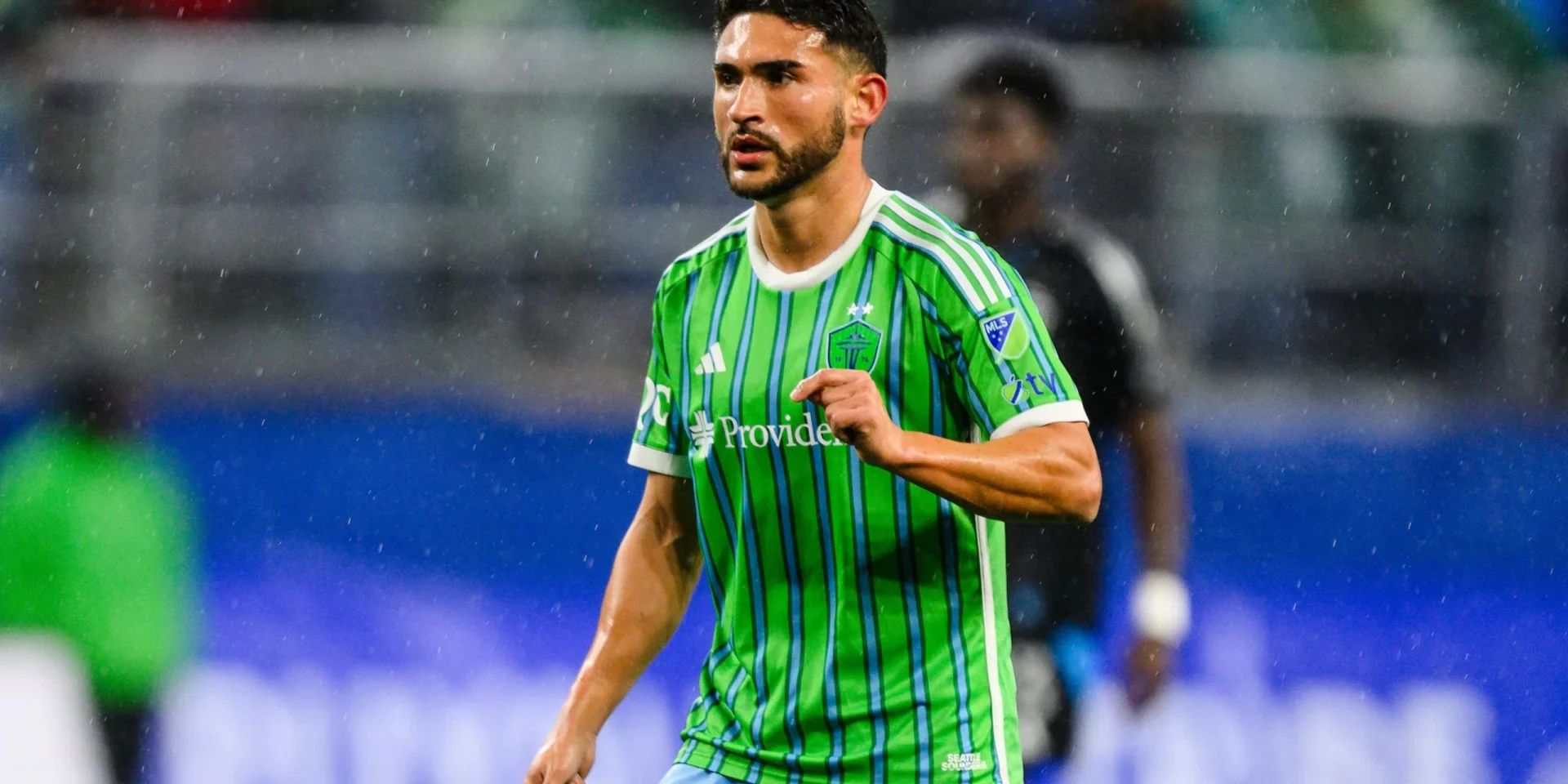

Table of Contents
In a backyard in Pico Rivera, California, there is a patch of grass where a father once built a soccer goal out of PVC pipes for his three sons. The house belongs to the Roldan family, and the backyard sits about 20 miles from SoFi Stadium, where the United States opens its home World Cup against Paraguay. When midfielder Cristian Roldan steps onto that field, he completes one of the shortest and longest trips any player will make at this tournament. Twenty miles from the backyard to the World Cup. Two generations from a civil war to the biggest stage in sports.
“The dream, the MLS dream, the national team, it all started right here,” his father Cesar Roldan Sr. said, touring that backyard for NBC’s podcast My New Favorite Futbolista.
Three Flags, One Decision
Roldan’s World Cup could have happened in a different shirt. His father is from Guatemala. His mother, Ana, is from El Salvador. The couple moved to California in the 1980s, when both countries were torn apart by civil wars, and raised three boys in Pico Rivera, a working-class city in southeast Los Angeles County. Under FIFA eligibility rules, Cristian could have played senior international soccer for any of the three nations, and both Guatemala and El Salvador wanted him.
“It was a very hard decision, knowing you could represent El Salvador and Guatemala,” he said. “But I wanted to give back to the United States for everything they gave our family.”
The choice carries extra weight inside his own household, because the Roldan family already has an international captain. Cristian’s younger brother Alex, his teammate with the Seattle Sounders, captains El Salvador. During qualifying for the 2022 World Cup, the brothers faced each other in a competitive international with their parents in the stands in San Salvador.
“That was so emotional for me because it was in my country and they were both there,” Ana said. “It was very, very beautiful.”
The Neighborhood Team
The Roldans did not come up through the polished machinery of pay-to-play academies. The backyard came first, and the brothers turned it into a permanent competition. “They would kick the ball around right here before the house was even built,” Cesar said. “It was very, very competitive. All three of them, always. If one lost, they would even start crying.”
What the family could not afford, the neighborhood provided. Rides to practice, help with expenses, coaches who gave their time for free. The family describes it as a neighborhood team in the most literal sense. “Many thanks to the parents, because the parents helped us a lot,” Ana said. “If someday we couldn’t make it, they would help us. And to the coaches, from the time they were 4 and 5 years old. Because they each put a little piece of themselves into my sons.”
The seed of the dream has a precise location too. When Cristian was around six, the family took him to a match in El Salvador, where he served as a ball boy. “He watched the whole crowd roaring,” Cesar said. “And he told us he was thinking that instead of being on this side of the line he wanted to be inside playing and hear the crowd. And with time it happened.”
Video Game Numbers
Dominic Picone, the soccer coach at El Rancho High School, first noticed Cristian when the kid was in sixth or seventh grade, tagging along to his older brother’s practices and refusing to stay on the sideline. “He would kick the ball around during practice and we knew that the kid had some skills,” Picone said. “But more than anything, it was his mental approach and his mental toughness.”
By his senior season in 2013, that toughness had turned into production that still sounds like a misprint: 54 goals and 31 assists, numbers that won him the Gatorade National Boys Soccer Player of the Year award, the highest individual honor in American high school soccer. “Video game type numbers,” Picone said. “But they were all legit against great competition.” The trophy still sits in the family home in Pico Rivera, with the banner hanging in the hallway. “This is the only place in the house this fits,” Cesar joked. “Plus, I have it up to show off.”
From there the resume built itself: a full scholarship to the University of Washington, where he led the program to its first Pac-12 title in 13 years, a first-round pick by Seattle in the 2015 MLS SuperDraft, and MLS Cup titles with the Sounders in 2016 and 2019. He is now entering his 12th season in Seattle, one of the longest one-club runs in modern American soccer.
A Home Tournament in the Truest Sense
Most players at this World Cup will experience the host nation from hotel windows. Roldan’s group stage is a tour of his own life. The opener against Paraguay is played 20 miles from the backyard where he learned the game. The second group match takes the United States to Seattle, to the same stadium where he has spent his entire professional career. His college town, his adopted city and his hometown, all inside one group stage.
“You can feel that energy, you can feel that support, and now it’s about translating that energy, that support, that pressure, into something good for our games coming up,” Roldan said before the tournament. “For me in my backyard, and my adopted city, to be able to have three group-stage games in the cities that I spent my whole life, I mean, it’s a beautiful story, honestly.”
He is not the only American whose road to this tournament reads like a family saga. Ricardo Pepi left El Paso at 13 to chase the World Cup he reaches this week, and this US squad is stacked with players whose parents crossed borders so their sons could eventually represent one. Coach Mauricio Pochettino has leaned into those stories, treating the team’s immigrant roots as a strength rather than a talking point.
What He Carries
Roldan is direct about the fact that wearing the US shirt does not mean setting aside the rest of his identity. “I say it’s more important to represent all three of those countries, especially in what I do,” he said. “I play soccer, and I know there are kids out there who are also from three countries or two countries and share the same culture as me. I have Latino blood. And for me, to motivate a young player through that, it’s a dream.”
Pico Rivera, for its part, has claimed him completely. Roldan helped build the Roldan Family Park, a mini pitch in the heart of the community, and the city’s mayor, Gustavo Camacho, talks about him the way small towns talk about favorite sons. “He’s one of us,” Camacho said. “He’s a reflection of our community. He has never forgotten where he’s from.”
His father puts the family’s feeling more simply. “That is a source of pride because this country has been very generous with us,” Cesar said. “And now a member of our family represents this country. It is indescribable. It is a way of giving back. Of showing that by doing things the right way, things can be achieved.”
Somewhere in the crowd at SoFi Stadium, a family that started with a PVC goal in a backyard will watch their son play a World Cup match for the country that took them in. “Pico Rivera,” Roldan says, “is always home.” This month, for the first time, the World Cup came to it.

Leave a Comment
More in News

Nottingham Forest Agree £22m Deal to Reunite Daniel Munoz With Oliver Glasner

Moyes Says Everton Supporters Are Not Wrong to Fear Losing Harrison Armstrong

Iraola Faces Alexander Isak Puzzle as Liverpool Search for Their First Win

De Zerbi Admits Finding the Right Mentality Is Tottenham’s Biggest Challenge

Emiliano Martinez Closes In On Chelsea Move After Robert Sanchez Error
Trending on Futbol Chronicle
Celta Vigo postpones LaLiga opener after fungus outbreak damages stadium pitch
Michael Carrick admits Manchester United have “no excuses” after AC Milan defeat
What Is Offsides in Soccer? The Offside Rule Fully Explained
Michael Carrick points to lack of sharpness after Manchester United draw with West Ham