How a Tiny Basque Club Produced the Managers Now Running Arsenal, Chelsea and Liverpool
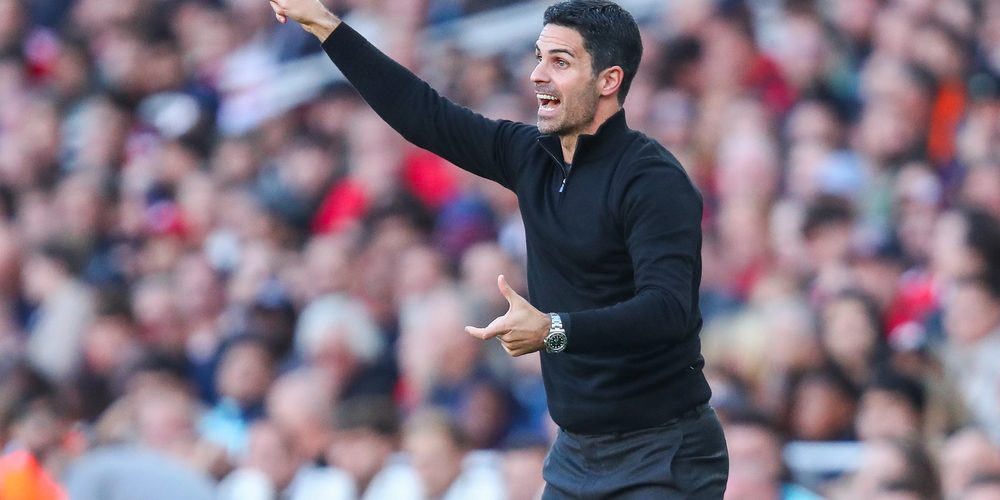
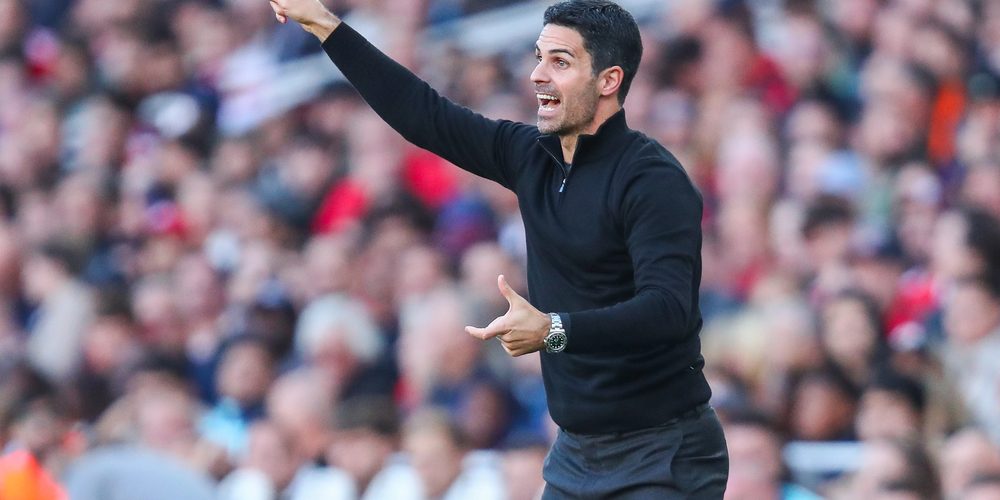
Table of Contents
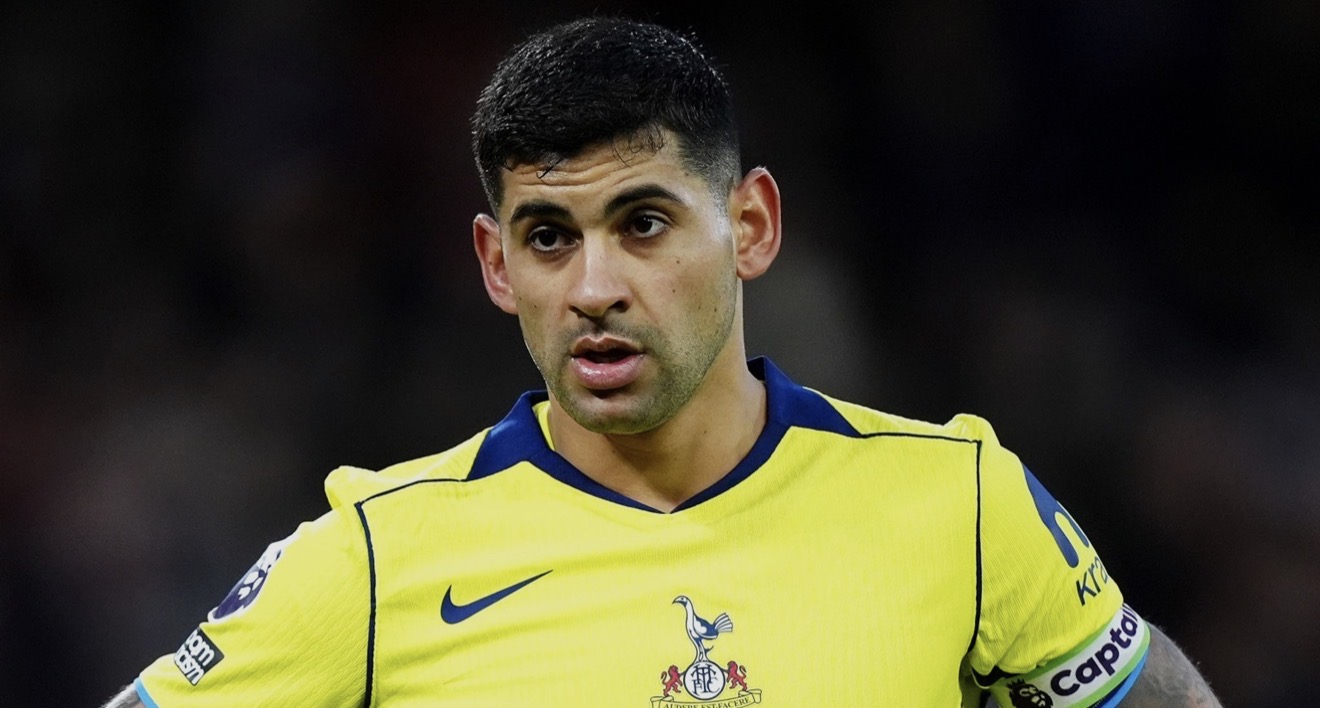
Three men born within 15 miles of each other, seven months apart, in the smallest province in Spain, now sit in the technical areas of three Premier League clubs. Mikel Arteta manages Arsenal. Xabi Alonso manages Chelsea. Andoni Iraola manages Liverpool. All three learned the game on the same strip of gravel in San Sebastian, at a neighborhood club so small it still struggles to find wall space for the signed shirts of the players who came through its doors.
The club is called Antiguoko. Arteta and Alonso went head to head as rivals for the first time when Arsenal hosted Chelsea, and Arteta described the occasion afterward as “a big week and a really intense and emotional match,” saying “you could sense from the beginning how much was at stake, two teams putting everything into every action.” Arsenal won 2-1. Back in the Basque Country, the people who coached and played alongside the three men as boys are still trying to make sense of how it happened.
“If I really think about it, it’s absolutely crazy that our three friends are managing these Premier League teams,” says Alvaro Parra, a former Antiguoko teammate and one of Arteta’s closest friends. “Sometimes I turn on the TV and say, ‘Oh, it’s Mikel! Oh, it’s Xabi! What’s happened here?'” adds Mikel Yanguas, another old teammate.
A Basque Dream Team on a Gravel Pitch
Roberto Montiel has coached at Antiguoko for decades and now serves as the club’s vice-president. He can still describe the exact texture of the surface the three men played on as children, on a patch of land in the Berio district of San Sebastian that is now a public park.
“The pitch wasn’t like the new one up there. It was smaller and made of small stones, like gravel,” Montiel says. “The balls weren’t like the ones now either. When they got wet, they became heavy. You would slip and slide, and if you fell, you’d end up with a terrible scrape.”
Arteta and Iraola played in the same age group. Alonso was a year older. Together with the rest of that generation, they turned the club into a local phenomenon that the players themselves still refer to by nickname.
“It was like a national team of the best players in the area and it made us an unbeatable team,” Parra says. “I remember games against Real Sociedad that were so easy. They would come to play us and we would beat them 5-0. Athletic Club would come and we would beat them as well. We won all the leagues. The team became known as the Basque Dream Team.”
More than 40 players who came through Antiguoko have gone on to the top division in Spain. The signed shirts of Arteta, Alonso and Iraola hang in the most prominent spot on the club’s wall.
Arteta the Predator
Of the three, Arteta was the standout as a boy. “He had something different,” says Yanguas, who played as a striker just ahead of him. “He was small but very technical and very clever. He played right behind me and he was always thinking about his next pass. I just needed to run.”
Parra, a former centre-back, remembers the pattern being just as simple from his own position. “I just had to pass the ball to Mikel Arteta. Mikel Arteta to Yanguas. Goal.”
Montiel has a favorite story that he says captures Arteta’s alertness even as a child. “The referee blew for a drop ball, and just as he let it bounce, Arteta flicked it away with the outside of his boot and hit a long pass across the pitch for a teammate who was on his own to score, and that was against Real Sociedad,” he says. “He was super-attentive to everything you said. He showed an interest in everything. And then, when he went on the pitch, he was a predator.”
That competitiveness followed Arteta off the pitch. Montiel remembers him sliding down the hallway of his house in Liverpool, in the style of Jurgen Klinsmann, after beating him at PlayStation on a visit made while he was playing for Everton. Parra puts it more bluntly. “Whatever game you played with him, you would always lose,” he says. “If you played PlayStation, you would lose. If you played ping pong, you would lose. He was very, very competitive. If you beat him at anything, he would get angry and go home.”
The friendship survived Arteta’s move away from home at 15, when he joined Barcelona’s La Masia academy. Yanguas made the same move but returned within a year. “Mikel had a better capacity to adapt,” Yanguas says. “He was quickly speaking to the other people at La Masia. I think he demonstrated that in other countries too, in France, in Scotland, in England. He always had the ability to adapt to any environment.”
Parra and Arteta stayed close even after Arteta’s career took him abroad. “After the year he made his debut with Paris Saint-Germain, he called me and said, ‘Alvaro, pack your suitcase, we’re going to Marbella,'” Parra says. Arteta himself credits the club for the belief that carried him through those moves. “I’m extremely grateful to all the people that work in Antiguoko. They really ignited something in me, that belief,” Arteta says. “Roberto used to tell me every day, ‘You’re going to be a professional footballer. You’re going to be one of the best footballers in the country.’ He was totally convinced. He believed more in me than anyone else. You need someone like this in life.”
Iraola, the Quiet Leader
Iraola cuts a different figure to Arteta in the memories of his old teammates. “Mikel was captain of the team, he took responsibility,” Parra says. “Andoni was more introverted, but at the same time he had incredible ability, and even if he was quieter, he was always a fun and polite guy, a great teammate, and popular in the group.”
Montiel remembers Iraola’s touch out wide. “He was one of my favorites,” he says. “Playing out wide, he didn’t get as many touches as those in the centre, but every time he got to the byline, he would beat two or three players, make a pass and we’d score. He could work wonders with the ball.”
That role changed once Iraola reached Athletic Club, where manager Ernesto Valverde moved him from winger to full-back. He did not take to the switch straight away. “At first, he didn’t like it at all,” Parra says. “He even got angry, asking, ‘Why are you putting me in defence?’ But Valverde knew he was going to be an incredible full-back because he had the quality and the ability to take on players and get all the way up the pitch.” Iraola went on to make 510 appearances for Athletic Club.
His cousin, Iñigo Iraola, now coaches Antiguoko’s under-16 team and remembers being taken to buy his first pair of football boots by Andoni. “They were Adidas boots,” he says. “I went to buy them with him on my birthday here in San Sebastian. He was already playing for Athletic, so it was special for me to go with him.” He points to the same quiet quality now visible in Iraola’s management. “One thing I really admire about Andoni is the kind of leader he is,” his cousin says. “He isn’t going to raise his voice above everyone else. He’s a quieter, understated kind of leader who has more of an impact through the example he sets his players every day.”
Alonso’s Late Bloom
Ignacio Azpilicueta, no relation to the former Chelsea defender of the same surname, played directly behind Alonso in midfield and says he had the best view in football as his teammate’s passing range developed. “He played as the midfield pivot right in front of me, so I had the privilege of seeing Xabi’s best passes from my position, right at the point when he developed the physical power and ball-striking ability that he went on to show for so many years,” Azpilicueta says.
Few at the club expected the career that followed. “I remember our first sessions together and I would say I don’t remember feeling that he was going to become the football star he is today,” Azpilicueta says. “He had a good touch, but physically he wasn’t by any means the biggest or the strongest or the quickest. It took him a while to grow.”
The turning point came in his under-17 year. “I would say that was the moment when he really took off,” Azpilicueta says. “He’d always had that intelligence, but now it was accompanied by that physical development.” Parra remembers the same shift. “At that age, you could see he was going to be a first division player,” Parra says. “Maybe not that he was going to win the Champions League, but you could see he was going to be a top-level player.”
Azpilicueta traces Alonso’s success back to the same qualities that carried Arteta and Iraola. “I would say he was a very normal kid, like the rest of us. He didn’t stand out in any particular way,” he says. “He had a sense of humour. He was a good friend to his friends. But above all, he was very intelligent. He always made good decisions, on and off the pitch. I would say that has been a big part of his success.”
The DNA That Never Changed
Antiguoko keeps producing players who reach the top division. Arsenal’s Martin Zubimendi, a World Cup winner alongside Alonso, came through the same club, as did Rayo Vallecano manager Iñigo Perez. Montiel credits some of it to scouting. “Oscar Landa, our sporting director, has a 95 per cent success rate,” he says. But he keeps coming back to one explanation above all else.
“We’ve never changed the DNA of Antiguoko,” Montiel says. “Competitive instinct, intensity and sporting discipline are non-negotiable.” Arteta uses the same phrase, competitive instinct, when he describes his own approach to management. Iñigo Iraola, coaching the current under-16 group, sees the same values reflected in the wider culture of the region. “We try to instil the values of sacrifice, discipline, hard work, teamwork and competitiveness,” he says. “I think it also reflects what the Basque player is: dedicated and committed to working hard every day. I think that’s what makes us special.”
Gorka Azpeita, the club’s general director, argues the connection to Arteta, Alonso and Iraola goes beyond what any of the three achieved on the pitch. “The results should be seen in sporting terms, but also in human terms,” Azpeita says. “Beyond the footballing talent they have, it’s important to highlight what they’re like as people. They should be seen for the values they have, the people they are, and how it’s enabled them to get where they are.”
Back at Antiguoko, that loyalty to all three men creates an obvious problem whenever two of them meet as rivals. Asked who the club would be supporting when Arteta and Alonso faced off in north London, Azpeita laughed off the question rather than pick a side. “That’s like choosing between Mum and Dad,” he said. “A draw would be perfect.”
It was not a draw. But for a club that has now sent three friends from the same gravel pitch into the technical areas of the Premier League’s biggest clubs, the result was almost beside the point.

Leave a Comment
More in News
Roberto De Zerbi Reveals the Honest Team Meeting Behind Spurs’ Revival

Mikel Arteta Is Clipping Images of Rival Managers After Second Yellow Card
Xabi Alonso Defends Mike Penders and Says Cole Palmer Will Learn

Washington woman scores $80 Chanel purse at Value Village. Then the worker does something spiteful: ‘Don’t trust…they’re not your friends’

Woman takes gravely injured cat to Florida vet. They refuse to touch him unless she pays $700 upfront. It costs him his life: ‘My heart is broken’
Trending on Futbol Chronicle
The Best Soccer Players of All Time: The 10 Greatest Ever Ranked
What Is Offsides in Soccer? The Offside Rule Fully Explained

What Is The Club World Cup?
Celta Vigo postpones LaLiga opener after fungus outbreak damages stadium pitch