1860 Munich Ends Ismaik Era After Relegation Crisis as Historic Club Faces Uncertain Future
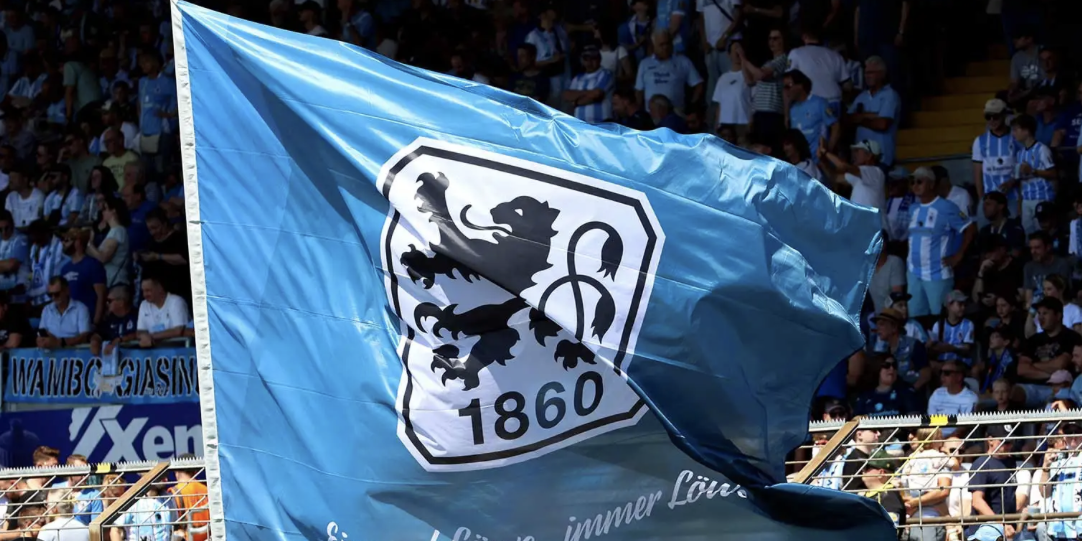

- TSV 1860 Munich has terminated its cooperation agreement with investor Hasan Ismaik after the club’s relegation to the Regionalliga.
- The club failed to secure a 3. Liga licence after falling €2.7 million short, triggering a second drop into Germany’s fourth tier since 2017.
- Ismaik’s decision not to provide further financial backing has intensified tensions, with club officials now beginning a major rebuild.
TSV 1860 Munich has formally ended its relationship with long-time investor Hasan Ismaik following a dramatic financial collapse that forced the club into the Regionalliga, marking a significant turning point in one of German football’s most turbulent ownership sagas.
After 15 years of often bitter disputes, financial uncertainty and boardroom battles, 1860’s registered association announced it had terminated the cooperation agreement signed with Ismaik’s HAM International in May 2011 with immediate effect.
The decision comes in the aftermath of the club’s failure to obtain a licence for the 3. Liga after missing a crucial €2.7 million funding target before the German Football Association’s deadline.
In a statement, the club confirmed: “TSV Munich 1860 e.V. has terminated the cooperation agreement concluded on 30 May 2011 with HAM International with immediate effect for good cause.”
The statement added that preparations for the 2026-27 campaign are already underway and that the club has received approval from the Bavarian Football Association to compete in the Regionalliga Bayern.
For many supporters, the announcement represents the end of an era defined as much by conflict as ambition.
Ismaik, who first invested in the club in 2011, became one of the most controversial figures in German football. While his arrival initially brought hopes of restoring 1860 Munich to the Bundesliga, the partnership was repeatedly overshadowed by disputes over finances, governance and long-term strategy.
The latest crisis emerged when Ismaik withdrew previously approved loans and declined to provide further emergency funding, leaving the club unable to cover the shortfall required for third-division certification.
Speaking to Süddeutsche Zeitung, Ismaik defended his stance.
“I believe it is now clear to everyone that simply providing fresh funds year after year cannot be a solution,” he said.
“The question is how the club intends to build a stable future that is not dependent on emergency funding every season.”
His comments did little to ease tensions among supporters already frustrated by years of instability.
The financial situation worsened after main sponsor die Bayerische activated a contractual exit clause following relegation, removing another important source of revenue at a critical moment.
Club president Gernot Mang confirmed the severity of the situation when addressing supporters outside the club’s headquarters.
“We didn’t get the licence, which means we’ll be playing in the Regionalliga next year,” Mang said.
He acknowledged that the club had failed to raise the necessary €2.7 million before the deadline, sealing 1860’s relegation.
The fall is a painful setback for one of Germany’s most historic clubs. Former Bundesliga champions and members of the country’s football establishment for much of the post-war era, 1860 Munich have spent years attempting to rebuild following their first drop into the fourth tier in 2017.
Now, with the Ismaik era seemingly over, the focus turns to survival and reconstruction.
For a club whose history is intertwined with the identity of Munich itself, the challenge is no longer about returning to past glories. It is about creating a sustainable future after years of division, financial uncertainty and missed opportunities.
The next chapter begins in the Regionalliga, but many supporters will hope it also begins free from the turmoil that has defined the last 15 years.

Leave a Comment
More in News

Bruno Guimarães Admits Sleepless Nights and Tears Over Leaving Newcastle for Arsenal

Harry Kane Admits Ballon d’Or Wait Is ‘Very Stressful’ for His Family

Declan Rice Backs Harry Kane to Win Ballon d’Or, Calls Him ‘Ridiculous’
Kyle Walker Says He Never Meant to Remove Man City Tattoos
Enzo Maresca Calls Helping Phil Foden Recover His Form ‘My Duty’
Trending on Futbol Chronicle
Map of All the Premier League Teams for 2025/26
Cristian Romero completes €40m move from Tottenham to Atlético Madrid
What Is Offsides in Soccer? The Offside Rule Fully Explained
Michael Carrick points to lack of sharpness after Manchester United draw with West Ham