
Ferran Torres fires Spain to World Cup glory as Argentina’s reign ends in New Jersey
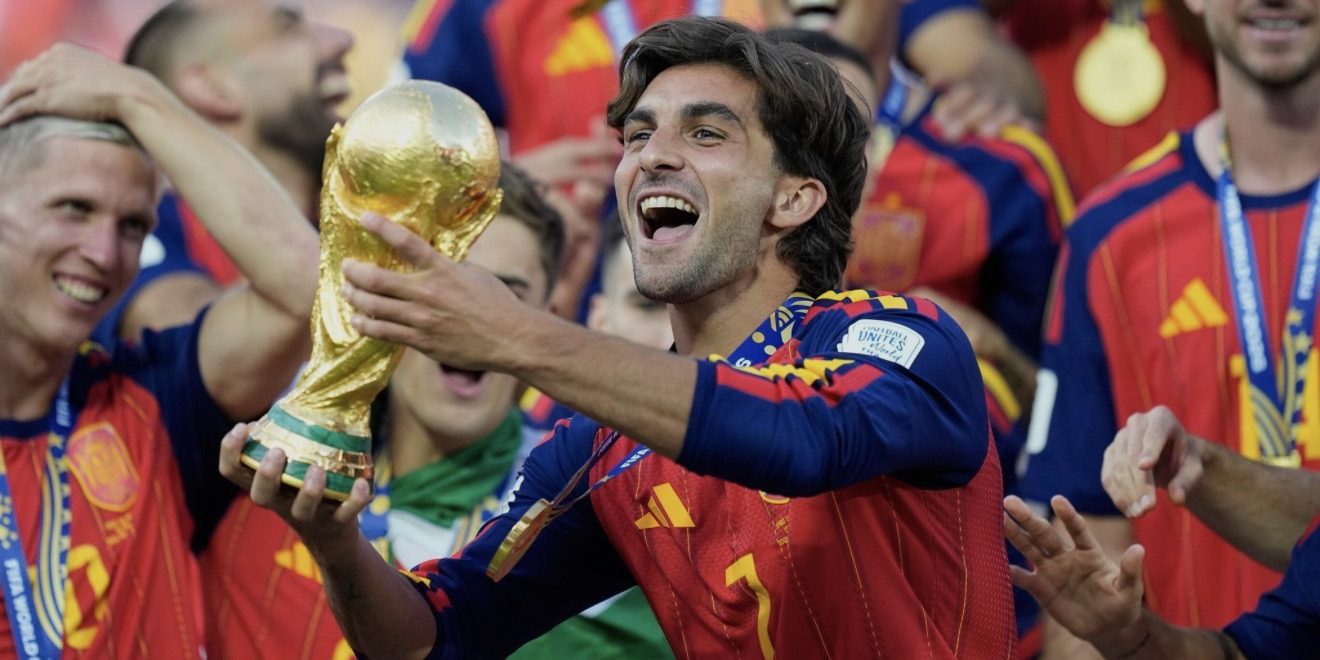

- Ferran Torres scored the extra-time winner as Spain defeated Argentina 1-0 to win the FIFA World Cup for a second time.
- Spain dominated the final before breaking through after Argentina were reduced to 10 players following Enzo Fernández’s dismissal.
- Luis de la Fuente’s side completed an unbeaten tournament to add the World Cup to their European Championship triumph.
Ferran Torres wrote his name into Spanish football history with the goal that ended Argentina’s reign as world champions, sealing a 1-0 extra-time victory in Sunday’s FIFA World Cup final at MetLife Stadium.
The Barcelona forward, introduced from the bench midway through the second half, converted from close range in the 106th minute to deliver Spain’s first World Cup title since 2010 and complete another landmark achievement for Luis de la Fuente’s side.
Torres’ decisive finish capped a final Spain controlled for long periods, with the European champions repeatedly testing Argentina goalkeeper Emiliano Martínez before eventually finding the breakthrough.
“The goal belonged to 47 million people,” Torres said.
“It wasn’t just mine or the 26 players. Destiny was written, and it was meant for us to win far away from our people.”
Argentina’s task became even more difficult deep into normal time when Enzo Fernández was dismissed after collecting a second yellow card for a late challenge on Pau Cubarsí. The Chelsea midfielder’s reckless tackle left referee Slavko Vinčić with little option but to produce a red card, forcing the defending champions to play the remainder of the contest with 10 men.
Even before the dismissal, Spain had established control.
De la Fuente’s team dictated possession, created the clearer opportunities and forced Martínez into an outstanding performance that kept Argentina alive throughout the evening. The Aston Villa goalkeeper produced 11 saves, the highest total recorded in a World Cup final, but was eventually beaten by Torres’ close-range finish.
Argentina, by contrast, struggled to threaten.
Lionel Messi found little space against Spain’s disciplined defensive structure and was unable to influence the match in the way he had throughout the tournament. The captain did not register Argentina’s first attempt until late in extra time, when his effort was blocked after Spain had already taken the lead.
The defeat ended Argentina’s hopes of becoming the first men’s team since Brazil in 1962 to defend the World Cup and left Messi reflecting on a painful conclusion to another remarkable campaign.
“They were better, to be honest,” Messi said.
The 39-year-old completed the tournament with eight goals, finishing behind France captain Kylian Mbappé in the race for the Golden Boot. It may also prove to be the final World Cup appearance of a player widely regarded among the greatest in football history, although Messi has yet to confirm his international plans.
Scaloni accepted Spain’s superiority while praising the commitment shown by his players throughout the tournament.
“I feel sadness but knowing that we left everything out there,” Scaloni said.
“They were better, that’s the truth.”
“But I’ll always remember what this group achieved by reaching another World Cup final and competing until the end.”
Spain’s victory underlined a tournament defined by consistency.
The champions conceded just one goal across eight matches and extended their unbeaten run to 38 games in all competitions, setting a new record for a men’s national team. The triumph also completed a remarkable period for De la Fuente, who added the World Cup to Spain’s recent European Championship success.
“We are world champions,” De la Fuente said.
“It was together that we reached this stage.”
“I feel enormous pride because accompanying these players on this journey has been an honour.”
The Spain coach also made clear his squad has little intention of slowing down after reaching the summit of international football.
“Once the game finished, some of the players asked what else there was left to win,” De la Fuente said.
“We agreed that the next challenge starts in September because this team never stops.”
Sunday’s final brought the curtain down on the first 48-team World Cup, staged across the United States, Canada and Mexico. The expanded tournament concluded with a record 104 matches and produced more goals than any previous edition before Spain lifted the trophy and confirmed their place once again at the top of world football.

Leave a Comment
More in News

Tempers flare after Spain edge Argentina to claim World Cup title

Lionel Messi’s World Cup dream ends as Spain deny Argentina historic title defence

Kylian Mbappé secures second consecutive World Cup Golden Boot despite France’s semifinal exit

Bukayo Saka Reveals He Wanted to Play More After Hat-Trick Answers Tuchel’s Big Call Against Argentina

Rodri Proves Pep Guardiola Right as Spain Captain Breaks World Cup Passing Records Before Final
Trending on Futbol Chronicle

Michael Carrick points to lack of sharpness after Manchester United draw with West Ham
What Is Offsides in Soccer? The Offside Rule Fully Explained
The Best World Cup YouTubers to Follow in 2026

Why Soccer Is The Best Sport