
Ecuador Built the Hardest Defense in World Cup Qualifying and Nobody Noticed
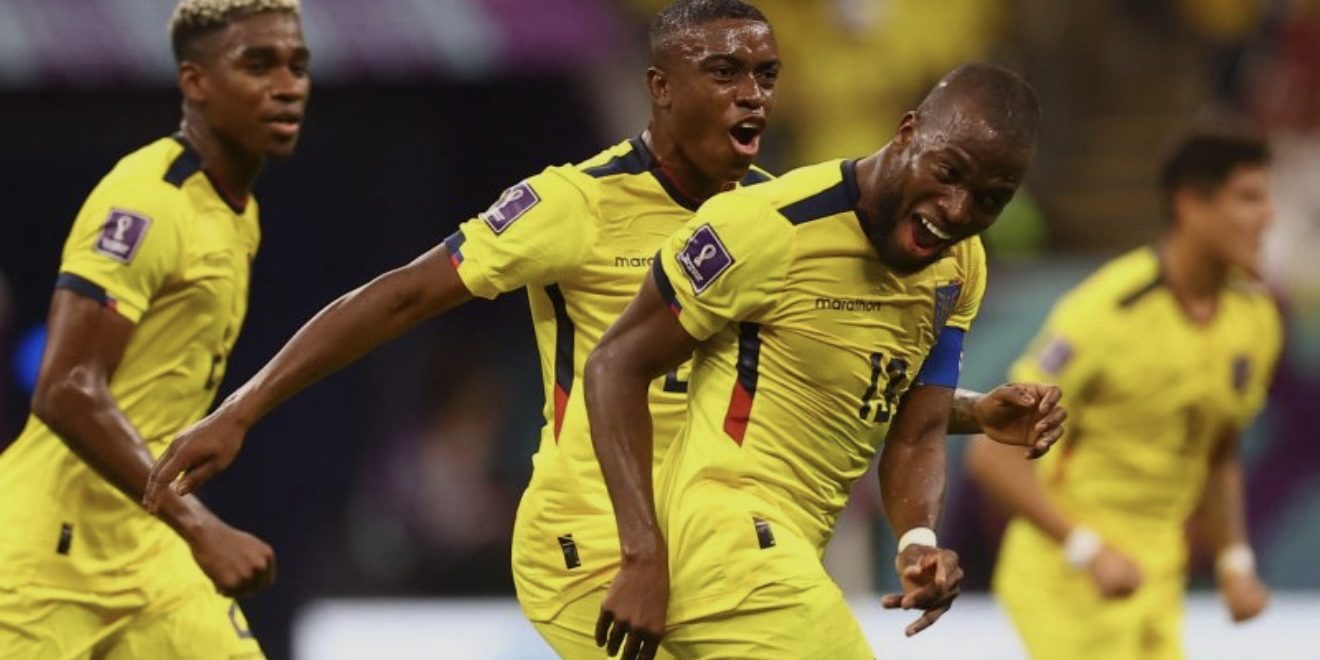

Table of Contents
While the World Cup spent its opening week marvelling at goals, upsets and the chaos of a 48-team tournament, one team kept quietly doing the least fashionable thing in football. Ecuador defended. They have built a reputation not on flair or famous names but on the simple, unglamorous art of refusing to let anyone score, and the numbers behind that reputation are among the most startling in the modern game. In a sport obsessed with attack, Ecuador arrived in the United States as the hardest team in the world to break down, and almost nobody was talking about them.
The figures from their qualifying campaign read like a misprint. Across 18 CONMEBOL qualifiers, the toughest and longest road to any World Cup, Ecuador conceded just five goals. Five, in 18 matches, against the likes of Argentina, Brazil, Uruguay and Colombia. They kept 13 clean sheets in that run and finished second in South America with 29 points, the best qualifying performance in the country’s history. For a nation that has often been overshadowed by its larger neighbours, it was a statement of defensive excellence that deserved far more attention than it received.
The Coach Who Made Them Impossible to Beat
The architect of this transformation is Sebastian Beccacece, an Argentine coach who took charge of Ecuador and turned defensive organisation into an identity. Under him, the team went on a 17-match unbeaten run through the qualifying cycle and extended that into a sequence that reached almost two years without defeat. Beccacece’s Ecuador are not a side that parks the bus and hopes. They press with structure, they recover their shape quickly, and they make the distances between their players so tight that opponents find themselves passing across the front of a wall rather than through it.
Beccacece belongs to a generation of Argentine coaches who have spread across international football, carrying a tactical seriousness and an obsession with detail that has reshaped teams from the inside. His work with Ecuador is among the most impressive of the lot, precisely because he did it with a squad that does not contain a single global superstar of the kind that decorates the favourites. He built a system that does not depend on individual brilliance. It depends on every player doing his job, every time, for ninety minutes.
That kind of discipline is harder to coach than it looks. Asking talented footballers to subordinate themselves to a collective structure, to track runners and hold lines and resist the temptation to chase the ball, requires buy-in that many squads never achieve. Beccacece got it. His players defend as if conceding a goal is a personal insult, and the results have followed.
A Back Line of Genuine Pedigree
The reputation is not built on organisation alone. Ecuador’s defence is stocked with players who operate at the highest levels of European and South American football. Moises Caicedo, the midfield anchor who shields the back line, is a Chelsea player whose ability to break up attacks and start them again makes him one of the most valued holding midfielders in the Premier League. In front of the defenders, he is the first line of protection, and his presence allows the whole structure to function.
Behind him sits a backline of real quality. Piero Hincapie has established himself at Bayer Leverkusen as one of the most composed young centre-backs in Europe, a defender comfortable on the ball and ruthless without it. Willian Pacho has reached the very summit of the club game, part of a Paris Saint-Germain side that conquered Europe, and brings the calm of a player who has defended in the biggest matches there are. Pervis Estupinan offers attacking thrust and defensive steel from full-back. Together they form a unit that has the experience to match its discipline.
Captaining the side is Enner Valencia, a veteran forward who has carried Ecuador’s attacking burden across multiple tournaments and who provides the leadership that holds a young squad together. Valencia is the link to Ecuador’s past World Cup campaigns, the player who remembers what it takes to compete on this stage, and his goals have so often been the difference for a team that scores sparingly and defends magnificently.
The One Time the Wall Cracked
No defensive record survives a World Cup untested, and Ecuador’s was punctured in their opening match. Amad Diallo struck in the closing minutes to give Ivory Coast a narrow win, ending Ecuador’s long unbeaten run and reminding everyone that even the meanest defence can be undone by a single moment of quality. It was a rare crack in a structure that had held firm for almost two years, and it served notice that this tournament punishes the smallest lapse.
Yet that defeat does not undo what Ecuador are. A team that concedes five goals in 18 qualifiers does not suddenly forget how to defend. The Ivory Coast result was a reminder of the fine margins at this level rather than evidence of a fundamental flaw. The qualities that made Ecuador so difficult to play against, the compactness, the discipline, the refusal to be opened up, remain the foundation of everything Beccacece has built. One late goal does not erase the identity of a side that has spent two years making forwards look ordinary.
If anything, the early stumble may sharpen them. Teams that pride themselves on defending tend to respond to a concession with renewed focus, treating it as a problem to be solved rather than a sign of weakness. Ecuador have the kind of squad that does not panic, and a tournament that rewards resilience as much as brilliance suits a team whose entire philosophy is built on staying in matches and trusting that one chance will be enough.
A Country That Has Earned Its Place
To appreciate what Beccacece has built, it helps to remember where Ecuadorian football has come from. This is a nation that did not reach a World Cup until 2002, a relative newcomer compared with the South American giants who have been winning the tournament for generations. Ecuador’s football has long been shaped by altitude, by the thin air of Quito where visiting teams have wilted for decades, and by a domestic game that punches above the country’s economic weight. Producing players good enough to anchor defences at Chelsea, Bayer Leverkusen and Paris Saint-Germain represents a remarkable rise for a federation that was once an afterthought in CONMEBOL.
That progress has not always been smooth. Ecuador have endured points deductions, off-field disputes and the constant challenge of holding on to their best young talents as European clubs circle. The fact that they finished second in the most demanding qualifying group in world football, ahead of established powers, is a testament to how far the country’s development has come. They did it not by buying success but by coaching it, by identifying a generation of defenders and a holding midfielder of genuine class and welding them into a unit greater than the sum of its parts.
There is a generational quality to this squad, too. Caicedo, Hincapie and Pacho are all young enough to anchor Ecuador for years to come, which means this World Cup is not a final destination but an arrival. A team this defensively sound, with this much of its core still approaching its peak, is the kind of side that grows more dangerous the deeper a tournament goes and the more the pressure mounts on the favourites expected to brush them aside.
Why the Quiet Ones Are Dangerous
The story of Ecuador speaks to something deeper about how World Cups are won. The tournament’s history is full of teams who advanced not by outscoring everyone but by being almost impossible to beat, grinding through tight matches and trusting their structure when the pressure rose. A side that defends as well as Ecuador does carries an inherent advantage in knockout football, where one goal can decide everything and where the team that makes fewer mistakes usually survives.
The lack of attention Ecuador have received is itself an asset. While bigger nations carry the burden of expectation and the glare of constant analysis, Beccacece’s team can go about their work without the weight of being favourites. They are the side nobody wants to draw and nobody talks about, the quiet outfit that turns an exciting match into a grind and waits for the opponent to lose patience. That is not the football that fills highlight reels, but it is the football that wins tournaments.
So Ecuador go forward as one of the most intriguing teams in the United States, a side whose greatness lies in subtraction rather than addition, in the goals they prevent rather than the goals they score. They built the hardest defence in World Cup qualifying and arrived almost unnoticed, and that combination of excellence and anonymity may yet prove to be the most dangerous quality any team can carry into a knockout competition. The rest of the World Cup has been warned, even if it has not been paying attention.

Leave a Comment
More in News

Trent Alexander-Arnold Returns to the England Squad for the First Time in Over a Year, and Cole Palmer Is Back Too After Their World Cup Snub

Gabriel’s Boot Caught Emiliano Martinez in the Head, and a Five-Person Premier League Panel Ruled It Was Never a Red Card

Floyd Samba Scores a Debut Double as a Teenager

Tottenham Spent £300m This Summer and Have Not Scored in Four Premier League Games for the First Time in the Club’s 144-Year History

Cyle Larin Scored Once in 15 Games on a Failed Feyenoord Loan, and Is Now Outscoring Kylian Mbappe and Erling Haaland at Southampton
Trending on Futbol Chronicle
Josef Martinez Returns to MLS Spotlight With Columbus Crew Signing
The Best Soccer Players of All Time: The 10 Greatest Ever Ranked
The Best World Cup YouTubers to Follow in 2026
Why Soccer Is The Best Sport