Why Germany Refused to Kick the Ball Out on Klopp’s Debut
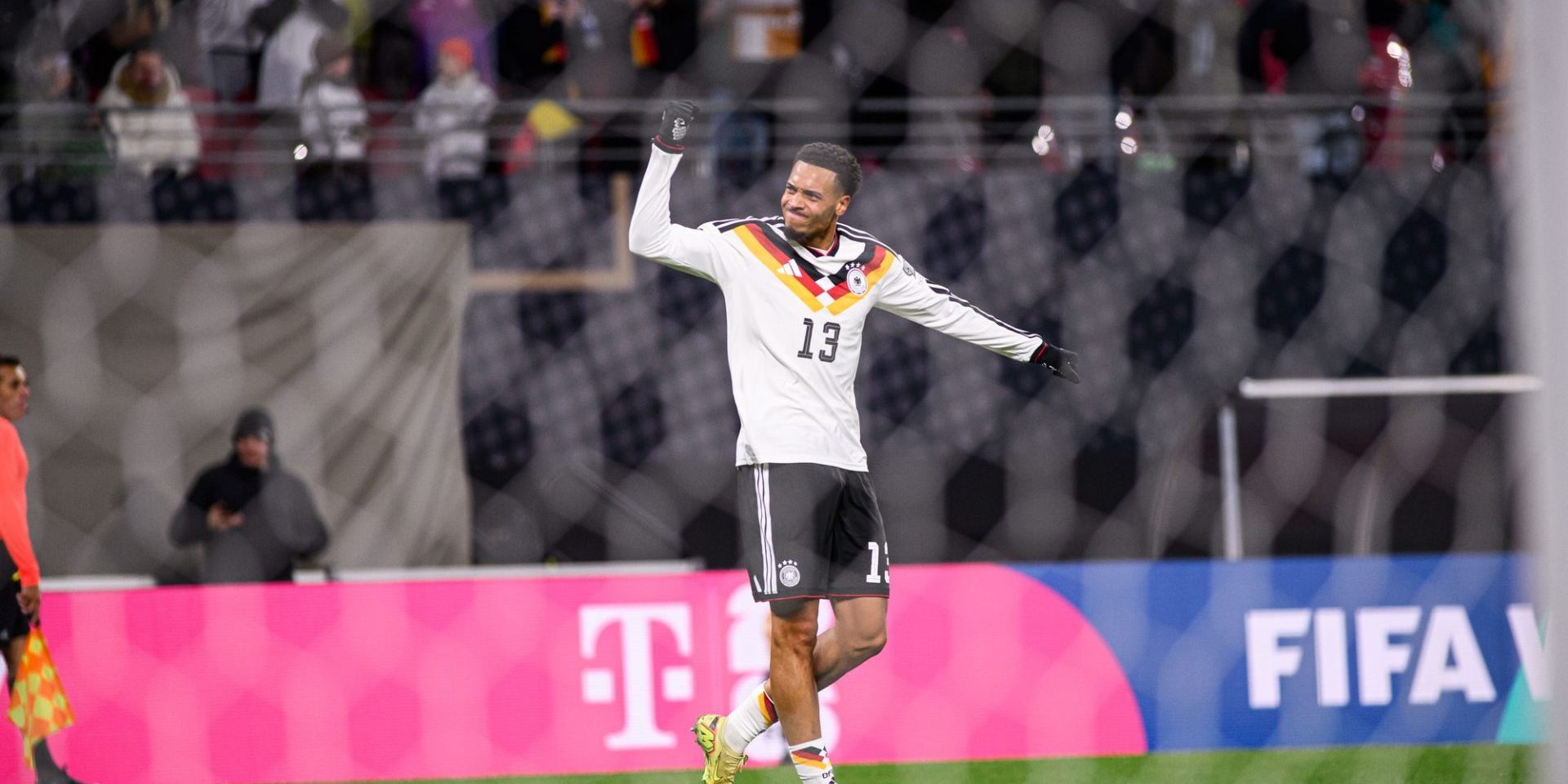

Table of Contents
- Germany refused to kick the ball out of play when Netherlands striker Brian Brobbey went down injured in their Nations League opener, then scored through Felix Nmecha moments later.
- New Netherlands coach Xavi said the passage of play was “a mixture” of cleverness and a lack of fair play, while former international Rafael van der Vaart branded it “unsporting.”
- Jurgen Klopp’s first game in charge of Germany ended 1-1 after Ruben van Bommel, son of former Bayern Munich midfielder Mark van Bommel, set up a stoppage-time equaliser for Cody Gakpo.
Xavi and Van der Vaart Accused Klopp’s Players of an Unsporting Act, and Joshua Kimmich Hit Back
Jurgen Klopp’s first game in charge of the German national team should have been about team selection and tactics. Instead, it turned into an argument about a rule that has never actually been written into the laws of football.
Germany led the Netherlands 1-0 in Amsterdam on Thursday night when Dutch striker Brian Brobbey went down injured inside his own half. Convention holds that the team in possession sends the ball out of play so an injured opponent can get treatment. Germany did not. Joshua Kimmich fed a crossfield pass forward, Karim Adeyemi carried it on, and Felix Nmecha finished from close range to put Klopp’s side 1-0 up in the 32nd minute.
The goal stood. The argument did not end there.
“It will still be a misunderstanding in 100 years’ time that the spectators expect the ball to be kicked out of play,” Klopp told RTL after the match. “But the lads are actually instructed to keep playing.”
New Netherlands coach Xavi took a different view. he said the referee already had the whistle at his mouth, which was why a few of his players stopped playing, though he added: “It was not a big deal either.” His description of Germany’s approach was pointed all the same: he called it “a mixture” of cleverness and a lack of fair play.
Former Netherlands international Rafael van der Vaart went further on broadcaster NOS, calling the decision to play on “unsporting.”
Kimmich was unmoved. “We were absolutely right to keep playing,” he said, pointing out that a stoppage only happens if the referee blows his whistle. “And I didn’t hear any whistle.” Told that Virgil van Dijk had called the goal a disgrace, Kimmich replied: “I think that is not a reflective answer from him.”
The Rule Football Has Never Actually Written Down
The convention Klopp and Kimmich brushed aside dates back decades and has no basis in the Laws of the Game published by football’s rule-making body, IFAB. A team is under no obligation to kick the ball out when an opponent goes down, and a referee can only halt play himself if he judges an injury serious enough. Officials in Amsterdam let the game continue, and by the letter of the rules, Germany did nothing wrong.
That has not stopped the tradition from becoming one of the most policed customs in the sport. Players who ignore it are usually jeered by opposing fans and picked apart by pundits, even when, as Klopp pointed out, national coaches instruct their squads in training to keep the ball moving and let the referee make the call.
The build-up carried an extra layer. Brobbey is one of the more physically imposing forwards in Dutch football, and Klopp made the point that nobody had fouled him to put him on the ground. Germany, in his reading, owed him nothing.
A VAR Call Went Germany’s Way Too
The goal was not the only flashpoint of the night. Twelve minutes earlier, Virgil van Dijk appeared to have headed the Netherlands in front from a corner, only for the goal to be ruled out after a VAR review found that Brobbey had blocked goalkeeper Marc-Andre ter Stegen from coming out to challenge for the ball.
Van der Vaart called the decision “an absolute disgrace.” “It is unbelievable,” he said. “Brobbey is hardly doing anything. Of course you are allowed to make contact. The goalkeeper cannot do whatever he wants. It was simply a very poor goalkeeping performance.”
Klopp disagreed, again pointing to how much of the goal Brobbey’s body was blocking. “He’s almost square and Marc has no chance of getting past him,” he said. “It’s a great corner, but it’s a foul. That is how it has to be given now,” he added, noting that goalkeepers had been given greater protection in their six-yard box under directives introduced after the World Cup this summer.
Van Bommel’s Son Denies Klopp a Winning Start
Germany held their lead until stoppage time, when substitute Ruben van Bommel, son of former Bayern Munich and Netherlands midfielder Mark van Bommel, produced an outside-of-the-boot cross that Cody Gakpo met with a first-time strike past ter Stegen. The match finished 1-1.
Klopp, never short of a quip even in defeat, could not resist a line about the assist afterwards. “I asked little van Bommel where he got that from,” he said, before turning the joke on his old adversary. “He didn’t get it from his father, that outside-of-the-boot must come from his mother.”
Centre-back Jonathan Tah offered a measured verdict on his new manager’s opening game. “Of course we would have liked to win, there were chances at both ends,” he said. “We took a good first step, the game was brutally intense. Not everything was perfect, but that was not the point. We want to start showing a different face on the pitch. And today was the first step in that direction.”
Tah singled out debutant right-back Philipp Treu of SC Freiburg for praise. “I would like to highlight Pippo. The way he marched up and down the line was madness. Really top for a first international.”
Two Players in Doubt Before Klopp’s Home Debut
Klopp’s evening was complicated further by two fitness scares. Kai Havertz was substituted early with a problem in his back thigh, and Jamal Musiala was unable to play at all after picking up muscular trouble in the warm-up. “They are both having an MRI, I hope we still get a diagnosis this evening,” Klopp said. “I hope it is nothing serious. For us they are probably out, but hopefully they will be available again quickly afterwards.”
Neither player is expected to be fit for Klopp’s first home game in charge, against Greece in Augsburg on Sunday. Kimmich said the work done under Klopp so far had focused on defensive shape rather than results. “The focus was very much on defending and on pressing, on how we want to put the opponent under pressure,” he said. “It was about finding a certain basic structure without the ball. That is then the basis for us to improve with the ball as well.”
Two Coaching Careers Restarted on the Same Night
Klopp and Xavi both took charge of their national teams for the first time on the same night, arriving from club exits that had little in common beyond their timing. Klopp walked away from Liverpool in 2024 saying he had run out of energy for the daily grind of club management. Germany needed a change after a chastening World Cup this summer. Julian Nagelsmann resigned as head coach following an early exit from the tournament, and the federation moved quickly to install Klopp, who had spent the interim period away from club football, as his successor. Xavi left Barcelona the year before that and had gone without a permanent job in the years that followed. Both federations hired them as long-term builders rather than short-term fixes. Germany want a return to their major-tournament pedigree after a difficult run of years. The Netherlands want proof that a generation of attacking talent, built around players like Gakpo and van Dijk, can finally turn performances into silverware.
Neither point was settled at the Johan Cruyff Arena. What did get settled, at least for one news cycle, was that football’s oldest informal courtesy can still divide a dressing room, a broadcast panel and a press conference on the same night, more than a century after the game was first written down.
What Comes Next
Germany face Greece on Sunday in Augsburg for Klopp’s first home game in charge, hoping to follow up a solid defensive platform with a first win of his tenure, with Havertz and Musiala both racing to be fit in time. The Netherlands, unbeaten in Group A2 after their point in Amsterdam and boasting a squad several observers rate as their most talented in a decade, travel to Serbia in their next fixture as they chase a place at the top of the group, with Xavi knowing a point on the road will count for little if his side cannot turn dominance into results. Whatever happens in either match, Thursday’s draw will be remembered less for the scoreline than for the ball that was never kicked out of play, and the row that followed it into two press conferences and a Dutch broadcast studio.

Leave a Comment
More in News

Joao Felix Spares Ronaldo’s Blushes After Years of Flops at Chelsea and Milan
Rodri Left Manchester City for Barcelona, but Defends the Club After Guilty Verdict
Cole Palmer Has Missed Six of Thomas Tuchel’s Eight England Camps, and His Manager Has Just Questioned Whether He Wants the Shirt at All
Four European Leagues Accuse Infantino of Betraying FIFA Ahead of 2027 Vote
Manchester City’s 115 Charges Reported Mostly Proven, Guardiola’s Trophies at Risk
Trending on Futbol Chronicle
Mikel Arteta backs ‘warrior’ Bruno Guimarães to make Arsenal stronger
The Best Soccer Players of All Time: The 10 Greatest Ever Ranked
Map of All the Premier League Teams for 2025/26
The Best World Cup YouTubers to Follow in 2026