Daryl Dike Returns to Orlando City on Free Transfer After Injury-Hit West Brom Exit
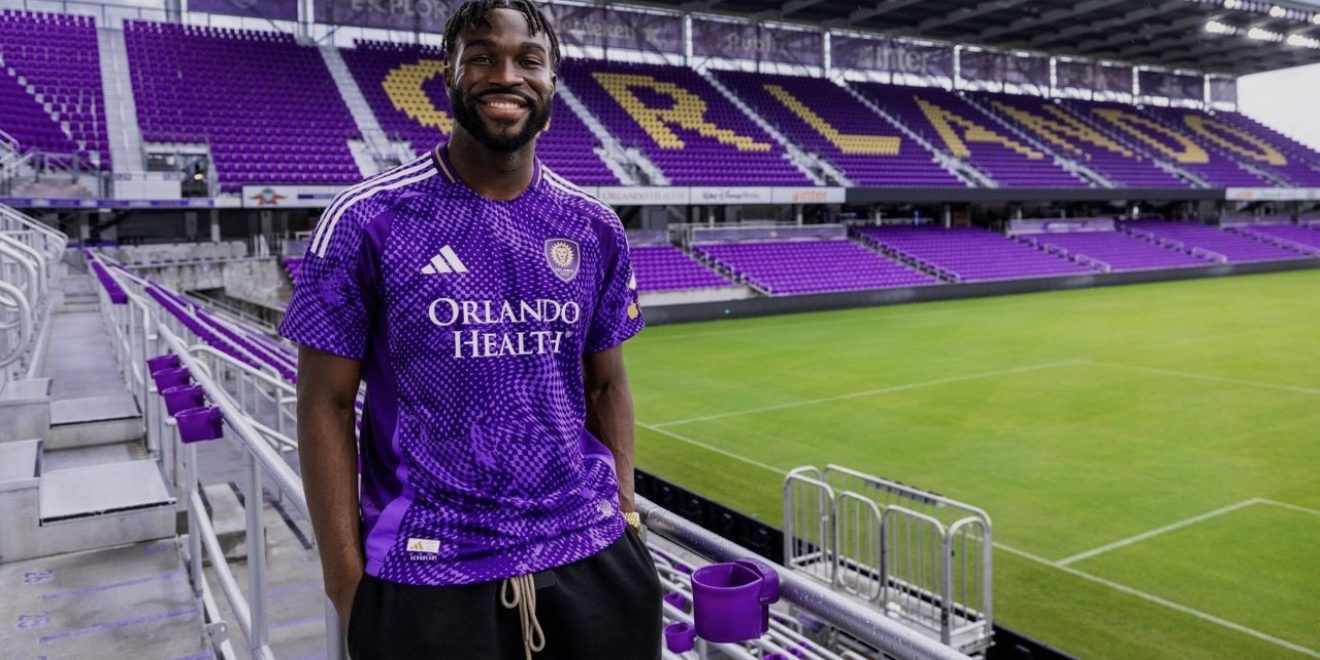

Table of Contents
Daryl Dike is coming home. Orlando City have signed the 26-year-old striker on a free transfer following his exit from West Bromwich Albion, reuniting the forward with the club that gave him his first professional opportunity back in 2020. The move closes a six-year loop that took Dike from an MLS SuperDraft pick to an English Championship regular and back again, this time as a proven attacker rather than an unproven prospect. For Orlando, the reunion arrives at a moment when the club is actively remodeling its attack rather than simply patching a gap, making the timing as significant as the player himself.
Dike signed a deal running through the 2027 Sprint Season with an option for 2027-2028. To complete the move, Orlando sent $75,000 in 2027 General Allocation Money to Seattle Sounders FC in exchange for Dike’s Discovery Priority, the mechanism MLS clubs use to establish first rights to negotiate with a player. Seattle stands to collect an additional $75,000 in GAM if Dike hits certain performance-based benchmarks in Orlando’s purple. The structure of the deal, a free transfer layered with an allocation-money trade for league-wide rights, reflects how MLS front offices now build rosters around out-of-contract talent while still working within the league’s single-entity rules.
A homecoming years in the making
Orlando selected Dike with the fifth overall pick of the 2020 MLS SuperDraft, and he spent two seasons at the club before his move overseas, contributing 19 goals and four assists in 41 appearances and finishing as an MLS Young Player of the Year finalist in his rookie year. That form, delivered as a teenager thrust into senior soccer in the pandemic-disrupted 2020 season, made him one of the most sought-after young forwards to come out of MLS in years.
A loan spell at Barnsley in England’s third tier followed, where Dike scored nine goals in 22 matches and did enough to convince West Brom to make his move to England permanent. Orlando received a fee reported at around $9.5 million for a player they had developed from a draft pick into a full transfer target for a club competing in a division above MLS at the time. That fee, at the time one of the largest ever paid for an outgoing MLS player, reflected how highly English clubs rated Dike’s combination of size, pace and finishing ability after watching him perform in a lower division on loan. It set expectations in England that a serious injury history would prevent him from meeting on a consistent basis.
“Daryl is a player our club and our fans know well, and we’re very excited to welcome him back to Orlando,” said Orlando City general manager and sporting director Ricardo Moreira. “He brings a powerful combination of strength, speed and physical presence, and his ability to hold up play, bring teammates into the attack and finish chances gives us another important option up front. Daryl has already shown what he can do in our league and in this city, and we look forward to helping him make an impact again in purple.” Moreira’s comments point to a front office that views Dike less as a reclamation project than as a known quantity being reintroduced to a league where he already has a proven scoring record.
Five years, five injuries, and a fresh start
Dike’s time at West Brom carried its own share of frustration alongside its highlights. He made 68 appearances across five seasons at the Hawthorns, scoring 11 goals and adding three assists, but multiple serious injuries kept him sidelined for long stretches and prevented him from building the consistent run of form that first made him a transfer target. A player who arrived in England with genuine hype around his physical profile spent much of his Championship career fighting to stay fit rather than kicking on toward the Premier League move some had projected for him.
That injury history makes the return to Orlando as much about opportunity as sentiment. Dike gets the chance to rebuild his career in a league where he has already proven he can produce at a high level, working under familiar surroundings rather than trying to force his way back into form at a new club in an unfamiliar country. There is less pressure attached to a return home than there would be arriving at an unfamiliar club expecting instant production, and that lower-stakes environment could help his recovery as much as any specific tactical fit.
“I’m thrilled to be back where it all started,” Dike said. “Orlando is where I first got the opportunity to play professionally, and returning here feels like coming home.” He added: “From the moment I arrived the first time, I felt welcomed, and that same feeling has only grown since I’ve come back. Everyone has been incredibly supportive, and I’m grateful to be back in Orlando.”
Fitting into a revamped attack
Dike arrives as Orlando’s second attacking addition of the summer transfer window, joining French forward Antoine Griezmann in a squad reshaping itself around proven, experienced finishers rather than developmental prospects. The club has also moved on from its previous striking options this window, trading Duncan McGuire to Houston Dynamo FC as Orlando’s front line takes on a different look heading into the second half of the season.
Adding a player with Dike’s profile gives Orlando a target forward capable of holding up play and bringing wide players and midfielders into attacking positions, a different kind of threat than the mobile, driving style McGuire offered. Whether Dike and Griezmann can share a forward line effectively, or whether one profiles as the preferred starter, will likely define how quickly Orlando’s front line settles into a consistent shape. Griezmann has operated in a deeper, creative role for much of his career, which leaves room for Dike to occupy the more central, physical presence up front rather than compete directly for the same starting spot. That positional separation could allow both players to start regularly rather than force the club into a straight either-or selection each matchday.
International pedigree still in reserve
Dike has represented the United States men’s national team at senior level, scoring three goals in 10 appearances and playing a role in the USMNT’s Concacaf Gold Cup triumph in 2021. Injuries limited his international involvement in the years that followed, mirroring the interruptions that slowed his club career at West Brom, but a fit and in-form Dike back in MLS gives U.S. Soccer selectors another domestic-based forward option to track heading toward future international windows. American forwards with proven MLS scoring records remain a limited pool, and a healthy Dike scoring regularly for Orlando would put him back in a conversation he was largely absent from in his years fighting fitness setbacks in the Midlands.
For now, the priority is simple: get Dike back on the field consistently and let his performances speak for a player whose talent was never seriously in question, only his ability to stay healthy long enough to show it. Orlando’s willingness to bring him back on a free transfer, five years after selling him for a substantial fee, says as much about how highly the club still regards him as any transfer fee could.
What the deal means for MLS’s transfer market
The Discovery Priority mechanism used to complete the deal is a reminder of how MLS transfers differ from most of the world’s leagues, where a club and a player can typically strike a deal without a third team’s rights entering the equation at all. Rather than negotiating directly with a player’s club, MLS teams frequently must first secure the right to pursue a player from whichever club holds that priority, a system designed to prevent bidding wars between teams within the same league for players re-entering MLS from abroad. Seattle held that right over Dike, and Orlando’s willingness to pay for it, on top of taking on Dike’s contract as a free agent from West Brom, shows the value the club places on a returning player it once developed from scratch.
With the 2026 season already past its midpoint and Orlando in the mix in the Eastern Conference, the addition gives the club’s technical staff a fresh forward option to call upon before the stretch run toward the playoffs begins in earnest. Whether Dike can immediately contribute or needs time to shake off the physical toll of his years in England remains the open question.
For a club and a player with history together, though, the reunion carries a meaning that goes beyond the $75,000 in allocation money it cost to complete. Orlando spent five years watching a player they developed go on to a difficult run abroad, and now they get the chance to see whether the forward once seen as destined for a bigger stage can find that early form again back where it started.

Leave a Comment
More in News
Trent Alexander-Arnold Returns to the England Squad for the First Time in Over a Year, and Cole Palmer Is Back Too After Their World Cup Snub

Gabriel’s Boot Caught Emiliano Martinez in the Head, and a Five-Person Premier League Panel Ruled It Was Never a Red Card

Floyd Samba Scores a Debut Double as a Teenager

Tottenham Spent £300m This Summer and Have Not Scored in Four Premier League Games for the First Time in the Club’s 144-Year History

Cyle Larin Scored Once in 15 Games on a Failed Feyenoord Loan, and Is Now Outscoring Kylian Mbappe and Erling Haaland at Southampton
Trending on Futbol Chronicle
Michael Carrick admits Manchester United have “no excuses” after AC Milan defeat
Cristian Romero completes €40m move from Tottenham to Atlético Madrid
Celta Vigo postpones LaLiga opener after fungus outbreak damages stadium pitch
What Is Offsides in Soccer? The Offside Rule Fully Explained