Berrada Admits United Lack Stability After Three Managers in Under Three Seasons

Table of Contents
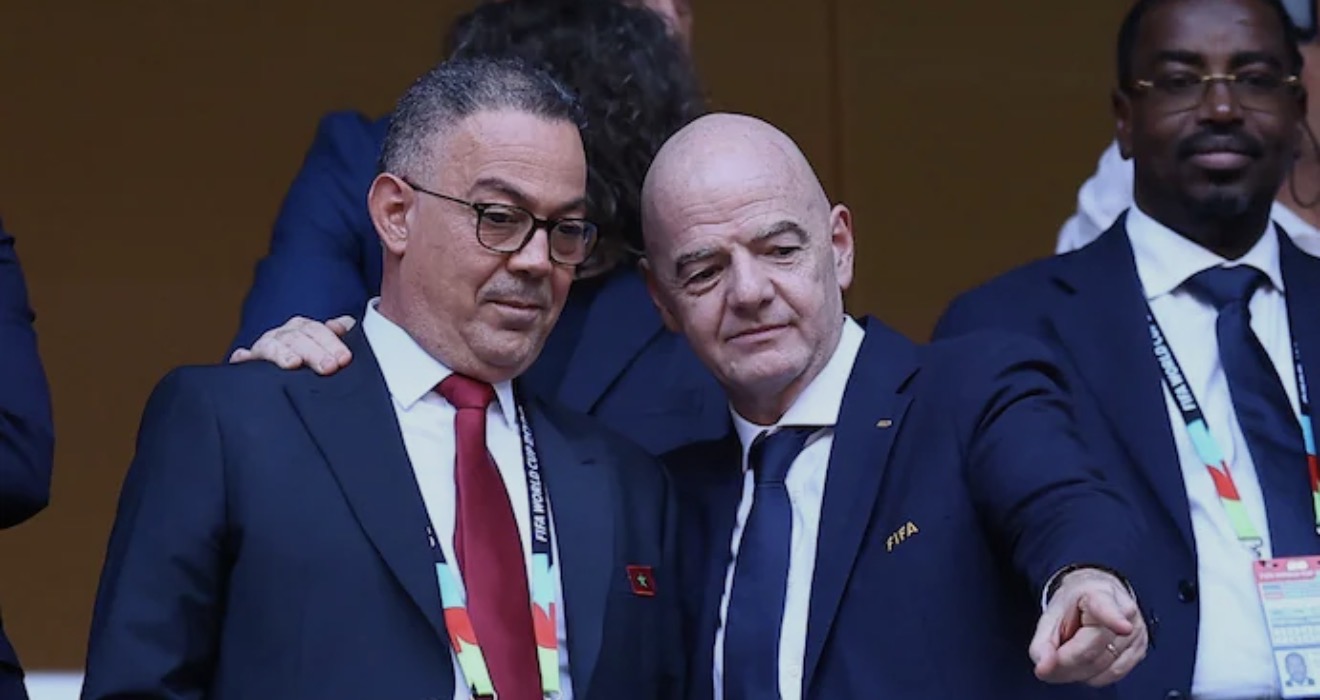
- Manchester United chief executive Omar Berrada says the club’s leadership is responsible for having three permanent managers in less than three seasons, per Daily Mail.
- He said in an interview that some criticism of United’s hierarchy is fair and some of it crosses the line.
- He also explained why United signed no defender in the summer, with the team 18th in the Premier League before a trip to Liverpool on Sunday.
Berrada Owns the Stability Problem, Defends the Summer and Draws a Line on Criticism
Omar Berrada gave his first sit-down interview in five months on Friday, and he opened with an admission. Pressed on how much accountability falls at his door, the Manchester United chief executive said: “I think if you think about the fact we’ve had three permanent managers in less than three seasons, clearly we haven’t achieved the stability that we wanted, that’s for sure,” The interview aired shortly after Mauricio Pochettino spoke to the media for the first time as head coach. United are 18th in the Premier League and travel to Anfield this weekend.
Three Managers, One Shared Responsibility
Berrada spread the blame across the whole football operation. “When it doesn’t work out with the coach or the manager, we are all responsible. Myself, the football leadership, everyone who is involved around the coach and the staff and the players. We have to continue improving and getting better.”
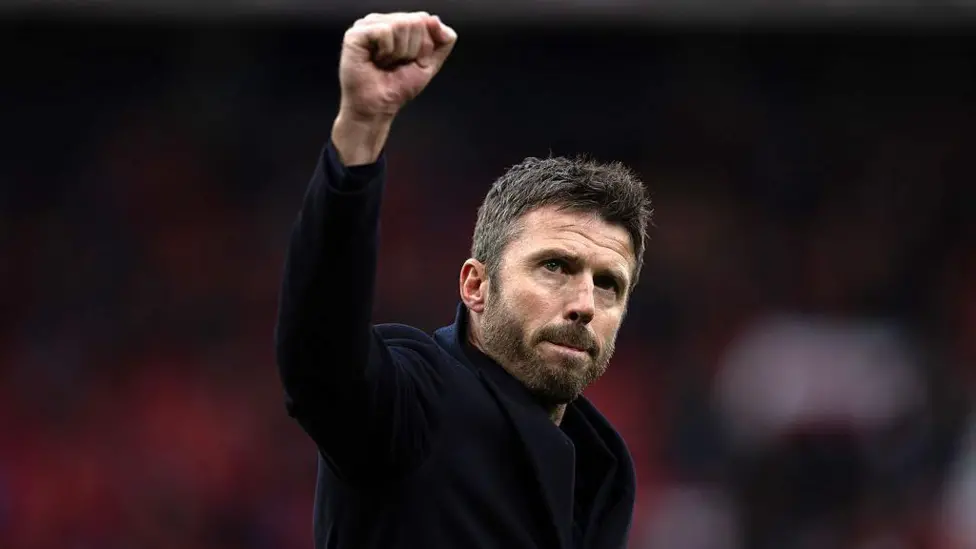
He named the three departures in turn. “There are different circumstances why it didn’t work out with Erik [ten Hag], and Ruben [Amorim], and now Michael [Carrick], and we are always learning and, as I said, trying to improve and understand what has failed.”
On what comes next, he said: “The challenge is we’re trying to find the right manager for the squad that we have with a specific set of skills in that moment to make them perform at their best level.”
He then accepted the criticism directly. “It’s true, we have to accept the criticism that we haven’t been able to achieve that stability with one coach and our aim is to do that as soon as possible. Of course, we hope now that Mauricio coming in will give us that stability that I think we all need.”
The latest example is the sacking of Carrick, which came less than six months after United handed him a two-year deal. Asked whether the club is actually progressing, Berrada replied: “It’s not good enough, not acceptable and that’s why we’ve made the change that we made so that we can move forward,”
He added: “But we are laying the foundations for sustained growth, to put us in a position where we can be competitive consistently. It’s not always been that.”
He also gave his own reading of where United stand. “Last year we finished third, we were happy with the squad, we were happy with the way we were going. And now, a few months later, we are not where we need to be. But the foundations are there and I am convinced that we are heading in the right direction. Very positive.”
Fair Criticism and the Line
Berrada and director of football Jason Wilcox have been at the centre of furious protests and anti-ownership chanting at matches this season. Supporters have singled out Wilcox at recent games, and there have been social media calls for both men to lose their jobs. Songs calling for minority owner Sir Jim Ratcliffe to leave are now sung regularly, one more strand of the protest against Sir Jim Ratcliffe that United have faced. Opposition to the Glazer family remains intense. Their leveraged buyout in 2005 left the club with debt that now exceeds £1bn.
Berrada accepted that the criticism of United’s leadership has mostly been fair, but he said some of it goes too far. “Being in this position comes naturally with the criticism and scrutiny we’re going to get,” he said. “We accept it. Some of it is fair, some of it does cross the line.”
He pointed to social media as a source of the unfair part. “We do live in this world of social media, where people like to generate negative stories about the club because it drives more engagement, and it drives more general noise and activity around the club. But we park that.”
The interview also covered the relationship between the Glazers and Ineos, the imminent departure of youngster JJ Gabriel and the decision to push ahead with a new stadium in the face of supporter backlash on matchdays.
The Left-Back Question
The summer decision that proved controversial was the back line. United spent in the region of £155million on three midfielders, Carlos Baleba, Andrey Santos and Youri Tielemans, and signed goalkeeper Karl Darlow on a free transfer. No defender arrived, and the back line had conceded 50 goals in the Premier League last season. Luke Shaw remains inconsistent with his fitness, and United have no natural back-up at left-back. Diogo Dalot and Noussair Mazraoui, both right-backs, have filled in when needed. Newcastle’s Lewis Hall was a target before he signed a new deal at St James’ Park, and Gary Neville has already argued over who is to blame in United’s defence.
Berrada addressed it in the interview. “When you look at the other areas of the pitch, and there’s a lot of discussion about the back line,” he explained. “But we did come into it thinking: we have depth.
“We have nine players that can play in the back line, in the back four positions. So that’s why we looked primarily at investing in the midfield. But we were always looking for opportunities.”
“I think it’s been widely reported that we were looking at potentially the left-back position as a reinforcement.”
“I think what we’ve seen in the back line is we’ve had injuries, it’s taken Matthijs de Ligt longer than we would want it to get back.”
“Unfortunately, Luke Shaw suffered a muscle injury that meant he was out for five or six weeks.”
“So could we have signed an additional defender to straighten the depth and the quality? Yes, but we have to find the right players and you have to find the right players at the right value.”
“There’s no point in us spending £40million, £50million for players that we’re not convinced are going to add value to the team.”
“So it’s always about being disciplined and finding the right opportunities and getting the right players that are going to take us forward.”
Berrada added: “When I talk about being disciplined, I talk about not overspending on players that don’t necessarily add quality to the team.
“Because when you sign a player that doesn’t work out for Man United, it becomes very difficult to move that player on or to get the sale we want. And that can set us back.”
“So when I talk about being disciplined, I’m not talking about necessarily not spending to get the top players.”
“We have the ambition to win, to win the Premier League, to win the Champions League, to win the domestic cups. And for that, we need top talent.”
“So when we find the right opportunities, we will spend. But what we don’t want to be doing is spending just for the sake of it.”
What Happens Next
Pochettino takes charge for the first time at Liverpool on Sunday, with United 18th in the Premier League. Berrada has put the stability problem on the leadership and named Pochettino as the man he hopes will end it. Anfield on Sunday is where that hope gets its first test.

Leave a Comment
More in News
Conte, 57, Tells Man Utd Doubters They Fear Winning After Pochettino Hire
Fifpro Tells Bayern to Know Better as Musiala, 23, Faces Contract Doubts
Alonso Admits Chelsea Are ‘Fragile’ After 4-1 Leeds Loss and Home Boos
De Zerbi Compares 18-Year-Old Williams-Barnett to Yamal After First Spurs Goal
Maresca Says Haaland’s 24th Minute Goal Was No Foul but Leno Disagrees
Trending on Futbol Chronicle
The Best Soccer Players of All Time: The 10 Greatest Ever Ranked

What Is The Club World Cup?
Michael Carrick admits Manchester United have “no excuses” after AC Milan defeat
What Is Offsides in Soccer? The Offside Rule Fully Explained