Bukayo Saka Carried England’s Cruellest Penalty Miss to the World Cup He Now Owns
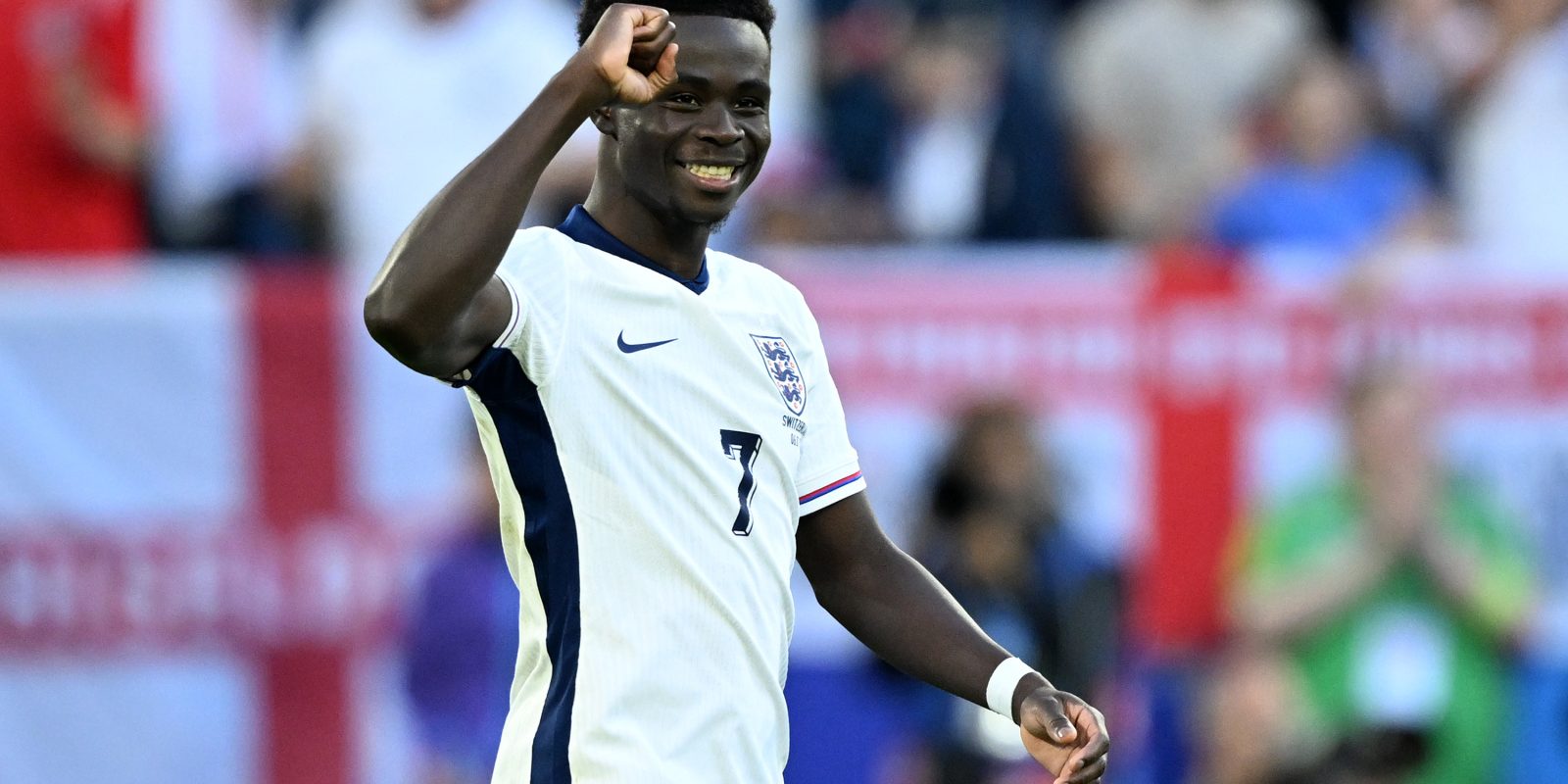

Table of Contents
On a July night at Wembley in 2021, England handed the most important kick of a generation to a teenager. Bukayo Saka was 19 years old. He had taken one competitive penalty in senior football before he placed the ball on the spot in the Euro 2020 final shootout against Italy. Gianluigi Donnarumma guessed correctly, pushed the ball away, and the trophy was gone. What came next turned a missed penalty into something uglier. Saka woke the following morning to a phone flooded with racist abuse, the same wave that hit Marcus Rashford and Jadon Sancho.
Five years on, the player who folded onto the Wembley turf walks into the 2026 World Cup as the man England most want on the ball when a match tightens. The story of how he travelled from that night to this tournament is not a tidy redemption arc. It is a study in how a quiet kid from west London learned to keep asking for the ball when most people would have hidden from it.
The Penalty That Could Have Ended Him
The image of Gareth Southgate crouching down to console his teenage forward became one of the defining pictures of that summer. Southgate had been the manager who put a 19 year old fifth in the order, and he carried that decision publicly. Saka carried something heavier. In the days after the final he posted a statement that read, in part, “There are no words to tell you how disappointed I was with the result and my penalty. I really believed we would win this for you.” He described the abuse that followed as “a sad reality” and pointed at the technology platforms that allowed it to spread.
Plenty of young players have been swallowed by less. A missed penalty in a final, broadcast to hundreds of millions, would have given anyone licence to step back into the shadows and let senior players take the heat next time. Saka did the opposite. When Arsenal returned to Premier League action that August, he was given a standing ovation by opposition supporters at Brentford. He scored soon after. The message he kept repeating, to teammates and in the rare interviews he gave, was that the abuse would not break him.
From Greenford to Hale End
Saka was born in Ealing, west London, in September 2001, to Nigerian parents. His father is from Edo State, his mother is Yoruba, and the household he grew up in was built on faith, family and discipline. Teachers at Greenford High School remember a polite, shy student who happened to be brilliant at football and quietly excellent in the classroom, leaving school with strong grades at a point when most academy prospects had long stopped caring about anything but the game.
He joined Arsenal’s Hale End academy at the age of seven and never left the club. That single-club loyalty is rare now, and it shapes how he plays. Saka came through a system that asked wingers to defend, to track back, to do the unglamorous work, and he carried those habits into the senior side. By 2018, still a teenager, he had broken into Arsenal’s first team. By the time England called, he was already a player managers trusted to be in the right place when the ball was lost, not only when it was won.
That blend of talent and humility explains why the abuse of 2021 landed so wrong with so many people. This was not a flashy character courting attention. This was a churchgoing teenager who had done exactly what his manager asked.
How Saka Turned the Wembley Wound Into Fuel
The clearest answer to that 2021 night came three years later. At Euro 2024, in the quarter-final against Switzerland, Saka scored a superb individual goal to drag England back into the tie, then stepped up in the shootout and buried his penalty. Donnarumma was not in goal this time, but the symbolism was impossible to miss. “To come back from something like that was really difficult,” he said afterwards. “I used it to make me stronger. Today I took the chance and I am happy.” Southgate, whose consolation of Saka had become an enduring image, said he could not have been prouder.
What gets lost in the highlight reels is how deliberate that comeback was. Saka volunteered to keep taking penalties for Arsenal and England in the years between the two tournaments. He did not wait to be eased back into the responsibility. He asked for it. For a player who had every reason to never want the spot again, that choice tells you more about his character than any goal.
Why Tuchel Builds England’s Attack Around Him
Saka arrives at this World Cup under a new manager. Thomas Tuchel is the first German to take charge of England, and his first major tournament in the job comes with the same weight of expectation every England boss inherits. You can read more about that in our look at Tuchel and England’s sixty years of hurt. For all the questions Tuchel has had to answer about his squad, Saka has rarely been one of them. He is among the most consistent attacking players England have produced in a generation, and Tuchel has leaned on him to provide width, end product and the discipline to protect his full-back.
Saka has now featured at three major tournaments. He knows the expectation England players carry better than almost anyone in the dressing room, and he sits alongside the emerging core that includes players like Kobbie Mainoo, whose own rise we covered in Mainoo’s six-month climb into the squad. The combination of experience and youth is exactly what Tuchel wants, and Saka is the bridge between the two.
The numbers back the trust. Across recent seasons Saka has been one of the Premier League’s most productive wide players for goals and assists combined, and he has done it while consistently ranking among Arsenal’s hardest workers without the ball. That two-way value is why he starts even when a manager wants more defensive cover.
What a Home From Home World Cup Asks of Him
This tournament, spread across the United States, Mexico and Canada, brings heat, travel and the kind of scrutiny that grows with every England match. For a player whose lowest professional moment came on the biggest stage, those conditions could read as a warning. Instead they look like the setting Saka has spent five years preparing for. The penalty miss is no longer the headline. It is the prologue.
His story also speaks to a wider shift in English football, where the children of immigrant families from Nigeria, Jamaica, Ireland and beyond now form the backbone of the national team. Saka, the son of a man from Edo State, wearing the Three Lions and carrying the hopes of a country that once let him be abused, is a reminder of how much the English game has changed and how much further the conversation around online abuse still has to go.
The Croatia Opener and the Familiar Faces Waiting
England begin their tournament against Croatia, a fixture loaded with history for this group of players. It was Croatia who ended England’s run at the 2018 World Cup, and it was a Croatia side built around Luka Modric that has tormented English teams in the years since. Saka was a schoolboy when that 2018 semi-final slipped away. Now he is one of the senior figures expected to make sure the result is different.
Tuchel has spoken about wanting his wide players to stay high and stretch defences that sit deep, and few teams defend a lead as cleverly as Croatia. That is the kind of problem Saka was built to solve. When opponents pack the middle of the pitch, England need someone who can beat a full-back one against one and deliver, and that has been Saka’s signature for Arsenal across the last four seasons. His ability to cut inside onto his left foot or hold the touchline and cross gives Tuchel two threats from one player.
There is a personal subplot too. Saka has become one of the most prominent voices in English football on the subject of online abuse, repeatedly urging social media companies to do more to protect players. He has turned the worst night of his career into a platform, speaking for younger players who do not yet have the standing to push back. That advocacy has made him a figure who carries weight off the pitch as well as on it, and it has deepened the bond between him and the supporters who refused to let the abuse define how they saw him.
If England are to go deep this summer, they will need their most reliable attacker to be at his best in the moments that decide knockout football. Saka has been there before, in the cruellest possible way, and come out the other side stronger. That experience, painful as it was, may turn out to be one of England’s quiet advantages.
When England need a goal in the closing stages of a tight knockout match this summer, the ball will find its way to the same right boot that was once the target of so much cruelty. Saka has spent five years making sure that, when it does, he will want it. That is the quiet triumph at the centre of his story, and it is why so many England supporters will be watching him more closely than anyone else.

Leave a Comment
More in News

Trent Alexander-Arnold Returns to the England Squad for the First Time in Over a Year, and Cole Palmer Is Back Too After Their World Cup Snub

Gabriel’s Boot Caught Emiliano Martinez in the Head, and a Five-Person Premier League Panel Ruled It Was Never a Red Card

Floyd Samba Scores a Debut Double as a Teenager

Tottenham Spent £300m This Summer and Have Not Scored in Four Premier League Games for the First Time in the Club’s 144-Year History

Cyle Larin Scored Once in 15 Games on a Failed Feyenoord Loan, and Is Now Outscoring Kylian Mbappe and Erling Haaland at Southampton
Trending on Futbol Chronicle
Cristian Romero completes €40m move from Tottenham to Atlético Madrid
Mikel Arteta backs ‘warrior’ Bruno Guimarães to make Arsenal stronger
Michael Carrick points to lack of sharpness after Manchester United draw with West Ham
The Best Soccer Players of All Time: The 10 Greatest Ever Ranked