
Cape Verde Has Half a Million People and Beat Cameroon to Reach the World Cup
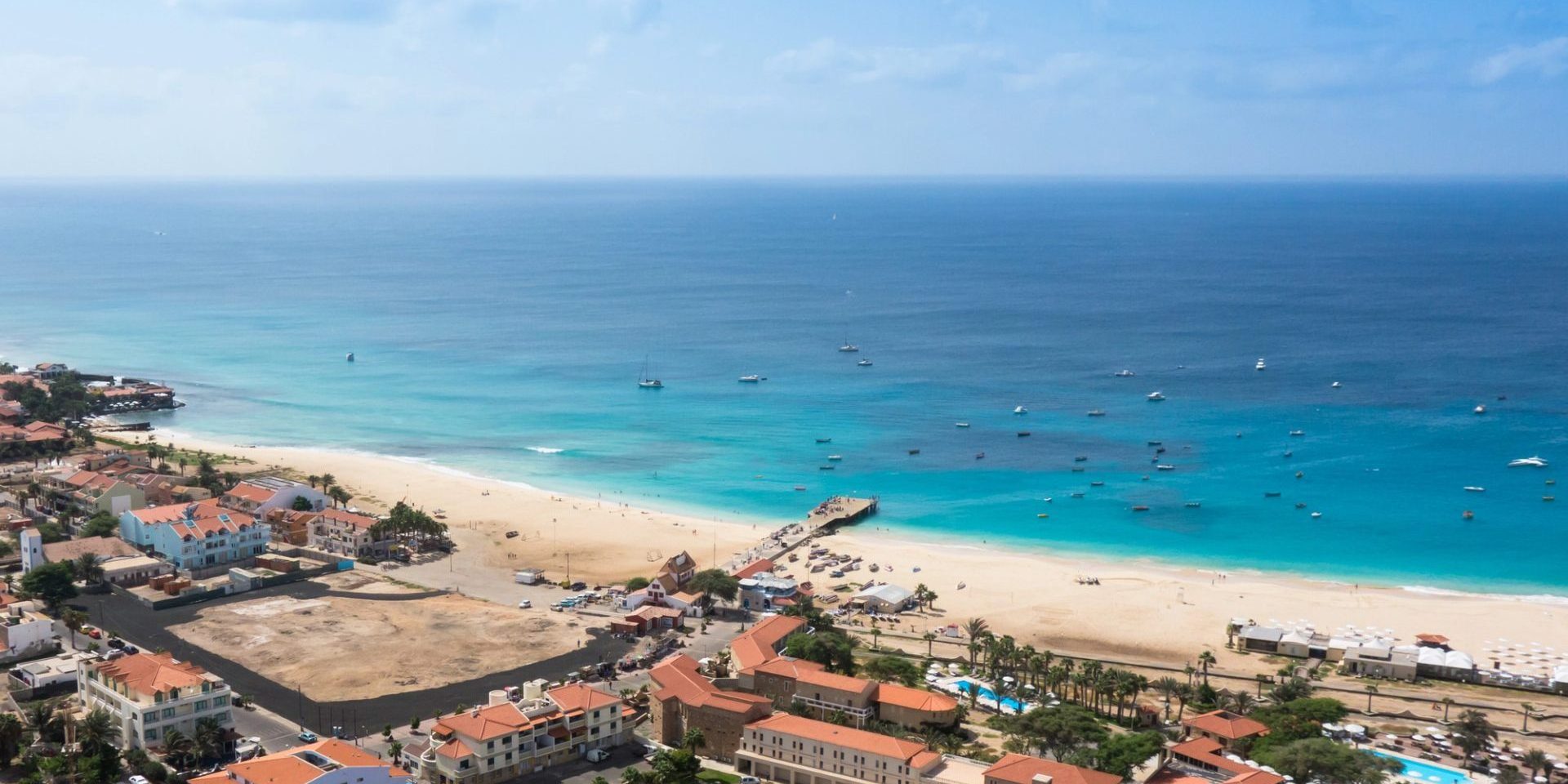

Table of Contents
On a September night in 2025, a chain of ten volcanic islands scattered off the west coast of Africa, home to barely half a million people, did something that should not be mathematically possible. Cape Verde beat Cameroon, a country forty times its size and a fixture at World Cups for decades, and in doing so all but booked a place at the biggest tournament in sport. When the final whistle confirmed qualification weeks later, the islands erupted. Cars filled the streets of Praia, flags hung from every window, and a nation that had never come close to a World Cup discovered it was going to one.
Cape Verde will be among the smallest countries ever to appear at a World Cup, a debutant with a population smaller than most host cities. Their story is not a fluke or a quirk of the expanded format. It is the result of a generation of players, many born far from the islands, choosing to represent the country of their parents and grandparents, and a coach who turned a scattered group into one of the most organised sides in Africa.
A Nation Smaller Than a Host City
To grasp the scale of what Cape Verde have done, start with the numbers. The country has a population of roughly half a million, which makes it one of the smallest nations ever to reach a World Cup. There is no enormous domestic league, no deep pool of home-based professionals, no history of football riches. The islands gained independence from Portugal only in 1975, and for most of the decades since, the idea of a World Cup was the stuff of daydreams rather than planning meetings.
What Cape Verde does have is a diaspora. Generations of Cape Verdeans have settled in Portugal, the Netherlands, France and beyond, and their children and grandchildren grew up in the academies of European clubs. The national team, nicknamed the Blue Sharks, has been built in large part by persuading these dual-eligible players to commit to the islands rather than the bigger nations where they were raised. It is a model several smaller countries have used, but few have executed it as well, and the result is a squad with European technical schooling and a fierce sense of belonging to a place many of them did not grow up in.
The Night They Beat Cameroon
The defining moment of the qualifying campaign came on 9 September 2025, when Cape Verde faced Cameroon, the five-time African champions and the group’s heavyweight. Cameroon have produced some of the most famous footballers the continent has ever sent to a World Cup. Cape Verde had never been to one. On paper it was a mismatch. On the pitch, a single goal from Dailon Livramento settled it, a 1-0 win that handed Cape Verde a four-point cushion at the top of their group and shifted the entire balance of the qualifying race.
It was the highlight of a remarkable run of five straight victories that carried the islands toward the finish line. There were wobbles, including a chaotic 3-3 draw away in Libya that threatened to undo the good work, but Cape Verde steadied themselves when it counted. A dominant win over Eswatini, with Livramento again opening the scoring, sealed top spot in the group, four points clear of Cameroon. The minnows had not snuck through on a technicality. They had finished ahead of a continental giant across a full campaign.
The Coach Who Made It Possible
At the centre of the achievement stands Pedro Leitao Brito, known to everyone as Bubista. A former Cape Verde player himself, Bubista understands the national team from the inside, and he built a side defined by organisation, discipline and a refusal to be intimidated by bigger names. His work was recognised across the continent when he was named CAF Coach of the Year for 2025, a rare honour for a man leading one of Africa’s smaller footballing nations.
Bubista’s genius was not in spending money he did not have or inventing some exotic system. It was in making a collection of players from different leagues and backgrounds play as a single, tight unit. He gave the team a clear identity, asked every player to do a defined job, and instilled the belief that a small country could stand toe to toe with the giants of African football. The phrase that followed the team through qualifying was that nothing is impossible, and Bubista turned that slogan into a tactical reality match after match.
The Players Carrying the Islands
Every great underdog story needs its faces, and Cape Verde have several. The captain, Ryan Mendes, is the country’s all-time leader in both appearances and goals, with 94 caps and 22 goals to his name, a veteran who has carried the national team through leaner years to this historic peak. He is the link between the Cape Verde that dreamed of a World Cup and the one that finally reached it, and lifting his country onto the global stage as captain is a fitting reward for years of service.
Then there is Dailon Livramento, the 24-year-old forward who became the team’s biggest attacking hope at exactly the right moment. His goals against Cameroon and Eswatini were not just important. They were the decisive strikes that turned qualification from a hope into a fact. A young player carrying the scoring burden for a debutant nation is the kind of figure tournaments fall in love with, and Cape Verde will lean on him to trouble defences that will, for once, not be taking the Blue Sharks lightly.
What Cape Verde Means for the Game
The expanded 48-team World Cup has been criticised for diluting the competition, for handing places to nations that might once have stayed home. Cape Verde are the rebuttal to that argument. They did not back into qualification through a soft expanded route. They topped a group containing Cameroon, beating the African powerhouse along the way, and they did it as one of the smallest countries ever to try. Their presence is proof that the bigger tent can let in genuine stories rather than makeweights.
For the islands themselves, the impact runs far beyond football. A World Cup appearance puts Cape Verde on television screens in every corner of the planet, draws attention to a nation many viewers could not place on a map, and gives a young generation at home a reason to believe their country belongs among the best. The diaspora that built the team will be watching from Lisbon, Rotterdam and Paris, and the islanders will be watching from Praia and Mindelo, all of them sharing the same impossible fact. Their tiny country is at the World Cup.
When Cape Verde walk out at the World Cup, they will represent every small nation that was ever told it was too little to dream big. Half a million people, ten islands, one squad stitched together from across two continents, and a coach who refused to accept the limits everyone else assumed. They have already won the part that seemed unwinnable, which was getting there at all. Whatever happens once the tournament begins, the Blue Sharks have rewritten what a country their size is allowed to achieve, and no result can take that away.

Leave a Comment
More in News
Arab football federations back Gianni Infantino as FIFA president faces growing opposition
Celta Vigo postpones LaLiga opener after fungus outbreak damages stadium pitch

Tottenham Agree £34m Cristian Romero Sale to Atletico Madrid After Turbulent Season
Lionel Messi returns to Inter Miami as Leagues Cup campaign ends with Club León defeat

Chelsea set Friday deadline for clubs interested in Enzo Fernández
Trending on Futbol Chronicle
Why Soccer Is The Best Sport
What Is Offsides in Soccer? The Offside Rule Fully Explained

Michael Carrick points to lack of sharpness after Manchester United draw with West Ham

Map of All the Premier League Teams for 2025/26