
Rogers’ Handball Was Correct in Law, but Shearer Says Common Sense Lost


Table of Contents
- Chelsea conceded a handball penalty against Morgan Rogers in a 4-1 home defeat by Leeds on Saturday, per BBC Sport.
- Rogers raised his arm to the flight of Jayden Bogle’s shot, and that deliberate act made the penalty correct in law.
- Alan Shearer and Xabi Alonso both say the penalty should not have been given.
Why a Penalty That Fits the Law Still Feels Wrong to So Many
Jayden Bogle shot from distance, Morgan Rogers’ arm came up, the ball deflected away, and Michael Oliver pointed to the spot. That penalty put Leeds ahead for the first time in a 4-1 win at Stamford Bridge, their first there after a wait that began in 1999. Alan Shearer did not agree with the decision. Xabi Alonso would not have given it. The law, as the Premier League applies it, says Oliver got it right, and that gap between instinct and rule has reopened the argument over handball.
What Rogers did and why VAR stayed out
Two of the factors a referee weighs in a handball decision apply here. The first is how far the ball travelled. Bogle’s shot came from distance, and a defender in that position has more time to adjust his body and react, which gives him the chance to avoid a handball.
The second is the movement of the arm, and it decides this case. When Bogle shot, Rogers’ arm was not raised. It came up to meet the flight of the ball. Had Rogers left it in its original position, lower and level with his midriff, there would have been no offence. If the ball would have struck the body anyway had it not come off the arm, the contact is treated as having no impact.
That is not what happened. Rogers raised his arm, and that is what deflected the ball away. The law treats it as a deliberate act, and a deliberate act trumps every other consideration. Premier League clubs feel handball is in a good place, with a penalty given only when the arm is fully extended away from the body, raised, or deliberate. The last of those applied to Rogers.
VAR Michael Salisbury had one possible reason to step in: whether the ball hit Rogers too high on the arm. It was close, but it looked to be inside what the laws call the “red zone”, the part of the arm that is punishable for handball. Salisbury was left out of the final round of last season’s fixtures after a Manchester United VAR controversy.
Shearer and Alonso say the penalty was wrong
Many observers want the Premier League’s already relaxed handball interpretation to go further. Shearer, a Match of the Day pundit, echoed them by saying there should be more intent needed for a handball.
“I didn’t agree with the penalty when Michael Oliver gave it,” he said.
“I know once the on-field decision is made there is a high bar to review it, but I don’t think officials are allowed to use common sense.
“Morgan Rogers is not deliberately trying to stop the ball. He just doesn’t want it hitting him in the face.
“Although the penalty came at an important point in the match, Chelsea were deservedly beaten by a much stronger, far more physical and better-organised Leeds team.”
Alonso, the Chelsea head coach, said he did not want to make a fuss, but he was clear about the decision.
“For me it was quite a harsh decision,” he said. “I would not have given a penalty. I don’t want to make a big thing about it but for me it’s not a penalty.”
Rogers, whose move to Chelsea was agreed in July, could argue that he lifted his arm to protect his face. Protecting the face is one of the recognised mitigating factors, but it usually applies only when a player raises his hands to his face, not when he uses the arm as a barrier.
A rare call, and not the first like it
Handball penalties are scarcer in England than elsewhere in Europe’s big leagues. Last season the Premier League had 22 in 380 games, easily the lowest total of the top five leagues. La Liga produced 36 and Serie A 38. This season there have been three in 106 matches, a lower rate than last season’s.
A similar call went Leeds’ way last season. Everton’s James Tarkowski leaned to his left to block Anton Stach’s powerful strike, and his arm was tucked tightly to his side. Everton manager David Moyes called the decision “wrong”. It was correct in law: the lean into the path of the ball was a deliberate act, so where the arm sat was irrelevant.
The law has frustrated fans before, as this explainer on Harry Maguire’s handball goal showed.
The Premier League approach has not changed: the arm must be fully extended, raised or deliberate. Rogers raised his arm to the flight of the ball, and under that test the penalty stands. Shearer, Alonso and many observers want intent to count for more. Until the wording changes, Oliver’s call stands as the law is written.

Leave a Comment
More in News
Courtois Says Messi, 39, Deserved Red for Ball Thrown in Tapia’s Face

Guimaraes, 29, Booed Throughout Return to Newcastle, Then Admits Frustration After Draw

Fernandes, 32, Pauses Man Utd Talks: ‘First One Walking Out the Door’

Palmer, 24, Skips Fans After 4-1 Leeds Loss, Has Words With Pedro

Conte, 57, Tells Man Utd Doubters They Fear Winning After Pochettino Hire
Trending on Futbol Chronicle

The Best World Cup YouTubers to Follow in 2026

Mikel Arteta backs ‘warrior’ Bruno Guimarães to make Arsenal stronger

The Best Soccer Players of All Time: The 10 Greatest Ever Ranked
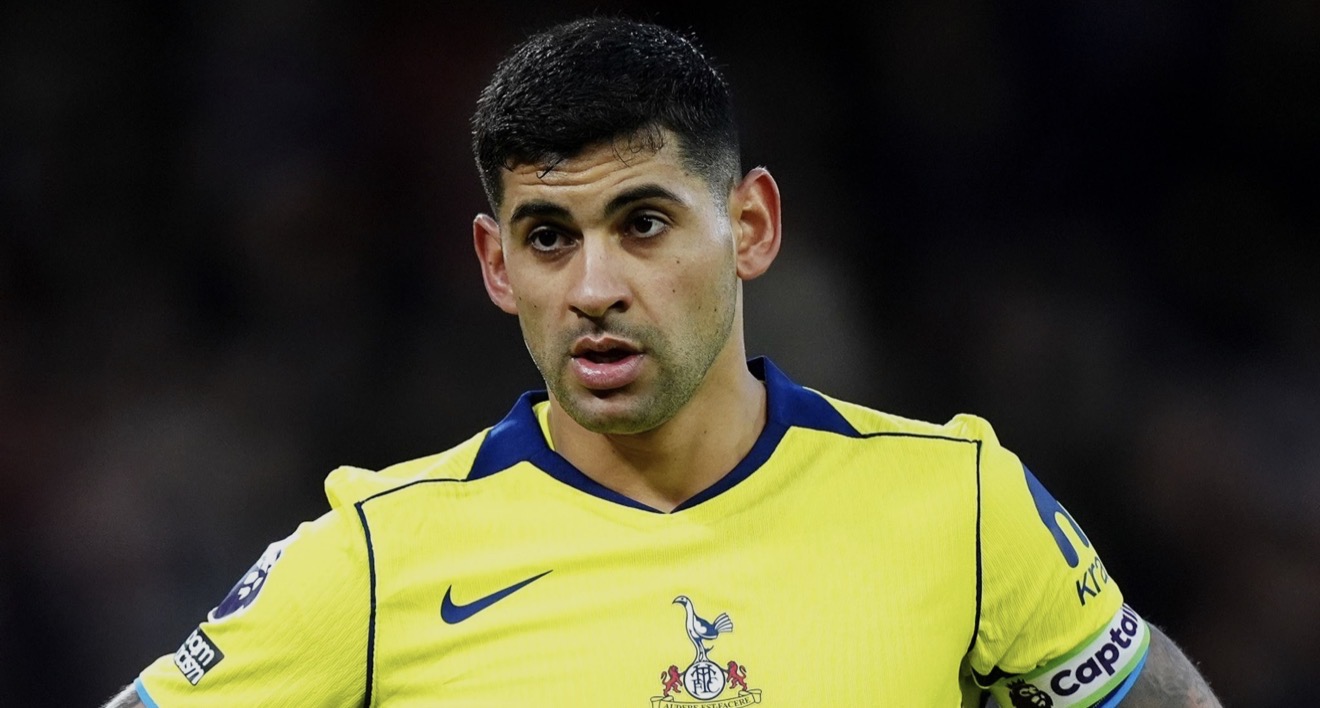
Cristian Romero completes €40m move from Tottenham to Atlético Madrid