Carlos Queiroz Reaches a Fifth Straight World Cup and Now Faces England With Ghana
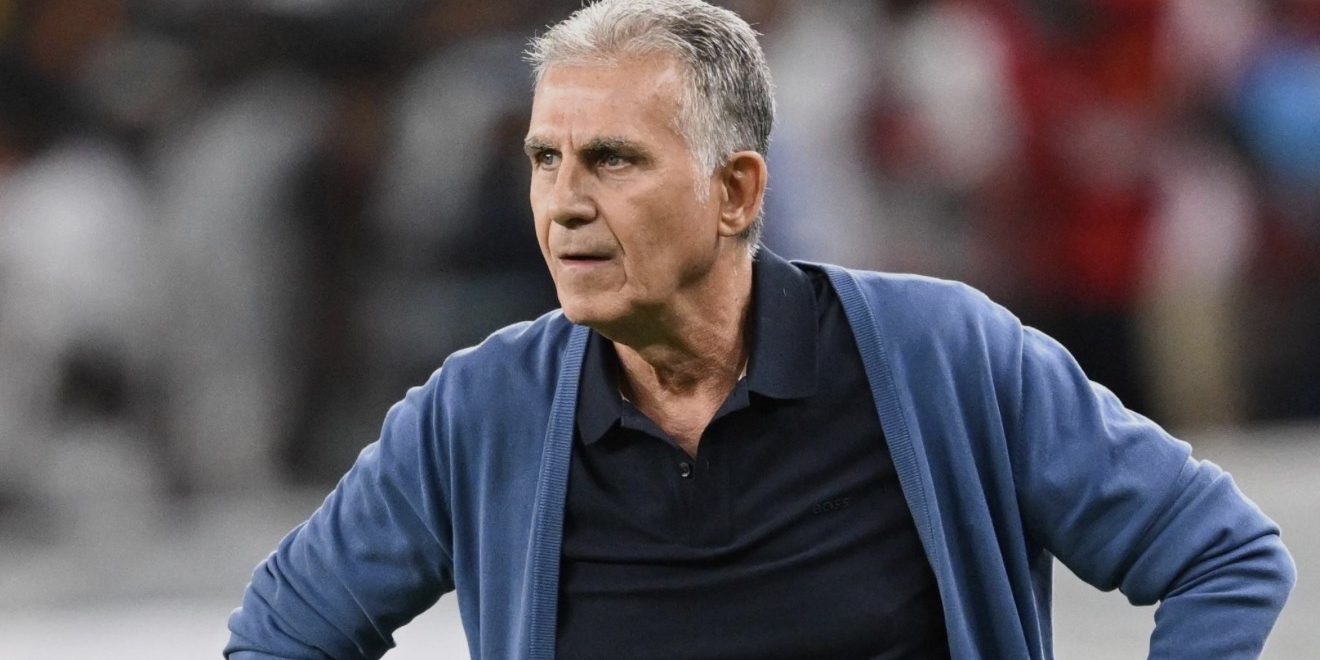

Table of Contents
When Ghana walk out at Gillette Stadium on 23 June to face England, the most travelled man on either touchline will not be a player. He will be the 73 year old in the Ghana technical area, a coach who has stood at five consecutive World Cups, worked on four continents, and managed Real Madrid, Manchester United and Portugal’s golden generation. Carlos Queiroz has spent half a century in the game, and somehow his strangest assignment yet might be the one in front of him now: taking charge of the Black Stars less than two months before a World Cup and asking them to upset the country where most of his squad earns its living.
From Mozambique to the Touchlines of the World
Queiroz was born in Nampula, in what was then Portuguese Mozambique, in 1953. His route into football was not as a player of any renown but as a goalkeeping coach and a teacher of the game, a man who thought about structure and preparation long before those words became fashionable. His breakthrough came with Portugal’s youth teams, where he guided the side that won back-to-back FIFA World Youth Championships at the end of the 1980s. That team produced Luis Figo and Rui Costa, the players who would become the spine of Portugal’s celebrated golden generation, and it established Queiroz as one of the most respected developers of talent in European football.
What followed was a career with few parallels for sheer range. He coached in South Africa, taking the national team to the brink of a World Cup. He spent years as Sir Alex Ferguson’s assistant at Manchester United across two spells, widely credited as a key tactical influence during one of the club’s most successful periods. He had a season in charge of Real Madrid. He returned to lead his native Portugal at a World Cup. And then he began the long association with Iran that defined the middle of his career, building one of the most organised defensive teams in international football and taking them to multiple tournaments.
Along the way there were posts with Colombia, Egypt and Qatar, each a different culture, a different football problem to solve, a different group of players to convince. Few coaches in the history of the sport have adapted to so many environments. Fewer still have done it while maintaining a clear, recognisable identity in how their teams play.
Five World Cups, Three Different Flags
Ghana represents Queiroz’s fifth consecutive World Cup as a head coach, a run that stretches back across the better part of two decades. He led Portugal at the 2010 finals, guiding them to the knockout phase. He took Iran to the 2014, 2018 and 2022 tournaments, turning a side that had often flattered to deceive into one that no opponent enjoyed facing. Now he adds Ghana to the list, a third different nation to lead onto world football’s biggest stage.
That consistency is its own kind of achievement. Plenty of coaches reach a single World Cup and build a reputation on it. To keep being trusted with the job, across different federations and different generations of players, requires something rarer than a good tournament. It requires a method that travels. Queiroz’s calling card has always been organisation, a defensive shape that frustrates superior opponents and a meticulous attention to the details of preparation. His Iran sides held some of the best teams in the world for long stretches, and they did it through discipline rather than individual brilliance.
The Ghana appointment, confirmed in April, gave him almost no time to impose that method. Fewer than two months separated his arrival from the opening match, a window that would terrify most coaches asked to install a new system. Queiroz has done it before, parachuting into national jobs and finding a way to make a team competitive at speed, but rarely with the stakes this high and the runway this short.
The Black Stars Find a Way
The early signs suggest the formula still works. Ghana, four-time African champions but a side that has known plenty of disappointment in recent years, opened their Group L campaign with a hard-fought 1-0 win over Panama at BMO Field in Toronto. It was not a performance to set the tournament alight. Panama controlled long stretches, and Ghana had to dig in and wait. Then, deep into stoppage time, Caleb Yirenkyi struck the winner, and Queiroz’s side had three points from a game many felt they had been second best in for an hour.
That is a very Queiroz result, the kind of gritty, unglamorous victory his teams specialise in. Afterwards, the coach struck a confident note about what his squad could still become. “With the football we played today, we can count on Ghana to do something,” he said, before suggesting his team could achieve something special at the tournament. Coming from a man who has seen four previous World Cups from the inside, it was less a boast than a considered assessment from someone who knows exactly how far organisation and resilience can carry a team.
The win over Panama means a victory against England would guarantee Ghana a place in the knockout rounds with a game to spare, a remarkable position for a team assembled under such time pressure. It also sets up a fixture with a peculiar subtext, because the players Queiroz will send out against England have spent their careers learning the game in English football.
A Reunion Dressed Up as a Group Game
The meeting with England is loaded with connections. Ghana’s squad is heavily populated by players developed in or competing within the English game, which turns a Group L fixture into something closer to a reunion. Queiroz, the former Manchester United assistant who knows English football’s rhythms intimately, will be plotting to undo a team built around the very league he helped shape. There is a neat symmetry in a coach who spent years in the dugout at Old Trafford now trying to send English players home from a World Cup using players England knows well.
For England, the danger is obvious. Thomas Tuchel’s side conceded twice in their opening win over Croatia, and Queiroz has built a career out of exploiting exactly that kind of defensive uncertainty. A Ghana team set up to absorb pressure and strike on the counter, organised by one of the most experienced tournament coaches alive, is precisely the sort of opponent that has tripped up English sides in the past. Tuchel will know that a single lapse against a Queiroz team can decide a match.
Whatever happens on 23 June, the longevity is the story. Carlos Queiroz has been preparing teams for World Cups since before some of England’s players were born, adapting his message to Portuguese teenagers, Iranian internationals and now a Ghanaian side he barely had time to meet. Most coaches measure their careers in clubs. Queiroz measures his in continents and decades. At 73, with a fifth straight World Cup underway and a meeting with English football’s elite ahead of him, the old teacher from Nampula is still finding new players to convince, and still, by the look of that win over Panama, finding ways to win.

Leave a Comment
More in News
‘You Ain’t Going to Win’: Carrick Was Right, United’s Numbers Show It
Gianni Infantino Gets Re-Election Boost as Asia Chief Drops His Criticism
Oliver Glasner Insists Forest Deserve More After Five Defeats in Eight Games
Xabi Alonso Turned Pedro Neto Into Chelsea’s Wing-Back After £100m Price Tag
Michael Carrick Refuses to Rule Out Dropping Bruno Fernandes in Emotional Address
Trending on Futbol Chronicle
Cristian Romero completes €40m move from Tottenham to Atlético Madrid
Michael Carrick admits Manchester United have “no excuses” after AC Milan defeat
Mikel Arteta backs ‘warrior’ Bruno Guimarães to make Arsenal stronger
The Best Soccer Players of All Time: The 10 Greatest Ever Ranked