Tuchel’s Own Warning About Playing Scared Comes Back to Bite Him at the World Cup
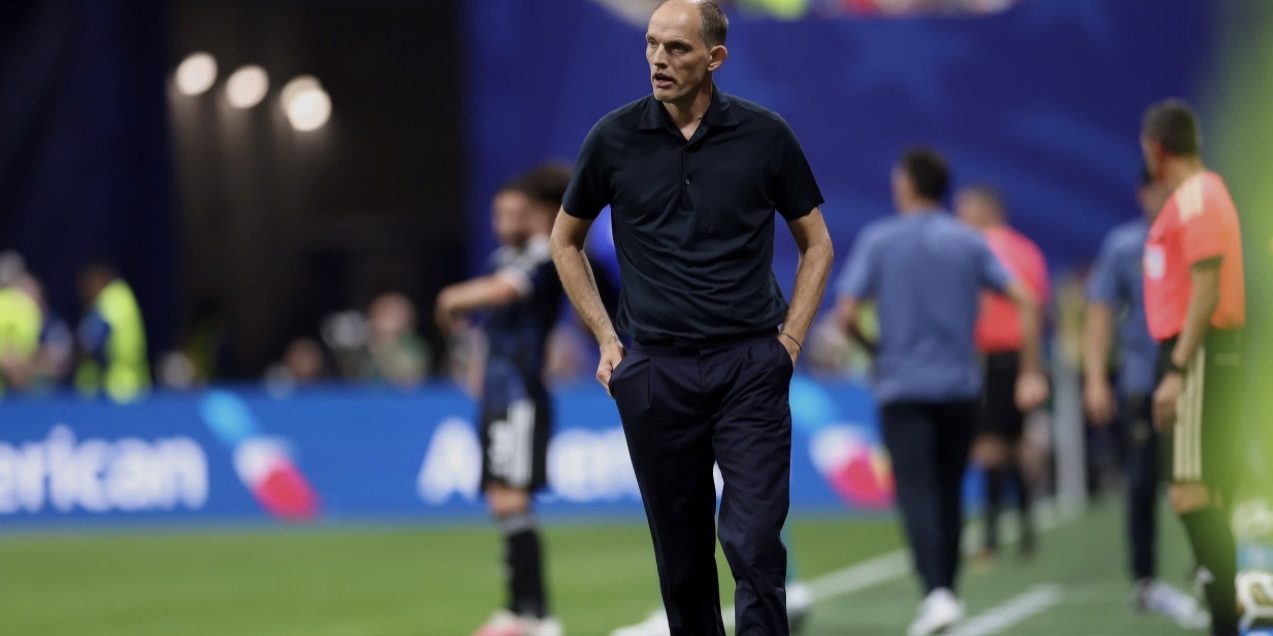

Table of Contents
Five minutes and stoppage time stood between Thomas Tuchel and a first England World Cup final in 60 years. Anthony Gordon had put the Three Lions 1-0 up against Argentina, the tournament favourites were chasing the game, and England had the mentality Tuchel had spent two years promising to build. Then Tuchel sent on a third centre-back, England dropped deeper, and Argentina scored twice in seven second-half minutes to win 2-1 in Atlanta.
The defeat has put Tuchel’s methods under the sharpest scrutiny of his England reign, and it has revived a set of his own words that now read very differently than they did when he first said them.
The substitution that changed everything
Gordon’s goal gave England the platform to reach a first final in six decades. Argentina had created little before that point, and for a spell England, briefly, had the world champions exactly where they wanted them: chasing a game, stretched, and short of answers. What followed has become the defining moment of Tuchel’s reign so far, replayed on television and picked apart by former players in a way few single substitutions in England’s recent history have been.
On 72 minutes, with his side still ahead, Tuchel switched to a back five. The change was designed to protect the lead. Instead, it altered the entire shape of the contest. Argentina reacted by throwing more attackers forward. England, set up to defend rather than press, sat deeper and deeper. Sky Sports pinpointed a 21-minute stretch of play as the passage that decided the game, with the pressure building until Argentina scored twice before the final whistle to complete the turnaround.
Tuchel has said he did not expect his team to retreat as far as it did once the extra defender came on, which places some of the responsibility for what followed on his players as much as his own selection. Would England have held on with a back four intact? It is the question that will follow this squad through the coming weeks. Sky Sports reported that the Football Association is not reviewing Tuchel’s position, and that he remains contracted through Euro 2028 having signed a two-year extension before the tournament began. Former England midfielder Jamie O’Hara said publicly that Tuchel should be sacked over the substitutions, a sign of how badly the collapse has landed with sections of the English game, even with the manager’s job safe for now.
A promise that has not held up
Before he took charge of England, Tuchel assessed the team’s defeat to Spain in the European Championship final under Gareth Southgate in blunt terms. His verdict at the time was that the players had been “more afraid to drop out of the tournament than having the hunger and excitement to win it.”
It was a sharp line, and it doubled as a pledge. Tuchel’s England would be built differently: braver on the ball, more willing to take the game to opponents, and ready to embrace the biggest moments rather than manage them.
For long stretches of this World Cup, that team showed up. England overwhelmed Croatia in an exhilarating spell after half-time in the opening match. Against Mexico, Jude Bellingham scored twice in a matter of minutes as England played with purpose and real conviction. Those were the passages of football Tuchel had described wanting to build when he took the job, moments where his team looked capable of imposing itself on elite opposition rather than simply reacting to it. For a manager who had made his name on detail and control, these were the signs that the project was taking shape the way he had planned it.
Against Argentina, with a place in the final within touching distance, England did the opposite. The team built to seize the moment instead protected what it already had, and lost it anyway. The manager who had criticised his predecessor’s players for playing not to lose appeared, in the biggest match of his own tenure, to coach that same instinct into his own team. The psychology of the contest shifted the moment the substitution went on: England retreated, Argentina advanced, and the pressure that followed proved impossible to hold off. It is a difficult contradiction to reconcile, and one that will sit with Tuchel through the rest of this tournament and beyond it.
Questions that trace back to squad selection
The scrutiny on Tuchel does not stop at his in-game decisions. His original squad selection has come under fresh examination now that England are out of the tournament.
Tuchel left out Trent Alexander-Arnold, Harry Maguire and Cole Palmer, who had scored in a European Championship final two years earlier. He justified the calls at the time by talking about wanting specialists in every position. That approach was tested before a ball was even kicked against Argentina, with Djed Spence and Morgan Rogers both starting out of position, with few natural alternatives left on the bench.
Declan Rice and Bukayo Saka both carried injury concerns into the tournament. Tuchel’s choice of Noni Madueke as his back-up right winger, while leaving Adam Wharton, England’s only other recognised holding midfielder, at home, has drawn scrutiny given those fitness doubts. When Reece James suffered a hamstring injury against Ghana in the group stage, Tuchel said “no-one could see it coming.” Plenty inside English football viewed it as a risk from the outset, given that James’s own back-up, Tino Livramento, had missed more than 30 club games through injury the previous season.
None of those decisions alone cost England their place in the final. Taken together, they form a pattern that has followed Tuchel through the tournament: bold calls made with conviction, several of which did not survive contact with the knockout stages. It is the kind of pattern that invites a simple question. Had some of it already gone wrong before England ever kicked a ball against Argentina, in the squad list announced weeks earlier?
An unwanted farewell fixture
England’s World Cup now ends with Saturday’s third-place play-off against France in Miami, a fixture Tuchel himself has described as one nobody wanted to play. “None of our players and none of the French players want to play this match,” Tuchel said after the semi-final defeat. “They want to play the final. We gave everything to achieve that.”
It is an unforgiving way to close out a tournament that, for large parts, showed genuine promise. England arrived with a manager who talked openly about winning the World Cup at the first attempt, adding a second star to the shirt, and ending decades of near misses. Instead, the squad now has to find the motivation for a dead rubber against opponents who are equally deflated, less than 48 hours after the biggest disappointment of the campaign. Both sets of players will walk out in Miami carrying the same question: how do you summon anything for a match that decides nothing beyond bragging rights?
Tuchel has faced difficult weeks before in his career and has generally found a way through them. What makes this one different is the shape of the argument against him. It is not that his England side lacked quality, spirit or moments of real brilliance across the tournament. It is that the manager who built his reputation on identifying exactly what had gone wrong for his predecessors could not, in the biggest moment of the tournament, stop the same fault line from opening up under his own watch. That is the version of this story that will follow him into Saturday’s match and into the rebuild that starts the day after it.
What comes next
Beyond Saturday, Tuchel is contracted to lead England into Euro 2028, with Spain due to visit Wembley in September as the rebuilding process begins. His job is not in question. What is in question, after this tournament, is whether the manager who diagnosed English football’s biggest psychological flaw so precisely can find a way to stop his own team from repeating it.
The irony will not be lost on anyone who watched Tuchel deliver that verdict on Southgate’s players two years ago. He wanted England to dictate games, to make opponents uncomfortable, and to embrace the biggest occasions without fear. For 72 minutes against Argentina, his team did exactly that. Then, with the game there to be won, it stopped asking questions of Argentina and started protecting what it had. Same old story, just with a different manager standing on the touchline, and a set of his own words waiting to be replayed back at him.

Leave a Comment
More in News
Bowen’s Saved Penalty Costs West Ham a Shot at Top Spot

Cole Palmer Missed England’s World Cup Squad This Summer, and His Club Have Just Backed Him With a Deal Running to 2034
Enzo Maresca Insists Manchester City’s Titles Are Not Tainted After the Club Was Found Guilty on 115 Charges
Michael Carrick Lost Two Title Races to Manchester City, and United Fans Now Mark 50 Years Without a Trophy

Jarell Quansah Was Never Liverpool’s Top Academy Prospect, and He Has Already Won Eight England Caps
Trending on Futbol Chronicle
Celta Vigo postpones LaLiga opener after fungus outbreak damages stadium pitch
Cristian Romero completes €40m move from Tottenham to Atlético Madrid
Josef Martinez Returns to MLS Spotlight With Columbus Crew Signing
Michael Carrick admits Manchester United have “no excuses” after AC Milan defeat