Pau Cubarsi Is One Win From World Cup History and Nobody Is Talking About It
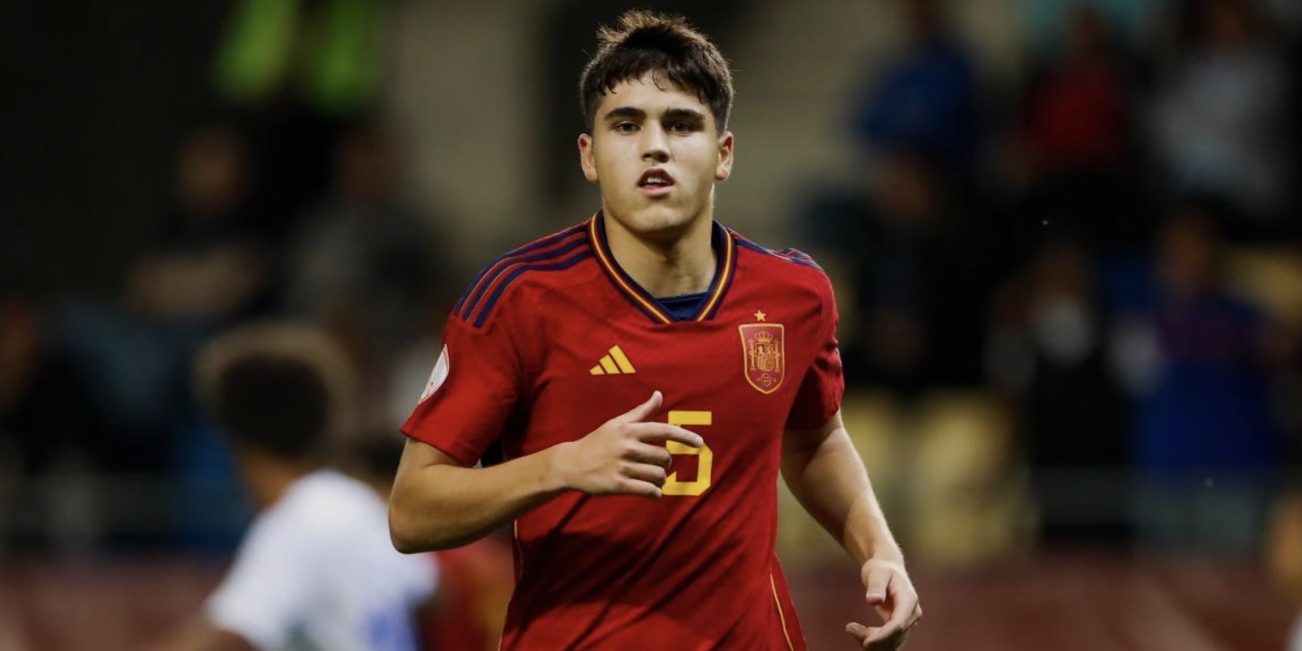

Table of Contents
Everybody at this World Cup is talking about Lamine Yamal. Almost nobody is talking about the 19-year-old standing next to him in defence, and that suits Pau Cubarsi just fine.
Cubarsi shut down Kylian Mbappe for 90 minutes in Spain’s 2-0 semi-final win over France in Dallas, the sixth clean sheet of seven games at this World Cup for a Spain side now unbeaten in 37 matches across all competitions. Former Barcelona player Oscar Garcia has watched Cubarsi’s rise closely and does not hesitate when asked how good he can become. “I am sure he will be one of the top five centre-backs in history,” he tells Sky Sports. On Sunday, in the final against Argentina, Cubarsi has the chance to become just the fourth man to start and win a World Cup final in his teens, a club that currently includes Pele and Mbappe.
The Job Nobody Notices
Spain’s semi-final win over France was built on defensive control rather than the attacking flair the team is better known for. Aymeric Laporte made 76 passes in the match to Cubarsi’s 32, a split that reflected the job Cubarsi had been given: use his pace and reading of the game to nullify Mbappe, the one player France’s opponents had spent all summer failing to stop. Nobody on the pitch made more clearances than Cubarsi that night.
“It is difficult in the youth department for people to talk about you,” Oscar Garcia says. “Normally, they will talk about a Lamine Yamal, a Lionel Messi, these kind of players. Not a centre-back. But for me, Cubarsi is fantastic.” Asked to explain what separates him, Garcia points to Cubarsi’s composure under direct pressure. “In those one-on-one situations, he is really strong, and clever.”
A Passer First, a Defender Second
What makes Cubarsi unusual for a teenage centre-back is what he does once he has the ball rather than what he does without it. Only Rodri has made more passes than Cubarsi at this World Cup. Only a handful of players at the tournament, Messi and Michael Olise among them, have completed more through-balls, and no player has sent more passes into the opposition half than the Barcelona defender. His pass completion rate at the World Cup stands at 96.2 per cent.
Yamal himself has said Cubarsi is one of the three best players in the world at bringing the ball out from the back. There was a reminder of his attacking value in the quarter-final against Belgium, when a shot from Cubarsi was spilled by goalkeeper Senne Lammens for the winning goal.
“He is really young, but he is very good in the build-up, because the first pass by him, it is always fantastic,” Garcia says. “He eliminates a lot of players from the opposition and does not miss the passes.”
Learning in Public
Cubarsi made his LaLiga debut before he turned 17 and has already made more than 100 appearances for Barcelona. “If Hansi Flick had to choose one defender to start every game, it would be Cubarsi,” Garcia says. Spain coach Luis de la Fuente has reached the same conclusion at international level.
The role has not come without difficult moments. Cubarsi was sent off against Atletico Madrid at the Estadio Metropolitano in April, in the match that ended Barcelona’s Champions League campaign. Garcia sees that setback as part of the price of playing centre-back at the top level so young. “To play as a centre-back at his age, for the big teams, it is the most difficult position,” he explains. “Because if you leave a lot of space behind you then you have to be very clever and very fast to be able to read the game.” Barcelona’s high defensive line leaves exactly that kind of space behind their back four.
“I like that they are really brave,” Garcia says of the way Barcelona and now Spain ask Cubarsi to defend. “They put the line of defenders very, very high. They leave the space because they want them to be close to press the opponent. They are not afraid to play against fast players like Mbappe and Vinicius Junior with this same style.” No player at this World Cup has successfully played the offside trap more times than Cubarsi, timing his line to catch attackers even faster than himself.
How Dallas Was Won
Spain’s win in Dallas came from two separate passages of play rather than a sustained battering of France. Mikel Oyarzabal converted a 22nd-minute penalty after Lucas Digne fouled Yamal as the France defender tried to clear the ball, and Pedro Porro added the second in the 58th minute after exchanging passes with Dani Olmo. In between and after, it was Cubarsi’s part of the pitch that stayed quiet, which against this opponent was the entire point. Luis de la Fuente called his players’ effort faithful to an idea Spain have built for almost four years, adding that they “make the difficult look easy.”
The Numbers Behind the Clean Sheets
Six clean sheets from seven games at this World Cup is the platform underneath Spain’s unbeaten run of 37 matches across all competitions, a joint record for a European nation. That record rests on Cubarsi and Laporte at its centre, with Cubarsi’s reading of the game allowing Spain to defend with a back line that pushes high up the pitch rather than sitting deep to protect a lead. It is a braver approach than most teams would risk with a teenager anchoring it, and so far this summer it has held up against every forward line put in front of it, Mbappe included.
One Win From an Elite Club
Only four players have started and won a World Cup final as teenagers, Pele and Mbappe among them. If Spain beat Argentina on Sunday in New Jersey, Cubarsi and Yamal will both join that group in the same match, taking the number to five. For a player operating in a position that rarely draws attention at youth level, that would be a remarkable line to add to a resume still just three years into senior football.
Garcia is in no doubt about where credit belongs, even with Yamal drawing most of the headlines heading into the final. “Everybody talks about Lamine Yamal and he is obviously a fantastic, decisive player,” he says. “But, for me, Cubarsi is key.”
The Final Test
Sunday’s opponents will pose a different problem to the one Cubarsi solved against France. Argentina reached the final with a stoppage-time win over England built on Lionel Messi’s influence in the closing stages of matches rather than a single early threat like Mbappe. Cubarsi and Laporte will need the same composure that shut down Dallas to do it again in New Jersey, this time against a forward line that has shown all summer it can strike when a game looks settled.
For a teenager who is still measured by comparison to a more famous team-mate his own age, Sunday offers the clearest chance yet to be judged on his own terms. Whatever happens in the final, the assessment from someone who has watched him build his career from the inside will not change. Cubarsi is, in Garcia’s words, still learning, and still getting better at a rate few defenders his age have managed before him.

Leave a Comment
More in News

Tottenham Spent £300m This Summer and Have Not Scored in Four Premier League Games for the First Time in the Club’s 144-Year History

Cyle Larin Scored Once in 15 Games on a Failed Feyenoord Loan, and Is Now Outscoring Kylian Mbappe and Erling Haaland at Southampton

Why Haaland’s Man Utd Winner Should Never Have Stood, Officials Stood Down

Peter Schmeichel Calls for VAR to Be Scrapped After Manchester Derby Debacle

Philippe Coutinho Was Mentally Exhausted and Without a Club Seven Months Ago, and Has Just Signed for Santos to Reunite With Neymar
Trending on Futbol Chronicle
The Best Soccer Players of All Time: The 10 Greatest Ever Ranked
What Is The Club World Cup?
Why Soccer Is The Best Sport
What Is Offsides in Soccer? The Offside Rule Fully Explained