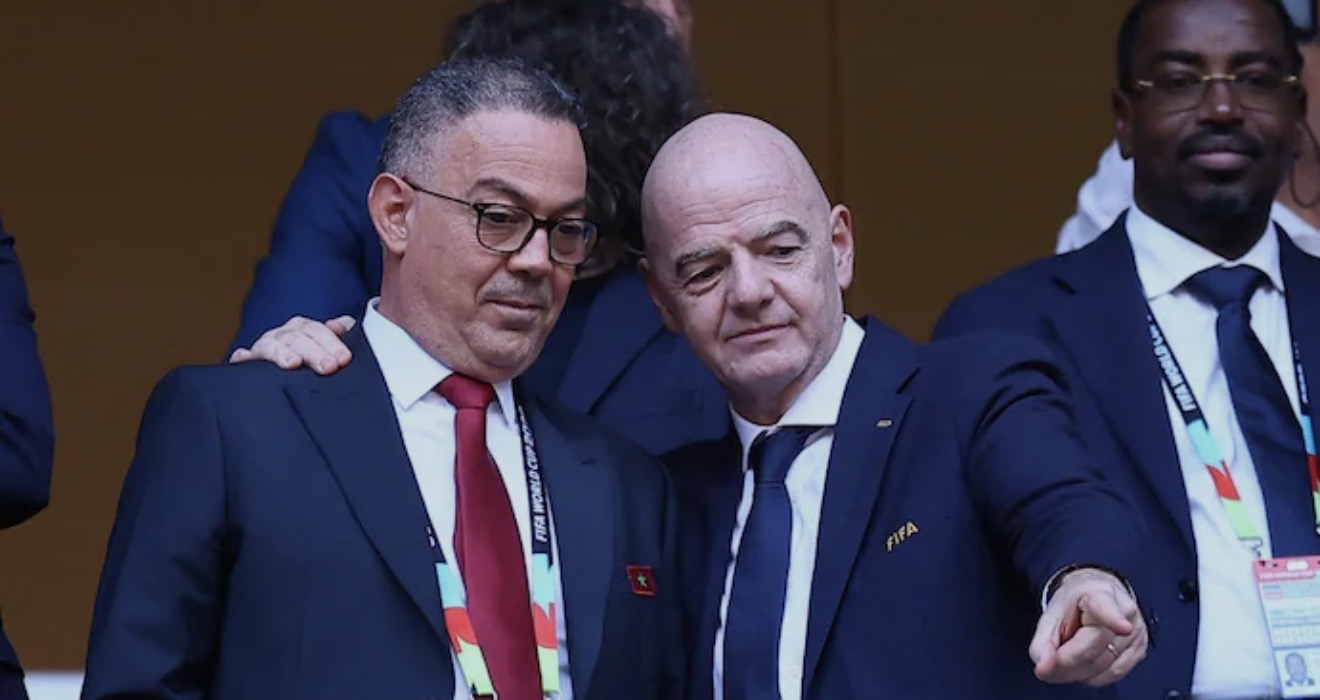
‘We Lost to Ourselves’: France’s Brutal Newspaper Reckoning Before Deschamps’ Farewell
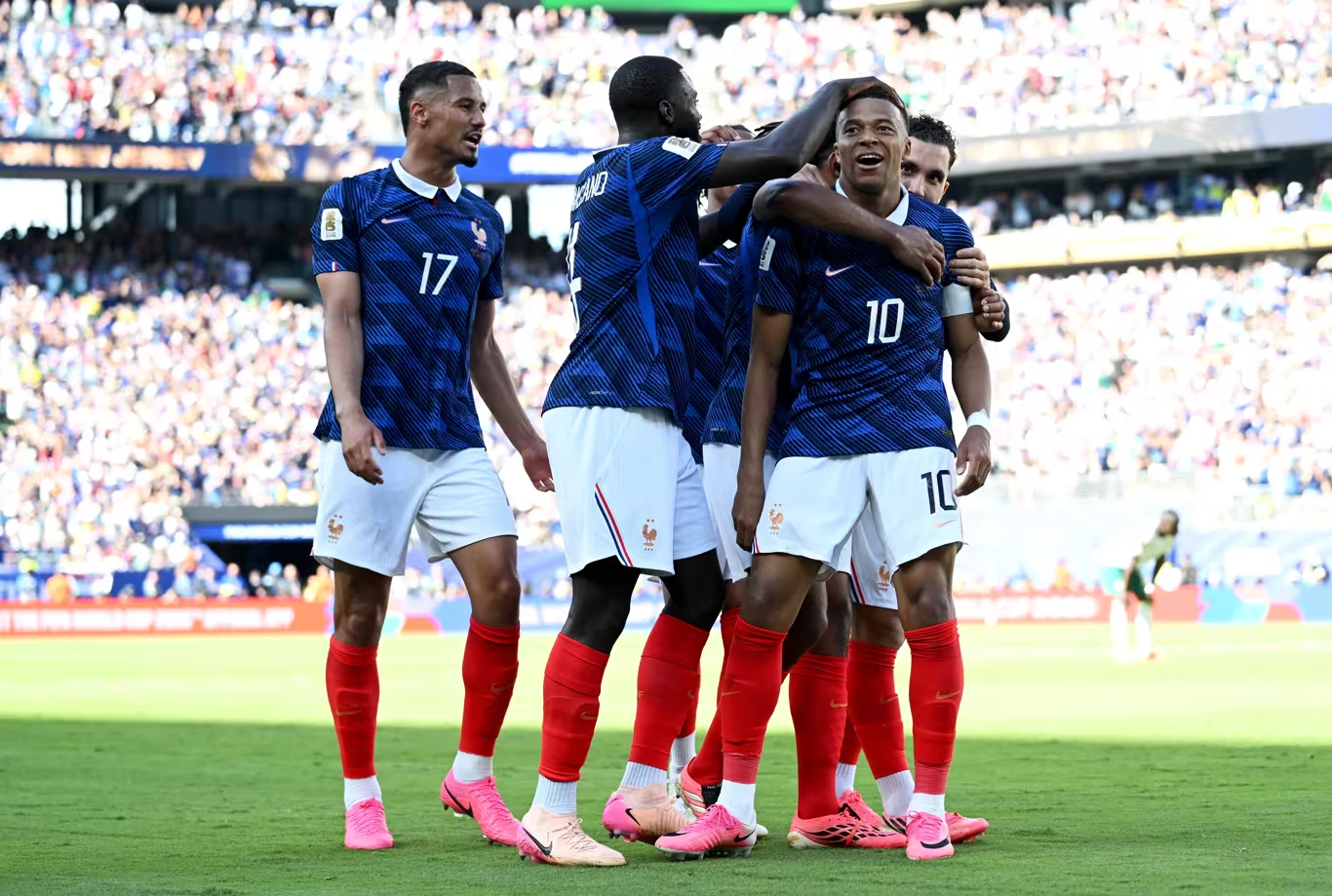
Table of Contents
Rayan Cherki did not blame the referee. He did not blame Spain. Sitting in front of the media hours after France’s World Cup dream ended in Dallas, the French midfielder offered a version of events that was far harder to swallow than any complaint about a missed call.
“It’s a huge disappointment, huge because today we lost to ourselves,” Cherki said. “We didn’t lose to the referee, we didn’t lose to Spain, we lost to ourselves. Here, you all know, we all know we were a force to be reckoned with. The only team capable of eliminating us was ourselves, and today that’s exactly what happened.”
France had gone into their semi-final against Spain as one of the form teams left in the tournament. They left it beaten 2-0, their much-discussed front four nullified, and their head coach Didier Deschamps facing the final match of a 14-year reign in a fixture nobody wanted: Saturday’s third-place play-off against England.
A flat night in Dallas
Mikel Oyarzabal’s first-half penalty and a second-half strike from Pedro Porro were enough to see Spain through. France, by contrast, never found a way past a European champion side that had barely conceded a goal all tournament. Deschamps was honest about where the gap had opened up.
“The Spanish team is a strong one. It is tough and proved their skills today,” Deschamps said. “We were below our standard, we committed more technical flaws than before. I have really skilled and top-notch players on the bench, but William Saliba got injured, Adrien Rabiot was at risk because of the yellow card. To hope for victory, we should have been at our maximum and given it all and we did not, unfortunately. We are extremely disappointed tonight.”
The absence of options on the bench, with Saliba injured and Rabiot managing a booking, left Deschamps with fewer ways to change the game than he would have wanted against a Spain side that gave up almost nothing.
The morning after, in headlines
French football has never been shy about turning the page quickly, and Wednesday morning’s front pages did exactly that. L’Equipe ran a photo of a forlorn Kylian Mbappe under the headline “Fallen star,” describing the team as “powerless” to stop Spain. The paper’s player ratings were unforgiving: no France player was rated above five out of ten. Lucas Digne, who gave away the penalty, was marked down to two, and Ousmane Dembele and Michael Olise scored the same after quiet performances in attack. Mbappe himself received a three, as did Deschamps.
Le Parisien went with “Rude awakening,” writing that France “never found the key to break down the Spanish Armada.” Corse-Matin used the Spanish word for disappointment on its front page, describing France as “outclassed.” Le Figaro said Spain had “taught France a lesson,” while Ouest France called it the “end of the American dream.” Every one of the papers led with the same image: a dejected Mbappe, walking off the pitch in Dallas.
It is the kind of reception that follows a team assembled to win the tournament rather than simply compete in it, and it lands hardest on the players who carried the greatest expectation into the summer. A two out of ten for a defender who conceded a penalty is a harsh mark by any measure, and pairing it with the same score for two attacking players who are usually among the first names on the team sheet is a signal of just how far below their own standard L’Equipe judged the performance to be. Rating the head coach at three, alongside his captain, made the point in case anyone had missed it in the match report itself.
None of the papers pretended the exit was a fluke. Each described a squad that had the tools to win the tournament falling short of its own level on the one night it counted most, a harder verdict for supporters to process than a simple story about a stronger opponent turning up on the day.
An ending nobody scripted
Deschamps announced before the tournament that this would be his last as France coach, and the third-place play-off against England was never going to be the send-off anyone had in mind for a manager who won the World Cup in 2018, reached the final in 2022 and has now taken France to the last four for a third straight tournament. Fourteen years in charge of Les Bleus ends not with silverware or a swan song at MetLife Stadium, but with a Saturday fixture in Miami that both sets of players have openly admitted they would rather not be playing.
For Deschamps personally, the manner of the exit will sting more than most. He built France’s recent identity around resilience and knowing how to get results when performances were not at their best. Wednesday’s semi-final was the rare occasion when that identity simply did not show up, and his own words afterwards, admitting the team fell short of its standard and needed more from the players available to him, reflected a coach who had run out of answers on the biggest stage of his career.
What Cherki’s words reveal
Cherki’s comments stood out precisely because they avoided the easiest explanations. There was no mention of refereeing decisions, no suggestion that Spain had been fortunate, and no complaint about the schedule or conditions. Instead, a young player who had been central to France’s run to the semi-final chose to put the responsibility squarely on the group in the dressing room.
That kind of honesty tends to travel further with supporters than any amount of spin, even when the underlying message, that a talented squad beat itself, is a difficult one for a fanbase to hear after entering the tournament with genuine title hopes. It also sets a tone for how France will need to approach Saturday’s dead rubber: not as a chance to prove a point to Spain, who are already gone from their side of the draw, but as a final opportunity to leave a mark on a tournament that got away from them at the worst possible moment.
Cherki delivered his verdict in the mixed zone within hours of the final whistle, while the disappointment was still raw enough that there was no time to settle on a more diplomatic answer. That immediacy is part of what made the quote land as hard as it did. It is not a script prepared in advance, but the first, unfiltered read from a player who had just watched a genuine title chance disappear.
Miami and beyond
Saturday’s third-place play-off will decide little beyond bragging rights and a handful of places in the Golden Boot standings, with Mbappe still able to add to his tournament tally even after elimination. For Deschamps, it is simply the last time he picks a France team. For Cherki and his teammates, it is a chance to answer their own verdict on themselves, delivered in a mixed zone in Dallas within hours of the result that ended their World Cup.
There is also a wider question hanging over French football now that Deschamps’ departure is confirmed. His 14-year reign included a World Cup title in 2018, a final defeat in 2022 and now a run to the last four that ended, in his own players’ words, as something France did to itself rather than something Spain did to them. Saturday’s match in Miami will be the final time Deschamps stands on the touchline as France coach, and whoever takes over inherits a squad that has just been told, by one of its own, that talent alone was not enough.
Whether a team that admits it lost to itself can find something different with nothing left to play for is the question France now carries into Miami. Cherki’s honesty in defeat suggests a squad willing to confront its own shortcomings rather than look for excuses, and that habit could shape the next four-year cycle far more than anything that happens in a third-place match played by two teams that would both rather be somewhere else on Saturday.

Leave a Comment
More in News
Bowen’s Saved Penalty Costs West Ham a Shot at Top Spot

Cole Palmer Missed England’s World Cup Squad This Summer, and His Club Have Just Backed Him With a Deal Running to 2034
Enzo Maresca Insists Manchester City’s Titles Are Not Tainted After the Club Was Found Guilty on 115 Charges
Michael Carrick Lost Two Title Races to Manchester City, and United Fans Now Mark 50 Years Without a Trophy

Jarell Quansah Was Never Liverpool’s Top Academy Prospect, and He Has Already Won Eight England Caps
Trending on Futbol Chronicle
Map of All the Premier League Teams for 2025/26
Michael Carrick admits Manchester United have “no excuses” after AC Milan defeat
The Best World Cup YouTubers to Follow in 2026
What Is Offsides in Soccer? The Offside Rule Fully Explained