Didier Deschamps Steps Away From France’s World Cup Camp After His Mother’s Death
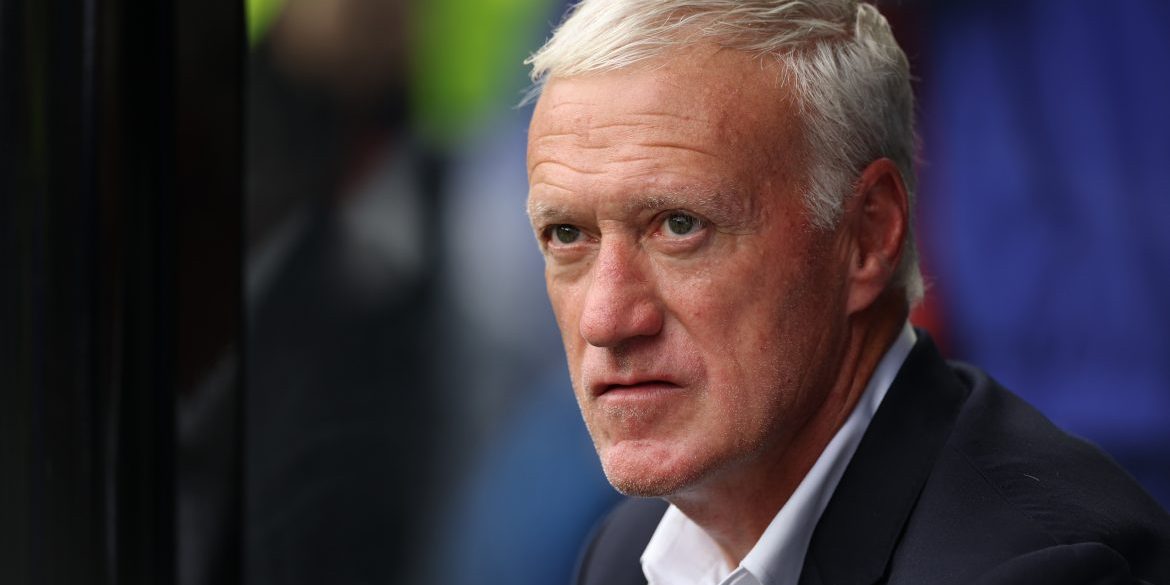

Table of Contents
On Tuesday, in the middle of the biggest tournament of his final year in charge, Didier Deschamps received the news no amount of professional experience prepares anyone for. His mother had died. When France play their final Group I game against Norway, the most successful figure in French football history will not be on the touchline. He has left the squad to return home and be with his family.
The French Football Federation announced the news on Tuesday in a short, careful statement, confirming that Deschamps would step away from the team for the Norway match and asking, in a phrase that cut through the usual machinery of tournament press releases, “for your utmost respect and restraint.” His long-time assistant Guy Stephan has taken charge of the team in his absence. It is the kind of moment that strips away the scoreboards and the Golden Boot races and reminds everyone that the people inside the sport carry the same private weights as anyone watching it.
A statement that asked for silence
The federation’s wording, released through its official channels and reported by The Athletic, was deliberately spare. “In agreement with Philippe Diallo, President of the French Football Federation, who is present at the French national team’s training camp, Didier Deschamps has entrusted his assistant, Guy Stephan, with the responsibility of leading the squad until his return,” it read. “During this extremely painful time, we ask for your utmost respect and restraint.”
Diallo’s presence at the camp was its own signal. This was not handled as a logistical reshuffle but as a human one, the head of the federation standing alongside a manager who has given the organisation fourteen years and the only two World Cup finals it has reached this century. Stephan, who has been at Deschamps’s side for almost the entire run, is as natural a stand-in as French football could offer, a continuity choice for a squad that does not need any further disruption.
France will play on, because that is what tournaments demand. But the men in that dressing room are not machines, and the absence of the manager who has defined their international careers will be felt regardless of the result against Norway.
The man who has done it all in blue
To understand the weight of the moment, it helps to understand who Deschamps is to France. At 57, he has spent his life at the centre of the national team’s greatest days. As a player, he was the unfussy, relentless midfielder who captained the side that won the 1998 World Cup on home soil in Paris, lifting the trophy at the Stade de France in the country’s defining sporting night. As a manager, he guided France to victory at the 2018 World Cup in Russia, becoming one of only three men in history to win the tournament as both captain and coach.
He then took France to within a penalty shootout of retaining it, losing the 2022 final to Lionel Messi’s Argentina in Qatar after one of the greatest finals ever played. Across fourteen years in the job, he has been a constant through generational change, building teams around Zinedine Zidane’s successors, then around Kylian Mbappe, while absorbing criticism for a pragmatic style that prioritised winning over spectacle. The criticism never quite landed, because the winning never quite stopped.
Last year he announced that this World Cup would be his last as France manager. Whatever happens over the coming weeks, the 2026 tournament was always going to be an ending. That it has now been marked by personal grief gives the farewell a sadness nobody could have scripted.
A team built to win without noise
France arrived in North America as one of the favourites, and the group stage has done little to dent that billing. They beat Senegal 3-1 and then Iraq 3-0, with Mbappe scoring twice in each match to sit level near the top of the Golden Boot race alongside Norway’s Erling Haaland. Both France and Norway have already secured their places in the knockout rounds, with their final group meeting set to decide only which of them tops Group I.
That is the kind of position Deschamps teams tend to find themselves in, ahead on points, quietly efficient, rarely thrilling but rarely beaten. His France has often been accused of playing below its talent, of leaning on defensive solidity and the brilliance of its forwards rather than imposing itself for ninety minutes. The accusation misses the point of what he has built. France under Deschamps win tournaments and reach finals because they do not beat themselves, and because they have a manager who has never confused style points with the only number that counts.
For Stephan, stepping in for the Norway game means overseeing a side already through, with the freedom that brings. The harder task is emotional rather than tactical, holding a group together while the man at its head deals with a loss that has nothing to do with football.
The quiet authority that held France together
What makes Deschamps unusual among great managers is how little he has needed the spotlight. He has never been a touchline performer in the mould of some of his rivals, never built a cult of personality around his methods. His authority comes from a different place, from the respect of players who know exactly what he has won and exactly what he expects. That authority is why the federation can hand the team to Guy Stephan for the Norway game without fear of it unravelling. The structure Deschamps built does not depend on his daily presence to function. It depends on the standards he set, and those do not leave the room when he does.
It is also why his eventual departure, already announced for after this tournament, leaves such a large gap. Fourteen years is an extraordinary tenure in international management, an era in which most federations churn through coaches every couple of cycles. France stuck with one man because he kept delivering, through World Cups and European Championships, through the retirements of legends and the emergence of new ones. The continuity he provided is the kind that cannot be bought or rushed, and it is the reason this French generation has known only one voice at the top for almost its entire international life.
Grief inside the goldfish bowl
There is something particularly exposing about private grief at a World Cup. The tournament is the most watched sporting event on earth, a month-long spectacle of noise and analysis and relentless coverage. Into that glare, a manager has had to step away to grieve, trusting his players and his assistant to carry on without him while the cameras keep rolling.
Football has seen such moments before, and they tend to leave a mark. Players and coaches have taken the field hours after family bereavements, sometimes producing performances of raw emotion, sometimes simply getting through the day. What unites those stories is the reminder that the people we watch perform under enormous pressure are also sons and daughters, parents and partners, subject to the same griefs that visit every family. Deschamps has spent nearly three decades as one of the most recognisable men in French public life. None of it changes the nature of the phone call he received on Tuesday.
The decision to go home rather than stay was, in its own way, a statement of priorities from a man often caricatured as football-obsessed. Deschamps could have remained with the squad, leaned on the distraction of work, and let the tournament carry him through the week. Instead he chose his family, trusting that the team he has spent fourteen years shaping could manage one match without him. For a coach whose entire public identity is bound up in winning, stepping away at the sharp end of a World Cup to be with his family in mourning says more about his values than any trophy ever could.
The respect with which the federation, the squad and the wider game have treated the news speaks well of a sport that can often feel cynical. For once, the instinct was to lower the volume rather than raise it.
An ending nobody wanted to write this way
Deschamps will return to the France camp when he is ready, and the team that awaits him is among the contenders to win the whole thing. A run to the final in his last tournament in charge would be a fitting close to a career that has touched almost every summit the French game has to offer, as a player and as a coach. The football, for now, can wait.
What this week has shown is the human being behind the trophies, a man who has spent his life winning for his country and who, in the middle of one more attempt, has had to put all of it aside for the most ordinary and most painful of reasons. France will keep playing. Their manager will grieve, then return, and try to finish the job he started fourteen years ago. Whatever the result against Norway, the empty space on the touchline is a reminder that the biggest stage in sport is still, in the end, made up of people. Deschamps has given France more glory than almost anyone. This week, France gave him space.

Leave a Comment
More in News

Thierno Barry Was Filmed Crying In A Private Training Session Last Season, And He Has Already Scored In Three Games This Campaign
Gravenberch’s Red Card Sparks Referee Row in Liverpool’s Defeat to City

Moise Kean Will Miss Como’s Biggest Game of the Season After Cesc Fabregas Clashed With Italy’s Doctors
Oliver Glasner Returned to Crystal Palace and Fans Turned From Applause to Taunts as Forest Lost
Vinicius Red Card for Hair Pull Leaves Mourinho Snubbing the Press
Trending on Futbol Chronicle
The Best World Cup YouTubers to Follow in 2026
Josef Martinez Returns to MLS Spotlight With Columbus Crew Signing
Michael Carrick admits Manchester United have “no excuses” after AC Milan defeat
Arab football federations back Gianni Infantino as FIFA president faces growing opposition