Diego Luna Was the Face of the World Cup Ads and Now Watches From Home
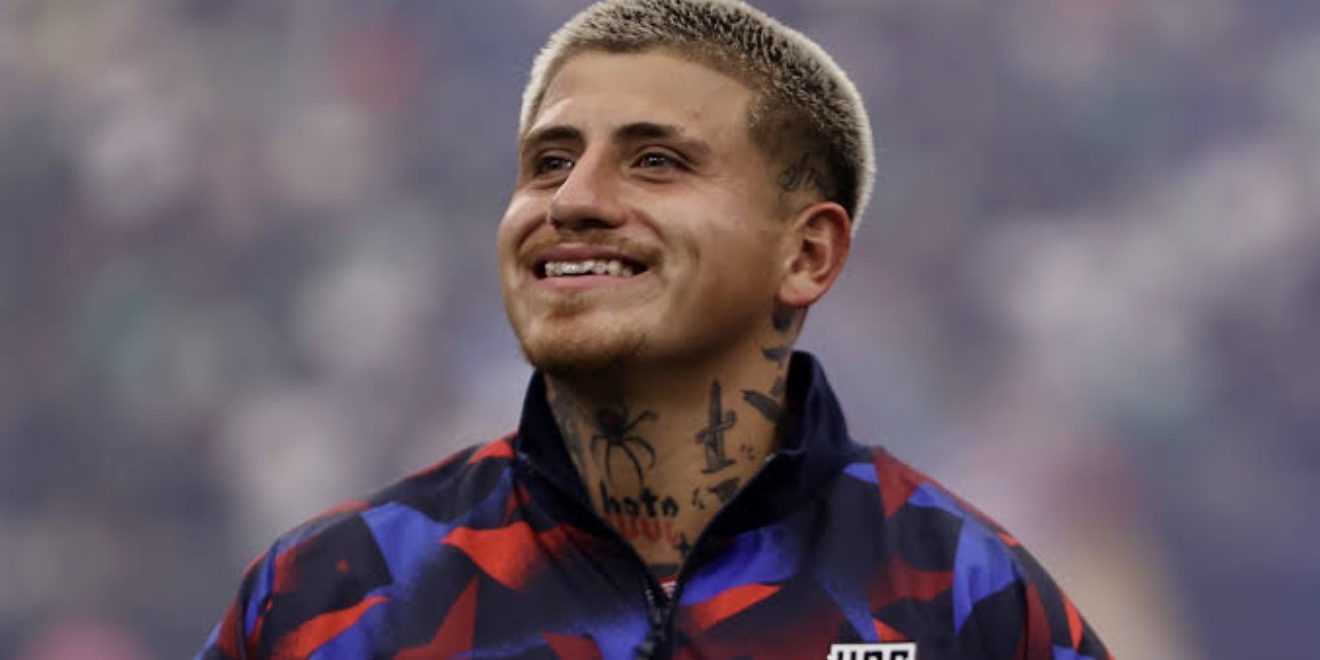

Table of Contents
For most of the past year, Diego Luna was the face the United States Soccer Federation wanted the world to see. He was in the Nike commercials. He was on the promotional banners. He was the tattooed, grinning, unmistakably American kid who seemed to embody everything a home World Cup was supposed to feel like. And then, when Mauricio Pochettino finalized his 26-man roster, the face of the marketing campaign was nowhere on the team sheet.
Luna’s omission stands as the most glaring call of the entire selection, a decision that stunned supporters who had penciled him in as a lock months ago. While the United States chase a knockout run on home soil, the player so many fans expected to be at the heart of it is watching from a couch in Utah, reckoning with the cruelest kind of near miss in the sport. His story is not a tale of failure. It is a window into how brutal the margins are at this level, and how a player can do almost everything right and still be left behind.
The biggest snub of the whole squad
When the final 26 were announced, the names left off told their own story. Tanner Tessmann missed out. So did others on the bubble. But it was Luna’s absence that dominated the conversation, because few players had been more closely associated with this team over the previous eighteen months. In 2025, with the United States searching for an identity and a spark, the national team leaned on him heavily, both as an attacking threat and as a personality who refused to shrink in the big moments.
“It’s an interesting decision for me,” Real Salt Lake manager Pablo Mastroeni said when asked about the exclusion. “In 2025, the national team really leaned on him, both as an attacking player and as a mentality piece.” That word, mentality, keeps coming up around Luna, and it is the part of his game that made the snub so hard for fans to accept. This is a player defined by edge and intensity, the sort of competitor coaches usually fight to keep close in a tournament where nerve can matter more than talent.
A decision about balance, not ability
Pochettino, to his credit, did not hide behind vague language. He explained that the call came down to the shape of the whole rather than the gifts of the individual. “The final decision wasn’t based solely on individual talent, but rather on balance, specific roles, and collective chemistry,” the Argentine said. In other words, Luna was not dropped because he is not good enough. He was dropped because of how the pieces fit together.
The spot many believed was his went instead to Giovanni Reyna, the Borussia Monchengladbach playmaker whose own road back to relevance has been littered with injuries and setbacks. It is a fascinating contrast: two creative players, two very different profiles, and a coach forced to choose between them. Reyna offers a different kind of guile and a pedigree forged in the Bundesliga and the Champions League. Luna offers fire, pressing and the swagger of a player who feels like he belongs to this particular American moment. Pochettino made his choice, and only the knockout rounds will tell whether it was the right one.
There is a timing element too. Luna missed the March international window with a knee injury, a gap that came at the worst possible moment in the race for places. He returned to play seven times for Real Salt Lake, logging at least 70 minutes in six of them, doing everything he could to remind the staff what they would be leaving out. It was not enough to overturn a decision that, it seems, had as much to do with the picture around him as the player himself.
The kid from Sunnyvale who plays like he has something to prove
To understand why the snub stung so much, you have to understand who Luna is. Born in Sunnyvale, California, he grew up at the side of a field, watching his father coach and his older brother play, soaking up the game before he was old enough to fully grasp it. That soccer-saturated childhood produced a player who treats the sport like an extension of his personality, all flair and feeling and refusal to back down.
The tattoos tell the rest. Luna’s body is a canvas of meaning, including a Joker design on his leg carrying the Dark Knight line, “Why so serious?” It is the perfect motto for a footballer who plays with a smile and a snarl in equal measure, who has built a cult following at Real Salt Lake precisely because he looks like he is enjoying himself even when the stakes are high. Teammates and fans took to calling him a heartbeat of the club, the player who sets the emotional temperature for everyone around him.
That is the cruelty of his exclusion. The qualities that made Luna a marketing dream, the authenticity, the edge, the sense that he represents a new kind of American player, are the same qualities that made his absence feel like a hole in the team’s character as much as its tactics.
What a home World Cup snub really costs
Every World Cup produces players left at home, and most of them get another shot four years later. But a home tournament is different. This was the World Cup on American soil, the one Luna grew up dreaming about without ever quite believing it could happen in his own country, in his prime, with his name already attached to it in every advertisement. Chances like that do not come around again. By 2030, the makeup of the squad will have shifted, new players will have emerged, and the specific magic of representing your nation in front of your own people will have passed.
For a 22-year-old, there is time. Luna is young enough to build a long international career and to make selectors regret leaving him behind. But there is no replacing this particular summer, and no amount of future success will quite paper over the ache of being the face of an event he did not get to play in. How he responds will define the next phase of his career. The most dangerous thing for any rival is a talented player carrying a grudge and a point to prove.
A mirror for the modern American game
Luna’s omission says something larger about where United States soccer now sits. A decade ago, leaving a player of his quality at home would have been unthinkable, because the pool was not deep enough to afford it. That Pochettino could make this call, that he had a Reyna to turn to and a roster strong enough to absorb the loss of a fan favorite, is a sign of how far the talent base has come. Depth is a luxury and a burden at once. It produces better teams and harder decisions, and it leaves players like Luna on the outside of squads they would have walked into in a leaner era.
It also reflects the cold logic of Pochettino’s approach. The Argentine was not hired to please the marketing department or to reward the most popular name. He was brought in to win knockout games, and he has shown he will make unsentimental choices to chase that goal, popularity be damned. Whether the gamble on chemistry over individual brilliance pays off will be written in the results to come.
The face on the billboard, watching like the rest of us
There is a strange poetry to it all. The player chosen to sell the dream of a home World Cup is now experiencing it the same way millions of American fans are, from the outside, with a remote in his hand and a what-might-have-been in his chest. If anyone is built to turn that pain into fuel, it is the kid who tattooed a question on his leg and answered it with the way he plays.
The United States will rise or fall in this tournament without Diego Luna, and that sentence still feels strange to write. For now, his role is the hardest one in football: to watch, to wait, and to come back hungrier. The billboards will come down when the World Cup ends. The reason to prove everyone wrong will not.
The season that made the case impossible to ignore
What makes the decision sting more is the form Luna carried into the selection window. He did not limp toward the deadline hoping to sneak in on reputation. He arrived off the back of a strong domestic campaign, a creative force for Real Salt Lake who turned games and dragged a mid-table club toward something better. The numbers backed up the eye test, with double-digit goal contributions and the kind of consistent, high-volume output that usually screams for a place on the plane.
Mastroeni watched it up close all year and made no secret of his belief that his player had earned the call. From a club perspective, losing Luna to the national team for a month would have been a sacrifice worth celebrating, a sign that Real Salt Lake had produced a genuine difference-maker. Instead the club kept its star, and the wider American public was left to wonder how a player good enough to anchor a Nike campaign was not good enough, in this coach’s eyes, to anchor a midfield.
None of it changes the outcome. Pochettino picked his 26, and Luna was not among them, and the team will live or die by that judgment over the coming weeks. But the case for inclusion was strong enough that the debate will not fade quietly. Every time the United States needs a spark in the knockouts, every time a game grows tight and a moment of nerve is required, someone will mention the name of the player watching from home in Utah.

Leave a Comment
More in News
Trent Alexander-Arnold Returns to the England Squad for the First Time in Over a Year, and Cole Palmer Is Back Too After Their World Cup Snub

Gabriel’s Boot Caught Emiliano Martinez in the Head, and a Five-Person Premier League Panel Ruled It Was Never a Red Card

Floyd Samba Scores a Debut Double as a Teenager

Tottenham Spent £300m This Summer and Have Not Scored in Four Premier League Games for the First Time in the Club’s 144-Year History

Cyle Larin Scored Once in 15 Games on a Failed Feyenoord Loan, and Is Now Outscoring Kylian Mbappe and Erling Haaland at Southampton
Trending on Futbol Chronicle
Josef Martinez Returns to MLS Spotlight With Columbus Crew Signing
Arab football federations back Gianni Infantino as FIFA president faces growing opposition

Map of All the Premier League Teams for 2025/26
Why Soccer Is The Best Sport