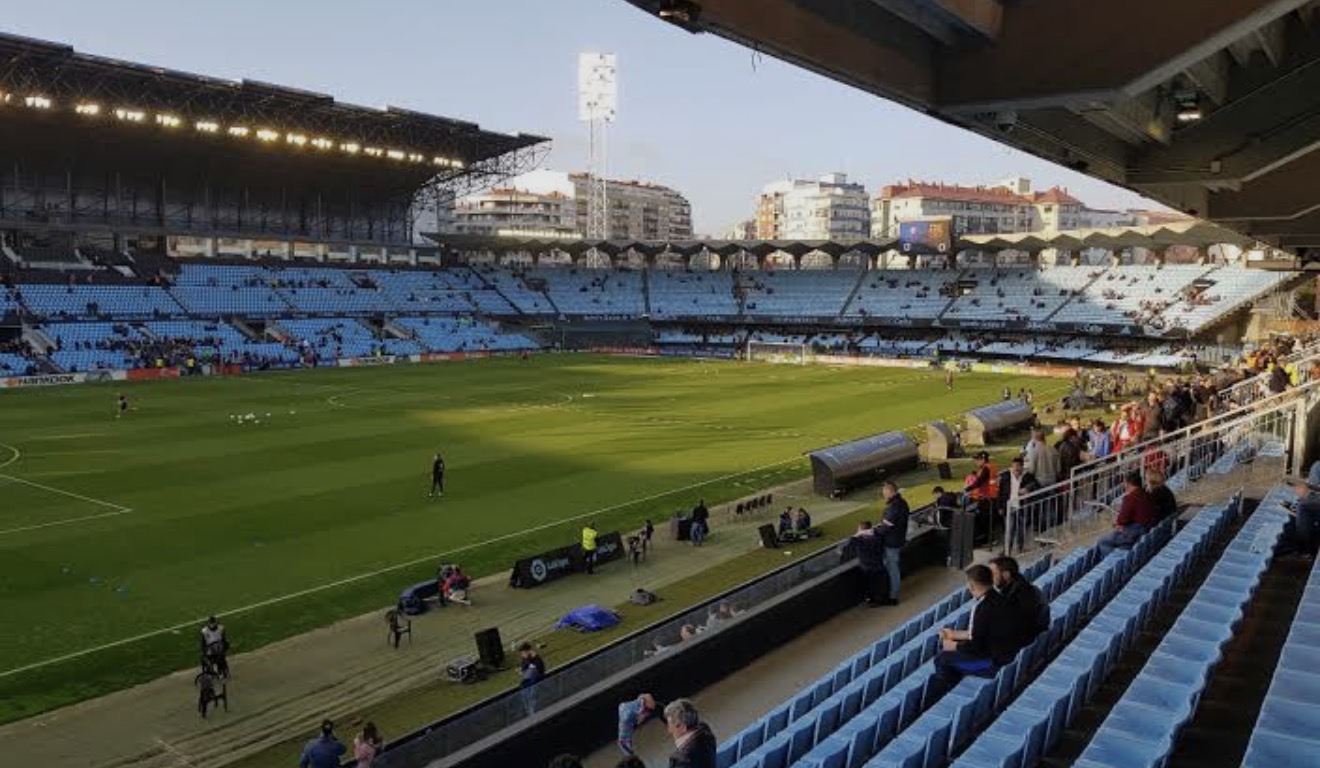
Fake Photos and AI Crowds Have Turned the World Cup Into an Information War
Table of Contents
When Cape Verde’s 40-year-old goalkeeper Vozinha made save after save to hold Spain on his World Cup debut, the internet decided it knew his secret. Within hours, posts racing across social media announced that the man frustrating one of the favourites was no professional at all. He was an electrician, some said. A bus driver who played football on the weekends, said others. It was a beautiful story, the amateur who walked off a building site to stun a superpower, and it was shared hundreds of thousands of times.
It was also completely false. Vozinha has been a professional footballer for the best part of twenty years, with a career that has taken him through Angola, Moldova, Slovakia and Cyprus before settling in the Portuguese second division. He is not an electrician. He never was. But the truth travelled far slower than the lie, and by the time it caught up, millions of people had already filed away a fiction as fact. Welcome to the first World Cup of the artificial intelligence age, where the most viral stories are often the ones that never happened.
The Goalkeeper Who Was Never an Electrician
The Vozinha myth is worth dwelling on because it shows how modern football misinformation works. It did not begin with malice. It began with a remarkable moment, a tiny island nation of half a million people holding Spain, and a goalkeeper old enough to be the father of some of the forwards he was denying. The real story was already extraordinary. The fabrication simply made it tidier, gave it a fairytale shape that the algorithm rewards, and stripped away the inconvenient detail that Vozinha is a seasoned professional who has earned his place.
What makes the case sharper still is the human cost sitting just beside it. Vozinha’s mother had been unable to travel to watch her son’s historic debut, a detail that did the rounds alongside the false claims about his day job. In her case the story had a happy ending, with reports that she was later granted a United States visa to see him play. But the episode captured the strange split-screen of this tournament. Real, moving, verifiable stories are unfolding everywhere, and they are competing for attention with inventions that are easier to package and impossible to fact-check at the speed they spread.
The Crowds That Do Not Exist
If the Vozinha story was an old-fashioned rumour dressed up for the feed, the next wave of fakes is something new. Clips showing glamorous young women dancing in the stands at World Cup matches have racked up hundreds of millions of views across platforms over the opening fortnight. They look real enough at a glance. They are not. Analysts who examined the footage concluded there was a 99.9 per cent probability that the videos were either deepfakes or fully generated by artificial intelligence, with the fingerprints pointing to a commercial video tool called Seedance 2.0.
These are not crude fakes. The technology has moved past the era of melting faces and extra fingers. A generative model can now produce a few seconds of a packed stadium, complete with plausible lighting, crowd movement and camera shake, that the human eye cannot reliably separate from a real broadcast. The accounts posting them are often AI-managed too, faceless pages that exist only to harvest engagement and sell it on. The football is merely the backdrop. The product is your attention, and the supply of synthetic content is effectively unlimited.
The result is a tournament where a fan scrolling at home cannot always be sure whether the moment they are watching took place at all. That uncertainty is corrosive in a way that goes beyond any single clip. Once people learn that footage can be faked this convincingly, they start to doubt the real thing too, which is precisely the environment bad actors want.
Why This World Cup Is Different
Every major tournament attracts rumour and hoaxes. What separates 2026 is the collision of three things at once. The event is the largest in the sport’s history, with 48 teams, 104 matches and a global audience spread across three host nations. Generative AI tools have become cheap, fast and good enough that anyone with a phone can manufacture convincing images and video in minutes. And the social platforms that carry this content have, for the most part, dismantled the fact-checking and moderation teams that might once have slowed it down.
Put those together and you have the perfect conditions for an information free-for-all. Doctored images of players, invented quotes, fake injury news and entirely synthetic fan footage now circulate faster than any newsroom or governing body can correct them. The European Broadcasting Union has been among the organisations cataloguing the viral posts that are simply fabrications, a quiet acknowledgement that debunking has become a full-time job at a tournament that was supposed to be a celebration.
The Actors Behind the Noise
Not all of this is harmless engagement-farming. Security agencies have warned that the World Cup is a target for something more deliberate. The Canadian Centre for Cyber Security has assessed that hostile state-linked groups will very likely use the public’s interest in the tournament to push disinformation that suits their own ends, seeding AI-generated content and deepfakes into the conversation. Intelligence experts have pointed to groups linked to Russia, China and Iran as the most active in eyeing an event this size as an opportunity.
Then there are the criminals. Fake FIFA ticketing sites, fraudulent travel offers and malicious apps disguised as official tournament tools have multiplied as fans rush to grab seats and plan trips across the United States, Canada and Mexico. The same generative tools that produce fake crowds can spin up a convincing replica of an official website in an afternoon. For the supporter trying to buy a ticket or follow their team, the practical danger is no longer just being misled. It is being scammed.
The wider concern is what this does to trust in the sport itself. Football has always run on shared moments, the goal everyone saw, the save everyone talked about. When a meaningful share of what circulates is fake, those shared moments start to fracture. Supporters retreat into doubt, governing bodies lose control of their own narrative, and the genuine wonder of a tournament like this gets buried under a landfill of synthetic noise designed to look exactly like it.
The Players Caught in the Middle
For the footballers themselves, the fakes are not an abstract problem. Fabricated quotes attributed to managers and players have circulated freely over the opening rounds, putting words in mouths that were never spoken and forcing press officers to spend their days denying things their clients never said. Invented transfer stories and false injury bulletins spread during matches, sometimes moving betting markets before anyone can correct them. A player can finish a game, pick up his phone, and discover he has supposedly given an interview he has no memory of.
Some have started to push back in real time, posting from verified accounts to label the fabrications as they appear. It is a thankless task. For every correction, three new fakes arrive, and the correction never travels as far as the original. Teams have begun briefing their squads on what to expect, treating digital hygiene as part of tournament preparation in the way they once treated jet lag and hydration. The governing bodies, for their part, are leaning on broadcasters and fact-checking partners to flag the worst of it, but they are firefighting rather than preventing.
The uncomfortable truth is that there is no technical fix on the horizon that will make this go away during the tournament. Detection tools exist, but they lag behind the generators that produce the fakes, and by the time a clip is confirmed as synthetic it has usually done its work. The responsibility, for now, falls on the audience. That is a heavy thing to ask of a fan who simply wants to enjoy a World Cup, but it is the reality of watching football in 2026.
It is worth remembering that football has survived disruption before. Television was once accused of killing the live experience, social media of cheapening it. The sport absorbed both and grew. The difference this time is speed and scale. A fabrication can now reach more people in an hour than a newspaper once reached in a week, and it can be tailored to confirm whatever a given audience already wants to believe. That is a harder thing to outrun, and it places a premium on the patient, verified reporting that synthetic content is designed to drown out.
There is a defence, and it is an old-fashioned one. Slow down. Check where a clip first appeared. Be suspicious of stories that are a little too perfect, the electrician who becomes a World Cup hero, the stand full of dancers no broadcaster seems to have filmed. The real World Cup is producing enough genuine drama that it does not need any help from a generative model. Vozinha did hold Spain. Cape Verde are real. The best answer to a tournament drowning in fakes is to go looking for the true stories, because they remain, even now, better than anything a machine can invent.

Leave a Comment
More in News

Rodri Says Real Madrid Cannot Fool Him Before His First Clásico

Chicago man orders iPhone 18 Pro Max. Then he gets an email saying his package has been delivered—and signed for

Enzo Maresca Says Both Villa Goals Were Avoidable as Guehi Struggles Again

Kylian Mbappe’s Ballon d’Or Pitch Draws Criticism From Jean-Pierre Papin
Gianni Infantino Laughs Off Resignation Question and Claims “Vast, Vast Majority” Backing
Trending on Futbol Chronicle
What Is Offsides in Soccer? The Offside Rule Fully Explained
Why Soccer Is The Best Sport
The Best World Cup YouTubers to Follow in 2026

Mikel Arteta backs ‘warrior’ Bruno Guimarães to make Arsenal stronger