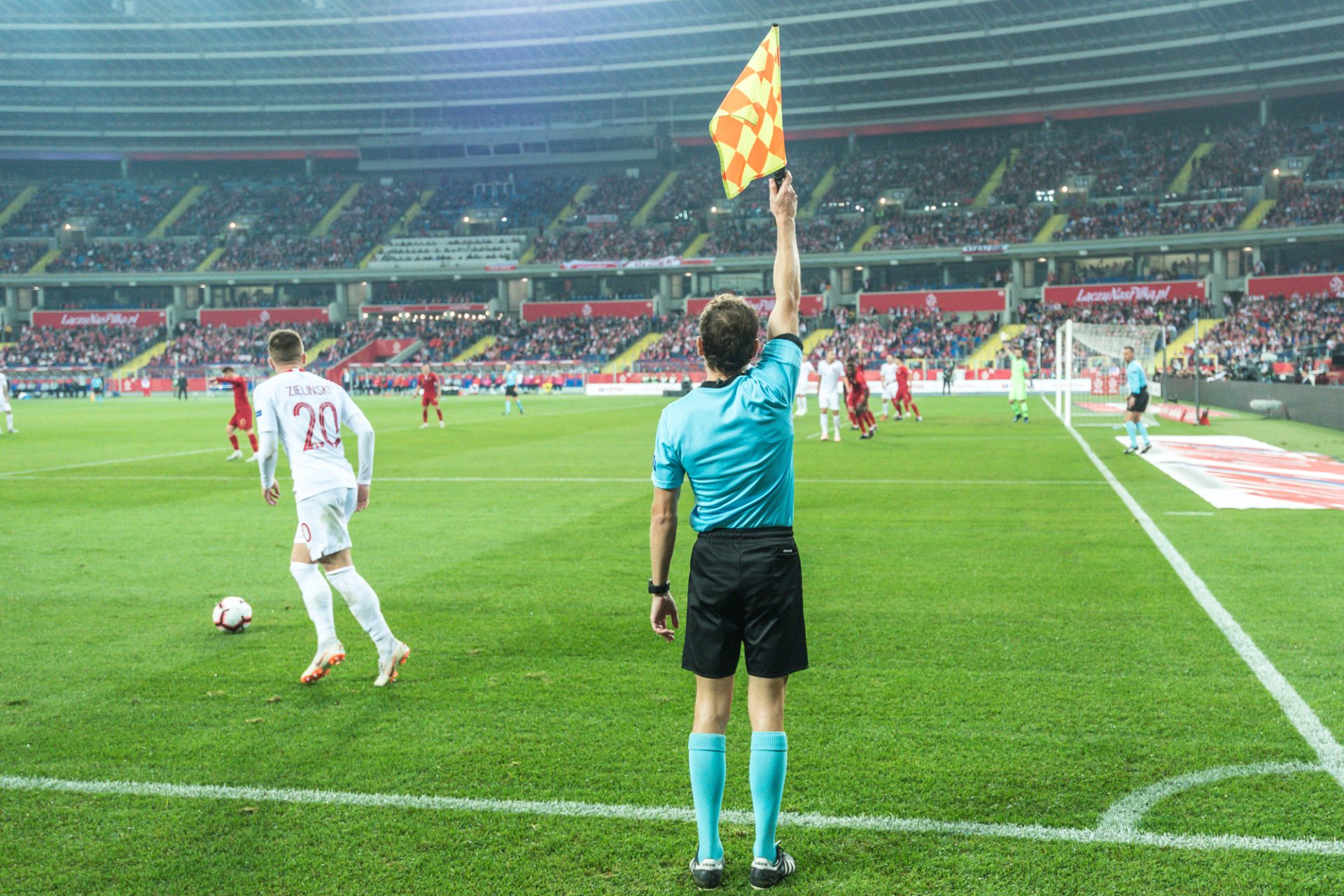
FIFA Cleared a VAR Official Over a Hand Gesture That Convulsed the World Cup
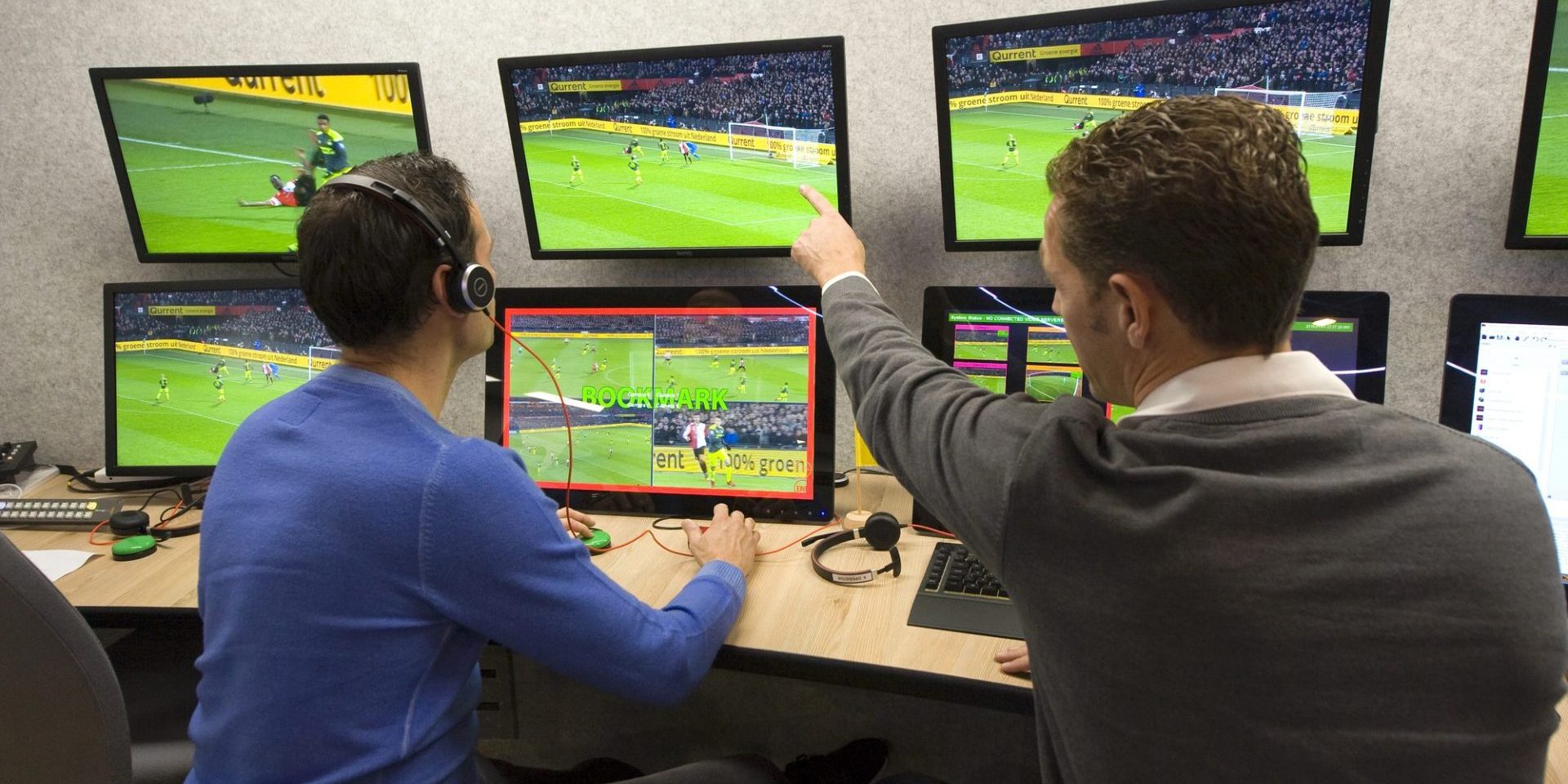
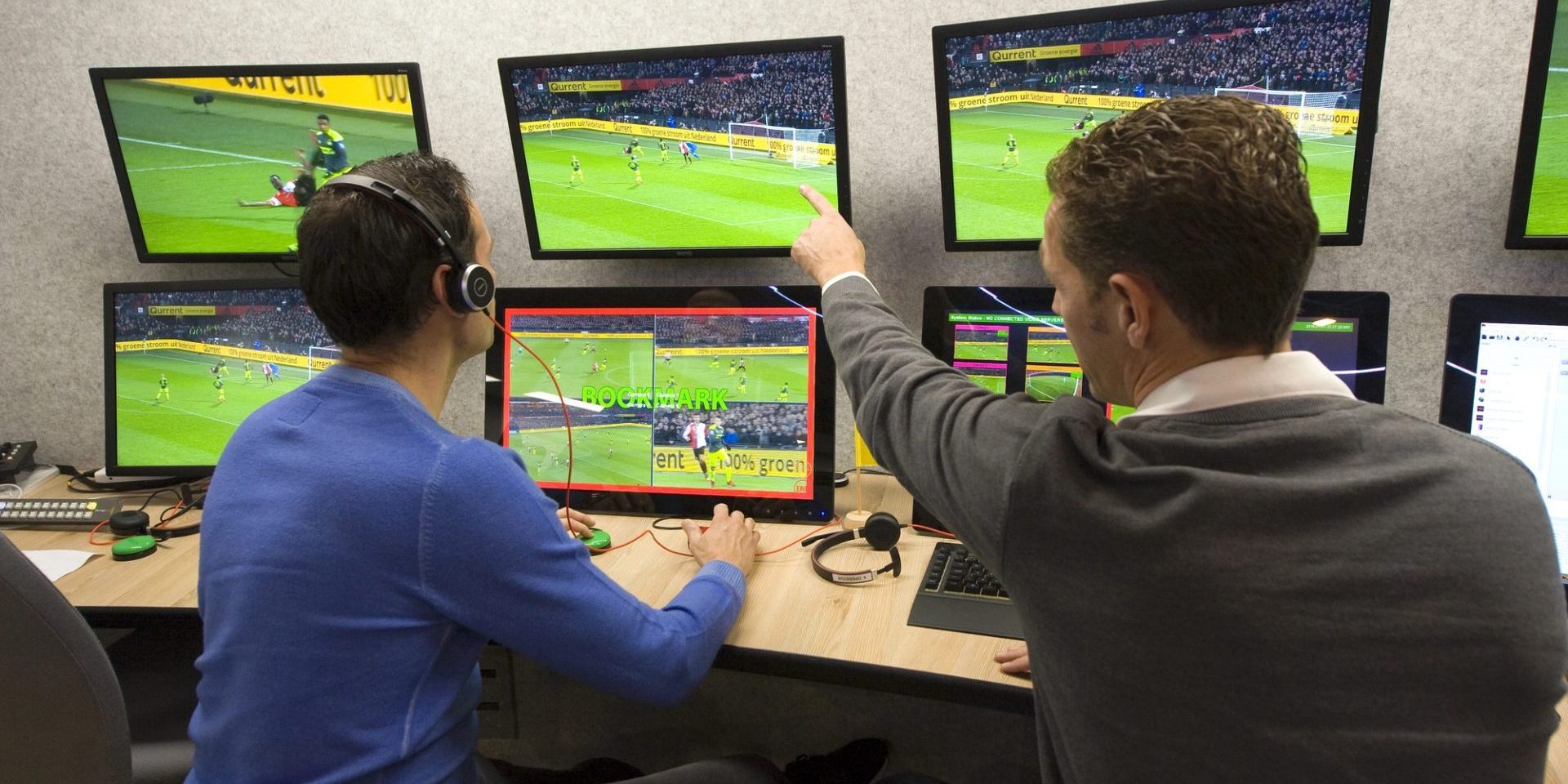
Table of Contents
For a few seconds during the broadcast of Germany against Curacao, the cameras did what they now do at every World Cup match. They cut away from the pitch and into the video review centre in Dallas, where a row of officials sat surrounded by screens, the unseen jury of the modern game made briefly visible. It should have been an unremarkable shot. Instead it became the biggest off-field story of the tournament’s opening week, because one of those officials, the Australian video assistant referee Shaun Evans, appeared to make a hand gesture that anti-discrimination campaigners said resembled a symbol used in far-right circles. Within hours, FIFA had a formal complaint to investigate and a question it could not avoid: what exactly had the world just seen?
A Gesture With Two Possible Meanings
The gesture at the centre of the controversy is an upside-down version of the everyday “OK” sign, thumb and forefinger forming a circle with the remaining fingers extended. To most people it means nothing at all, or it belongs to a schoolyard prank known as the circle game, in which one person flashes the sign below waist height and another loses if they look at it. For decades that was its only cultural baggage.
That changed in recent years. The Anti-Defamation League, the New York-based organisation that tracks hate symbols, added the gesture to its list in 2019 after it was adopted in some far-right corners of the internet, often as a deliberate troll designed to bait observers into overreacting. The result is a symbol with two completely opposed meanings, one entirely innocent and one deeply sinister, distinguishable only by context and intent. That ambiguity is exactly what made the Dallas broadcast moment so combustible.
When the footage circulated, the Fare network, which monitors discrimination in football, said the movement clearly resembled the upside-down OK symbol that has been used as a so-called white power sign in global far-right circles. The organisation urged FIFA to act, and calls quickly followed for Evans to be removed from the tournament’s pool of officials while the matter was examined. For a World Cup that FIFA has marketed around inclusion and a global welcome, the timing could hardly have been more awkward.
FIFA Investigates and Then Clears
FIFA’s response moved through the channels these cases now demand. The matter went to the disciplinary committee, which examined the footage and the surrounding circumstances. Its conclusion was that there was no evidence Evans had breached FIFA’s disciplinary code, and it described the hand gesture as innocuous. In short, the governing body cleared the official and allowed him to continue his role at the tournament.
Evans offered his own account. He said he “did not intentionally make a hand gesture or symbol to communicate a message, affiliation, game or belief of any kind,” describing the movement as “an involuntary, subconscious twitch” that he had not even been aware of making. His explanation, accepted by FIFA, was that a fleeting and meaningless motion had been captured at the wrong angle, on the wrong camera, at the wrong moment, and read as something it was never intended to be.
That outcome will satisfy some and frustrate others, which is the nature of cases built on intent. There is no way to prove what was in a person’s mind during a half-second movement, only to assess the available evidence and reach a judgement. FIFA assessed it and decided in Evans’s favour. Campaigners who raised the alarm can reasonably argue they were right to ask the question, even if the answer did not go the way they suspected. Vigilance and false alarms are not opposites. They often travel together.
Why VAR Put the Officials on Camera in the First Place
The episode would not have happened a decade ago, for a simple reason. The officials who decide the biggest moments of a match used to be invisible, tucked away in vans and control rooms that no broadcast ever showed. Video review changed that. As VAR became central to how games are officiated, broadcasters and FIFA began showing the review process to bring fans closer to decisions that were increasingly shaping results. The intention was transparency. The side effect was that match officials, once anonymous, are now on camera, subject to the same scrutiny as the players.
That scrutiny has only intensified at this World Cup, where the technology around officiating has expanded further. Semi-automated offside systems and the connected match ball feed precise data to the review team, speeding up some decisions and adding a layer of objectivity to others. But the more the game leans on the people in the review centre, the more those people are watched, and not only for the calls they make. The Evans incident is a reminder that putting officials on screen invites every kind of judgement, including ones that have nothing to do with offside lines or handball.
There is a wider debate buried in all of this about what VAR was ever supposed to be. Many supporters expected the technology to deliver a game without controversy, every decision correct, every argument settled. That was always an impossible promise. Refereeing involves judgement, and judgement involves disagreement. VAR has shifted where the arguments happen, from the pitch to the review screen, without eliminating them. The Evans story is the same pattern in a different form, a controversy generated not by a decision on the field but by the very visibility that VAR introduced.
What the Episode Leaves Behind
For Evans, the resolution means he can continue his work, his name cleared by the only body whose verdict counts at this tournament. For FIFA, the case is a small case study in how quickly an off-field moment can dominate the conversation, and how the apparatus built to make football fairer can produce headaches its designers never imagined. For the campaigners, it is a reminder that the symbols of the modern world are slippery, capable of meaning everything or nothing depending on who is watching and why.
The broader lesson is about the strange new exposure of the people who officiate the game. Footballers have always understood that millions of eyes follow their every move, that a gesture or a word caught on camera can define how they are seen. Referees and video officials are learning that lesson now, in real time, on the biggest stage the sport has. The room in Dallas was meant to be where controversy went to be resolved. For one week, it became the controversy itself.
As the tournament moves on and the football reclaims the headlines, the Evans incident will fade into the long list of World Cup footnotes. But it leaves a question that will not go away as technology pushes deeper into the game. The more we choose to see, the more we will have to interpret, and interpretation is never neutral. A half-second of footage from a review centre proved that a World Cup can now be shaped not only by what happens on the pitch, but by what the cameras catch when they look away from it.

Leave a Comment
More in News

Eberl Says Kompany Needs Protecting From Himself After Training Collapse

‘I base that off the 2 states where I served, Pennsylvania and Tennessee’: Waitress of 10 years says you should never tip below the standard—even with bad service

Rodri Says Real Madrid Cannot Fool Him Before His First Clásico

Chicago man orders iPhone 18 Pro Max. Then he gets an email saying his package has been delivered—and signed for

Enzo Maresca Says Both Villa Goals Were Avoidable as Guehi Struggles Again
Trending on Futbol Chronicle

Mikel Arteta backs ‘warrior’ Bruno Guimarães to make Arsenal stronger
Cristian Romero completes €40m move from Tottenham to Atlético Madrid

Michael Carrick admits Manchester United have “no excuses” after AC Milan defeat
Arab football federations back Gianni Infantino as FIFA president faces growing opposition