FIFA Says ‘No Evidence’ Ball Hit Camera Cable Before Bellingham’s Controversial World Cup Equalizer
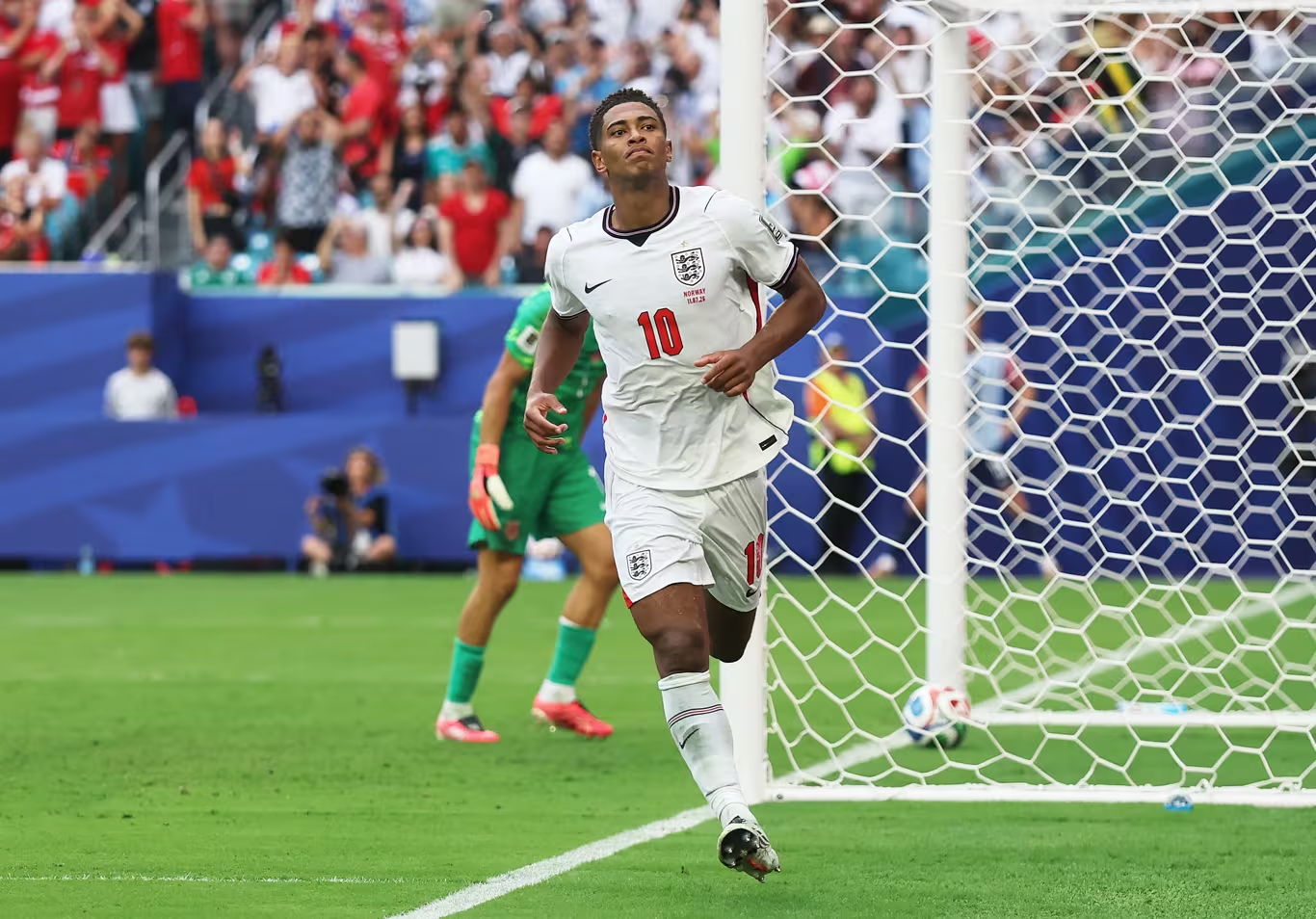
- FIFA has used data from the Connected Ball to dismiss claims that a camera cable interfered with play before Jude Bellingham’s equalizer in England’s 2-1 extra-time win over Norway.
- Footage appeared to show a Norway goal kick clipping an overhead wire before the ball fell to England, leading to the goal that changed the course of the quarterfinal.
- Norway goalkeeper Orjan Nyland, Erling Haaland and coach Ståle Solbakken confronted referee Clement Turpin at the break after the incident went unreviewed.
Connected Ball Sensor Detected No Contact, FIFA Claims, as Norway Fury Grows
FIFA has moved to shut down one of the biggest controversies of the 2026 World Cup by stating that ball-tracking technology found no evidence of contact between the match ball and an overhead camera cable in the buildup to Jude Bellingham’s equalizer against Norway.
The incident occurred in the closing moments of the first half of England’s quarterfinal victory at Hard Rock Stadium in Miami Gardens. Norway goalkeeper Orjan Nyland launched a goal kick that appeared to change trajectory in midair, with footage suggesting the ball had brushed one of the cables used to suspend a robotically controlled camera above the pitch. The ball dropped to England’s Elliot Anderson, was worked forward and eventually found Bellingham, who beat Nyland with a low shot to the far post to make it 1-1 in the second minute of first-half stoppage time.
Under the laws of the game, if the ball had been confirmed to have struck the cable, play should have been stopped immediately and a drop ball awarded to determine possession. The goal would not have stood.
FIFA released a statement citing the built-in sensor technology used in the official match ball. “Before England’s goal in minute 45+2 against Norway, the sensor in the Connected Ball showed no peak in the ‘heartbeat of the ball’ when in the air, and therefore no evidence that the ball touched the overhead wire and changed the movement of the ball,” the statement said.
The response did little to calm Norwegian frustration. Nyland slapped the turf in anger after Bellingham’s goal went in, and the goalkeeper along with star striker Erling Haaland and head coach Solbakken confronted referee Clement Turpin of France as the teams went in at halftime. It remains unclear whether video assistant referee Jerome Brisard reviewed the incident at any stage during the match.
The Connected Ball technology has already played a decisive role elsewhere in the tournament. Earlier in the competition, the same sensor system was used to rule out what would have been an equalizing goal for Croatia in their defeat to Portugal. In that instance, the sensor detected that the ball had made contact with a Croatia player, confirming an offside and disallowing the goal.
Brisard’s involvement in the quarterfinals extended beyond the England match. The French official also served as VAR for the Argentina versus Egypt quarterfinal, where Argentina came from behind to win 3-2. Egypt were left furious after a goal was removed from the scoreboard in the 58th minute following a VAR review that determined Marwan Attia had fouled Argentina defender Lisandro Martinez in the buildup.
Bellingham went on to score a second goal three minutes into extra time as England completed a 2-1 comeback victory to reach the semifinals. Whether the cable controversy would have altered the outcome is something Norway will debate for years to come.

Leave a Comment
More in News
Bowen’s Saved Penalty Costs West Ham a Shot at Top Spot

Cole Palmer Missed England’s World Cup Squad This Summer, and His Club Have Just Backed Him With a Deal Running to 2034
Enzo Maresca Insists Manchester City’s Titles Are Not Tainted After the Club Was Found Guilty on 115 Charges
Michael Carrick Lost Two Title Races to Manchester City, and United Fans Now Mark 50 Years Without a Trophy

Jarell Quansah Was Never Liverpool’s Top Academy Prospect, and He Has Already Won Eight England Caps
Trending on Futbol Chronicle
Mikel Arteta backs ‘warrior’ Bruno Guimarães to make Arsenal stronger
Josef Martinez Returns to MLS Spotlight With Columbus Crew Signing
Michael Carrick admits Manchester United have “no excuses” after AC Milan defeat
Celta Vigo postpones LaLiga opener after fungus outbreak damages stadium pitch