
Ghana’s World Cup Squad Was Forged in England and Now They Meet the Three Lions
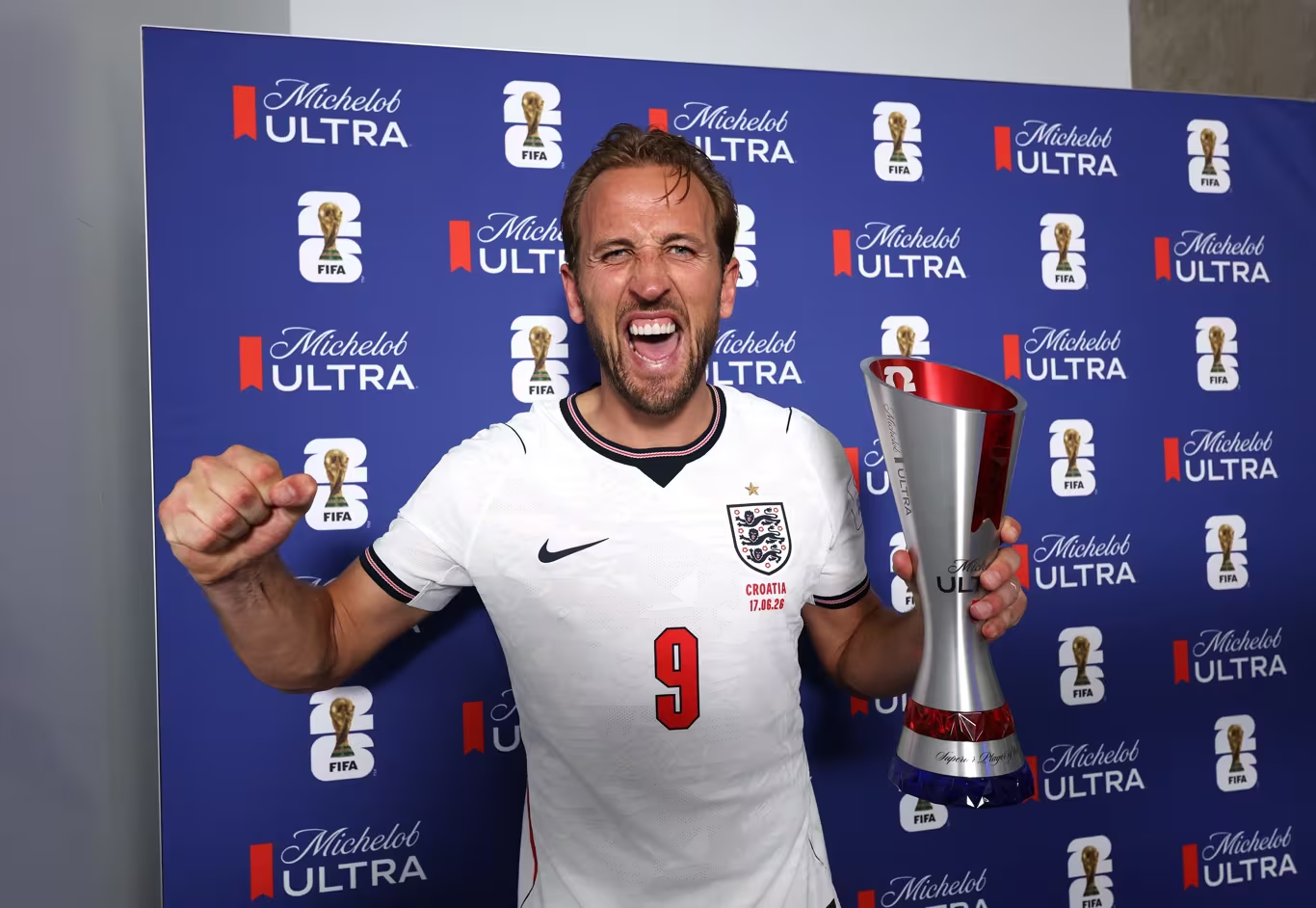
Table of Contents
On 23 June, at Gillette Stadium in Foxborough, England will play Ghana in a competitive match for the first time in their history. The fixture looks, on paper, like a mismatch. England arrive among the favourites for the tournament, Ghana sit 74th in the world rankings and scraped through African qualifying. Yet there is a strange intimacy to this meeting, because the Ghana side England face will be filled with men who learned their football in England, who play their club games in front of English crowds, and who know Thomas Tuchel’s players not as distant opponents but as weekly rivals. England are not facing strangers. They are facing the league they go home to.
A First Competitive Meeting Sixty Years in the Making
England and Ghana have crossed paths only once before, and never with anything at stake. On 29 March 2011, the two sides met in a friendly at Wembley that finished 1-1, Asamoah Gyan equalising late after Andy Carroll had given England the lead. That night was a celebration as much as a contest, with a huge Ghanaian following turning the national stadium into something close to a home game for the visitors. Fifteen years on, the circumstances could hardly be more different. This is a World Cup group game, in the United States, with qualification for the knockout rounds hanging on the result.
For England, the unfamiliarity is its own kind of test. Tuchel’s staff cannot lean on decades of scouting history or ingrained tactical memory. There is no folklore here, no scar tissue from a previous tournament defeat, none of the psychological baggage that comes with facing Germany or Argentina. Ghana are an unknown competitive quantity, and that places a premium on preparation rather than instinct. The German manager, the first foreigner tasked with ending England’s long wait for a trophy, must brief his players on opponents they have never met in a shirt that counts.
A Ghana Squad Forged in English Football
Here is where the fixture turns fascinating. Ghana, under the experienced Carlos Queiroz, have built a squad whose spine runs through English football. Antoine Semenyo, who joined Manchester City from Bournemouth in January for an initial fee of around 62 million pounds, is the most expensive and explosive of them. Jordan Ayew, a Premier League regular for the better part of a decade, captains the side. Several others ply their trade in the English leagues, from the top flight down through the Championship, and have spent years studying the very players they will now try to beat.
That familiarity cuts in Ghana’s favour. When you have spent a season trying to stop an England full-back overlapping, or marking an England forward at a corner, the aura of the white shirt fades. Ghana’s players will not be intimidated by reputations they confront most Saturdays. They know which England defenders can be turned, which midfielders dislike being pressed, which attackers drift to the same patch of grass when the team is chasing a game. The gap in world ranking says one thing. The shared knowledge of the Premier League says another.
It also reflects a deeper truth about English football’s reach. The Premier League is the richest and most watched competition on earth, and it draws talent from every corner of the globe, including the sons of the African diaspora who grew up in Britain or arrived as teenagers. Ghana have long benefited from that pipeline, calling on players raised and refined in the English system to strengthen the Black Stars. The result is a national team that, on the pitch, can feel less like a foreign opponent and more like an English club side in unfamiliar colours.
The Heritage Thread Running Through Both Teams
The crossover is not one-way. England’s own squad contains players whose heritage ties them to Ghana, the clearest example being Kobbie Mainoo, the Manchester United midfielder born in England to Ghanaian parents. Mainoo represents the modern English game in full, a product of the country’s academy system whose family roots reach back to the nation he will now play against. He is one of a generation of English internationals who could, under different circumstances, have worn the colours of their parents’ birthplace.
This is the quiet drama beneath the fixture. The line between England and Ghana, for many of the men involved, is a matter of choices made in adolescence, of which federation called first and which felt like home. Ghana’s recruitment of diaspora talent and England’s reliance on the children of immigrant families are two sides of the same story, the story of how migration and the Premier League have blurred the old boundaries of international football. When these teams line up, the anthems will divide them, but the upbringing, the academies and the league will bind them together.
For Mainoo and any teammate with similar ties, the occasion carries an extra charge. Facing the country of your parents is not a neutral event. There will be family watching with split loyalties, relatives who feel the pull of both flags. It is the kind of personal subplot that gives a group game an emotional texture the bare result can never capture, and it is becoming a defining feature of an international game increasingly shaped by movement and dual identity.
Why England Cannot Afford to Underestimate the Black Stars
England have started the tournament well, beating Croatia 4-2 in a chaotic opener with Harry Kane scoring twice to draw level with Gary Lineker’s tally of ten World Cup goals for his country. That win gave Tuchel’s side momentum, but it also exposed a defence that conceded twice to a Croatia team many had written off. Ghana, with Semenyo’s pace and Ayew’s experience, carry exactly the kind of threat that can punish a back line caught in transition. A ranking of 74th flatters nobody who watches the Black Stars on a good day.
The broader stakes are about more than three points. England carry the burden of sixty years without a major trophy, and every tournament becomes a referendum on whether this is finally the squad to end it. Tuchel was hired precisely because the Football Association believed a manager with his pedigree could remove the mental fragility that has undone so many gifted England sides. A slip against an opponent ranked far below them would reignite every old doubt, regardless of how familiar the Ghana players are with the Premier League.
The Premier League’s Long Reach Into Africa
This fixture is also a window onto how English football has reshaped the international game far beyond England’s borders. The Premier League’s wealth has made it the destination of choice for African talent, and Ghana have been among the biggest beneficiaries. Generations of Black Stars have built their careers in England, from the lower divisions to the Champions League places, and the national team has come to rely on that exposure. A player who spends his club season being coached to Premier League standards arrives at a World Cup sharper, fitter and more tactically literate than he would from almost any other league.
That dynamic complicates the usual narrative of a ranking gap. England may sit far above Ghana on paper, but football is not played on a ranking table, and the qualities that decide tournament matches, composure under pressure, the ability to read an opponent, the nerve to take a chance, are exactly the qualities Ghana’s English-based players have spent years developing in the most demanding environment in the club game. Semenyo learned his trade against the same defenders he will now try to beat. Ayew has a decade of Premier League know-how to draw on. The information flows both ways, and Ghana have plenty of it.
For neutral observers, that is what makes the meeting so compelling. It is not a David and Goliath story so much as a family argument, a contest between a national team and the league that raised half its squad. Few group games at this World Cup carry that particular texture, and fewer still pit a side against opponents who could practically name its starting eleven from memory. Whatever the scoreline on 23 June, the fixture is a reminder that the modern game is a web of shared histories, and that even a first meeting can feel like the renewal of an old acquaintance. The borders that once separated national teams have grown porous, and nowhere is that clearer than in a Ghana side stitched together from the English game England is so proud of.
So England approach Foxborough with a curious mix of advantage and risk. They are the stronger side, deeper in talent and richer in resources. But they face opponents who know them intimately, who carry no fear, and who include men bound to England by blood and upbringing. It is a first meeting that feels, in every way that counts, like a reunion. When the whistle blows on 23 June, two teams shaped by the same league and the same city academies will discover which of them wants it more, and English football will be watching players it knows better than almost anyone line up on the other side.

Leave a Comment
More in News
Mourinho Blasts Referee After Atletico Avoid Two Red Cards in Madrid Derby

Cole Palmer Withdraws From England Squad as Gibbs-White Returns Again
Marseille Fans Turn on Owner McCourt as Gomes Can’t Prevent Fifth Straight Loss

Juventus Fans Turn Backs on Silence for Mazzola, Club Slams ‘Lack of Respect’

Trent Alexander-Arnold Returns to the England Squad for the First Time in Over a Year, and Cole Palmer Is Back Too After Their World Cup Snub
Trending on Futbol Chronicle
Map of All the Premier League Teams for 2025/26
Arab football federations back Gianni Infantino as FIFA president faces growing opposition
Josef Martinez Returns to MLS Spotlight With Columbus Crew Signing
Cristian Romero completes €40m move from Tottenham to Atlético Madrid