Harry Kane Had Not Missed a Penalty for Club or Country Since England’s World Cup Heartbreak Against France, Then He Slipped and Hit the Crossbar Against Spain
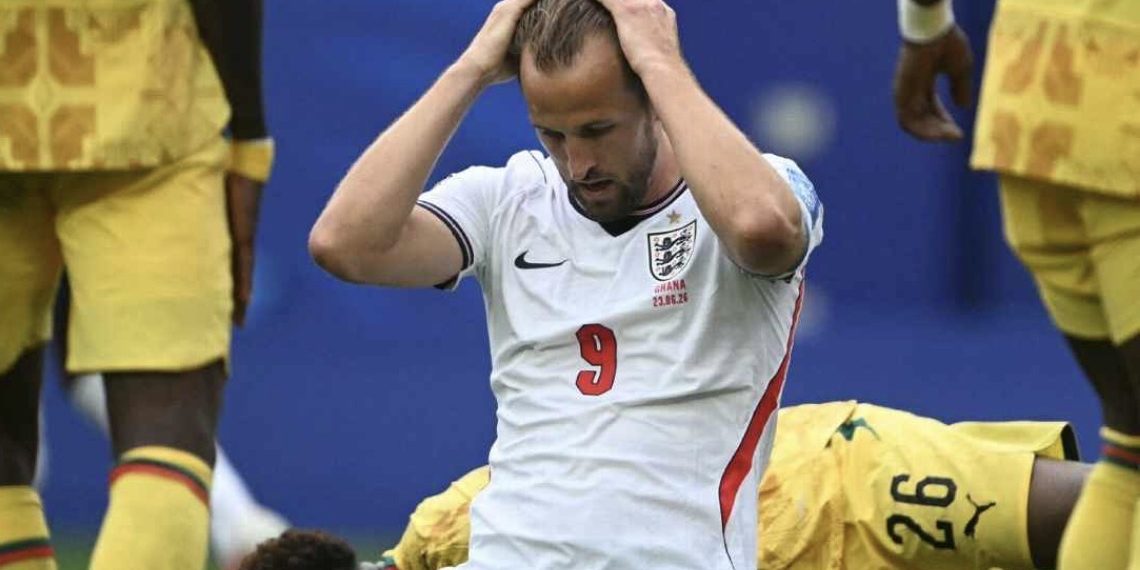

Table of Contents
- Harry Kane had not missed a penalty for club or country from the 2022 World Cup quarter-final defeat to France in Qatar onward, a run that ended when he slipped and struck the crossbar against Spain at Wembley.
- The miss came with England leading 2-1 in a UEFA Nations League opener, and Spain went on to score twice more to win 3-2 through Alex Baena and Mikel Oyarzabal.
- Thomas Tuchel said the missed penalty was the “decisive moment” of the game and that England must “take the points back” from Czechia in their next fixture.
A Penalty Record That Had Survived Every Test After Qatar
Harry Kane stepped up at Wembley with England 2-1 up on the world champions and the chance to put Spain away. He had not missed a penalty for club or country in the near four years that followed the night in Qatar when he blazed a second-half spot-kick over the bar against France, a miss that ended England’s 2022 World Cup at the quarter-final stage and one of the most replayed moments of his career. Against Spain, he slipped as he struck the ball, double-hit his effort and watched it come back off the crossbar. Spain scored twice more inside twenty minutes and won 3-2.
The build-up to the miss had gone almost entirely England’s way. Lamine Yamal put Spain ahead inside two minutes after Marc Guehi was caught out, but Anthony Gordon levelled in the 36th minute and Kane converted a deflected header just before half-time to put England in front. Head coach Thomas Tuchel described the period that followed the equaliser as the best fifteen minutes his side have produced under his charge. “After ten, twelve minutes, we were the better team,” Tuchel said. “We made two or three big mistakes. We conceded big chances but overall we were better, we dominated, we were in the opponent’s half, created, scored two goals. I think it was our best fifteen minutes after the whistle.”
The Moment Tuchel Believes Cost England the Game
England were awarded the penalty with the scoreline still in their favour, and Kane’s history from twelve yards made the moment feel routine rather than tense. His career penalty conversion rate sits at 84 per cent, and before Wembley he had missed from the spot for England only three previous times, most painfully in Qatar and, before that, in the Euro 2020 semi-final against Denmark, when his effort was saved but he scored the rebound. From the France miss in 2022 onward, he had not failed to convert a single penalty for club or country. That run ended the moment his standing foot gave way.
Tuchel was in no doubt about what the miss cost his team. “He couldn’t unfortunately convert the penalty, and that may have been the decisive moment, because Spain would have, maybe for the first time, believed that their long run of unbeaten games ends here,” Tuchel said. Nico O’Reilly then lost possession near his own box, allowing Alex Baena to level, before Mikel Oyarzabal scored the winner to complete the turnaround. Tuchel pointed to the pattern of errors rather than any single moment when he assessed the wider defensive display. “Then another big mistake for the 2-2, and the third goal was the only goal they really scored,” he said. “The other ones, too many individual mistakes on that level. It is what it is. We have to keep going, learn from it, and take the points back from Czech Republic.”
Kane Has Been Here Before, and Kept Taking the Next One
What separates the Wembley miss from the France miss in Qatar is what it cost. The 2022 miss ended a World Cup. The miss against Spain ended one match in a long league phase, with England still able to recover points against Czechia, Croatia and the rest of their Nations League group. Kane has always taken the next penalty regardless of how the last one finished, and his overall numbers back that up: an 84 per cent conversion rate built across four misses in a career that has produced well over a hundred converted spot-kicks for club and country combined.
The manner of this miss, a slip rather than a poor strike, also sets it apart from Qatar. There, Kane had time to pick his spot and missed the target entirely. At Wembley, his effort was compromised before he made contact, his left foot giving way as he tried to generate power, leaving him unable to properly control where the ball went. It still counted as a miss on the scoresheet. The mechanics behind it were different.
Two Kane Penalties, Two Very Different Outcomes
The strangest detail of the night is that Kane did not have a bad penalty match. He scored one and missed one, in the same 90 minutes, against the same opponent. His converted effort, a deflected header rather than a spot-kick, put England ahead before half-time and briefly had Wembley believing a statement win over the world champions was within reach. The missed penalty came only a matter of minutes into the second half, with England still leading and the crowd still expecting Kane to extend the advantage from twelve yards the way he almost always has.
Anthony Gordon, whose 36th-minute finish drew England level before Kane’s header put them ahead, was central to the spells of pressure that Tuchel highlighted as the best his side has produced. Tuchel’s own assessment points to a team capable of matching Spain for large stretches of the game, undone by a small number of individual errors rather than by any gap in quality between the sides.
What the Result Means for England’s Group
The defeat leaves England needing a response in their next UEFA Nations League A fixture against Czechia, a match Tuchel has already begun preparing for. The manager has made clear he intends to pick many of the same players who started against Spain rather than shape his squad around requests from Premier League clubs managing player workloads in the international window. Spain, meanwhile, extended an unbeaten run that Tuchel believes his side came close to ending, with the missed penalty representing the moment the momentum could have swung decisively toward England instead.
For Kane, the personal narrative around the miss is likely to follow the same pattern as every other setback in his career from twelve yards: acknowledged, absorbed, and followed by another penalty taken the next time the opportunity arises. Wembley’s crowd saw him convert one penalty in the same match he missed another, a detail that undercuts any suggestion his technique or temperament has deserted him. What changed at Wembley was a single step in the run-up. What did not change is a record that, outside of two tournament knockout moments four years apart, has been built on consistency from the spot for both club and country.
Tuchel now has a short turnaround to prepare his squad for Czechia, with the manager already on record about the defending he wants to see tightened rather than any wholesale change in approach. Kane is expected to keep his place and, on current evidence, to keep taking the next penalty that comes his way. Four misses in a career built on more than a hundred converted spot-kicks is not a pattern opposition defenders or England’s own coaching staff appear to view as a weakness worth targeting. It is a single data point in a much longer, much more reliable record, and one that Kane himself has already filed alongside the miss in Qatar as part of the job.

Leave a Comment
More in News

Jack Hendry’s Red Card Inside Ten Minutes Wrecked Sebastien Pocognoli’s First Home Game as Scotland Boss

Cristian Kily Gonzalez Once Lined Up Beside Lionel Messi For Argentina, Now He Is Coaching Him
Cristiano Ronaldo Was an Unused Substitute for Portugal for Only the Third Time in His Career, and Jorge Jesus Has Now Called a Meeting to Calm Him Down

Manchester City Have Until Friday to Appeal Guilty Verdict on 114 of 115 Charges
Tuchel Admits No Time to Check on Guehi and Anderson After City Verdict
Trending on Futbol Chronicle
Celta Vigo postpones LaLiga opener after fungus outbreak damages stadium pitch
What Is Offsides in Soccer? The Offside Rule Fully Explained
Mikel Arteta backs ‘warrior’ Bruno Guimarães to make Arsenal stronger
What Is The Club World Cup?