How the 2026 World Cup Turned Sixteen Host Cities Into Month Long Street Parties
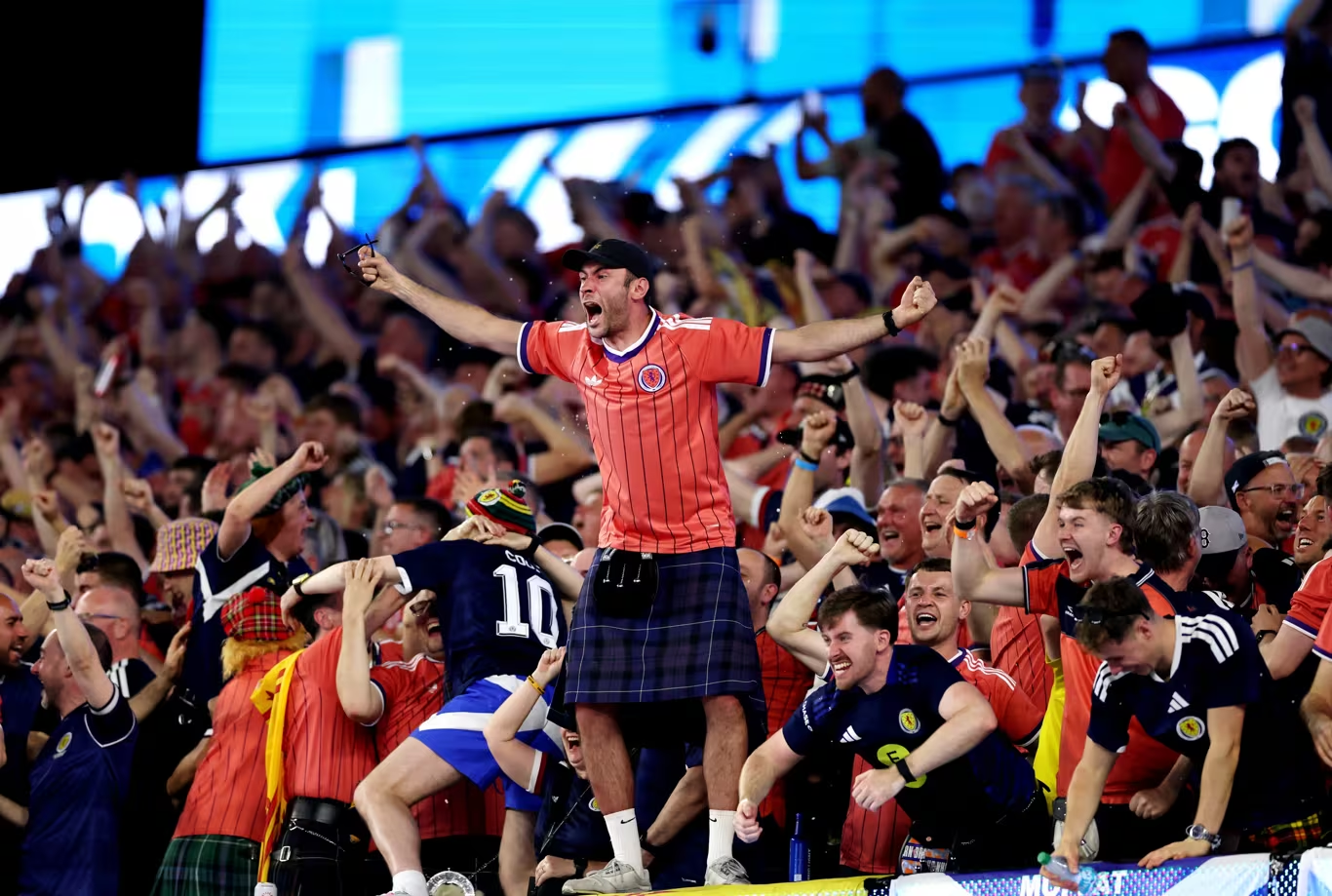
Table of Contents
The most revealing image of the opening week of the 2026 World Cup was not a goal. It was the concourse at a stadium in Atlanta, where a few thousand Cape Verde supporters kept singing long after their team had drawn with Spain, drowning out a crowd that outnumbered them many times over. That scene is being repeated, in different colours and languages, across an entire continent. For the first time, the World Cup is being staged across 16 host cities in three countries, and each of them has turned its public spaces over to a month long celebration that most fans will experience without ever buying a match ticket.
The biggest fan festival programme in the tournament’s history
FIFA has described the 2026 fan festival programme as the largest selection of host city fan events in World Cup history, and the scale is hard to overstate. Each official festival has been designed to reflect the character of the city around it rather than copy a single template. The result is a tournament that looks different depending on where you stand to watch it, from a plaza in the American northeast to a historic square in western Mexico.
Boston has handed City Hall Plaza to the tournament, running an official fan festival from 12 June through 27 June at the heart of the city’s civic centre. Philadelphia, a city that wears its sporting passion as a badge of identity, has gone longer still, with a free festival at Lemon Hill in East Fairmount Park stretching from 11 June all the way to 19 July, close to the final itself. Miami has taken over Bayfront Park from 13 June to 5 July, no ticket required, letting the crowds spill out toward the water in the Florida heat.
The Mexican host cities have leaned into their own heritage. Guadalajara’s festival sits in the city’s downtown, a space rich with culture and history, layering music, art and local food over the giant screens and the football. Smaller cities in the orbit of the tournament have joined in too, with places like Tacoma in Washington State hosting interactive fan zones with big screens and live music for supporters who will never set foot inside a host stadium. The map of the World Cup, in other words, is far larger than its dozen or so venues.
Why most of the World Cup will be watched away from the stadiums
There is a simple reason the fan festivals matter so much this time. The overwhelming majority of supporters will never get near a ticket. A 48 team tournament played across three enormous countries means matches are spread over vast distances, and the cost of attending in person, from tickets to travel to accommodation, places the live experience out of reach for most. For all but a lucky few, the World Cup is something to be watched, not attended.
That is why analysts expect the dominant fan experience of 2026 to be the watch party rather than the stadium seat. Supporters will gather in pubs, sports bars, living rooms, restaurants, gardens and on balconies, building their own version of the tournament around a screen and a crowd of friends. The fan festival is the public, civic form of the same instinct, a place to do collectively what millions will do in smaller groups at home. The shared act of watching, it turns out, is the real mass participation event of a modern World Cup.
This is not a lesser way to follow the tournament. Some of the most enduring memories of past World Cups were made not in the stands but in packed bars and on city squares where strangers became a temporary community for 90 minutes. The 2026 edition has effectively built that experience into its design, scattering official gathering points across a continent so that the celebration is never far from wherever a fan happens to live.
How a host city is reshaped by the tournament
Researchers who study mega events point out that a World Cup does something to a host city that lasts beyond the final whistle. Public spaces are reprogrammed, transport patterns shift, and a city is handed a rare chance to present itself to the world on its own terms. The 2026 tournament offers three national self presentations, from the United States, Mexico and Canada, alongside 16 distinct host city presentations, each one a small argument about what that place is and who it belongs to.
That is a storytelling opportunity unlike any in the tournament’s past. A single host nation gets to define the narrative of an ordinary World Cup. A 16 city, three nation tournament fractures that narrative into dozens of local versions, each shaped by the community staging it. Philadelphia’s festival will feel nothing like Guadalajara’s, and that difference is the point. The fan festival is where a host city tells visitors what it values, in the food it serves, the music it plays and the way it gathers people together.
For the cities themselves, the calculation is part civic pride and part hard economics. A month of crowds in a central park or plaza means weeks of spending in surrounding businesses, a stress test of a city’s ability to host on a global stage, and a showcase that tourism boards will be replaying for years. The football is the draw, but the festival is the chance to convert a worldwide audience into future visitors.
The diaspora effect
There is one feature of these gatherings that sets the 2026 World Cup apart. The host nations, and the United States in particular, are home to enormous immigrant communities from almost every country in the tournament. That means a fan festival in an American city can become a home crowd for a team from the other side of the world. The Cape Verde supporters who out sang Spain in Atlanta were not a travelling few. Many were drawn from a diaspora that has lived in the region for generations, and the same will be true for nations across the bracket.
That changes the atmosphere of the whole event. In a tournament where most teams are technically playing away from home, many will find pockets of fervent local support waiting for them, a built in crowd that turns a neutral venue into something close to a home ground. The fan festivals magnify that effect by giving these communities a public square to claim for an afternoon. A World Cup hosted in three countries has quietly become a World Cup hosted by dozens of communities at once.
The festival as a city’s calling card
Walk through any of these sites and the football is only part of what is on offer. The festivals are built around giant screens, but they wrap those screens in live music, local food vendors, art and family activities, so that a visitor who arrives for a match stays for the afternoon. Guadalajara has folded its festival into a downtown already full of culture and heritage. Philadelphia has placed its in a historic park. Each city is using the tournament as a stage to perform its own identity for a global audience.
The lengths of the events tell their own story about ambition. Boston’s two week run is timed tightly around the matches it will host, a focused burst of celebration. Philadelphia, by contrast, has committed to more than five weeks, keeping its festival open from the opening days of the group stage almost to the final. A city does not give over a major public park for that long without expecting a return, whether in tourism, in spending or simply in the goodwill of being remembered as a place that knew how to throw a party.
The free, no ticket model is the key to all of it. By removing the barrier of a ticket, the festivals open the tournament to families and casual fans who would never consider buying their way into a stadium. That accessibility is the whole point. The World Cup has always claimed to belong to everyone, and a free festival in the centre of a city is the most direct way of making that claim true rather than aspirational.
What it means for the future of the tournament
The 2026 model is a glimpse of where the World Cup is heading. As the tournament grows, with 48 teams now and the matches spread ever wider, the in person stadium experience becomes the privilege of a shrinking minority. The fan festival is FIFA’s answer to that problem, a way of keeping the mass of supporters connected to an event most of them cannot physically attend. Expect the idea to grow rather than shrink at future tournaments.
There is something fitting about a World Cup that places its emotional centre in public squares and crowded bars rather than only in the stands. Football has always been a sport of the many, watched and loved by people who will never see a game live. The 2026 tournament has built its festivals around that truth, turning 16 cities into month long street parties and inviting everyone to take part, ticket or no ticket.
By the time the final is played in July, the lasting images may well come from those squares as much as from the pitches. A goalkeeper from a chain of islands silencing a superpower is a moment for the history books. The thousands who celebrated it in a stadium concourse, and the millions who will roar at screens in parks and pubs across a continent, are the reason a World Cup feels like the whole world stopping to watch at once.

Leave a Comment
More in News
‘You Ain’t Going to Win’: Carrick Was Right, United’s Numbers Show It
Gianni Infantino Gets Re-Election Boost as Asia Chief Drops His Criticism

Oliver Glasner Insists Forest Deserve More After Five Defeats in Eight Games

Xabi Alonso Turned Pedro Neto Into Chelsea’s Wing-Back After £100m Price Tag
Michael Carrick Refuses to Rule Out Dropping Bruno Fernandes in Emotional Address
Trending on Futbol Chronicle
Michael Carrick admits Manchester United have “no excuses” after AC Milan defeat
The Best Soccer Players of All Time: The 10 Greatest Ever Ranked
The Best World Cup YouTubers to Follow in 2026

Map of All the Premier League Teams for 2025/26