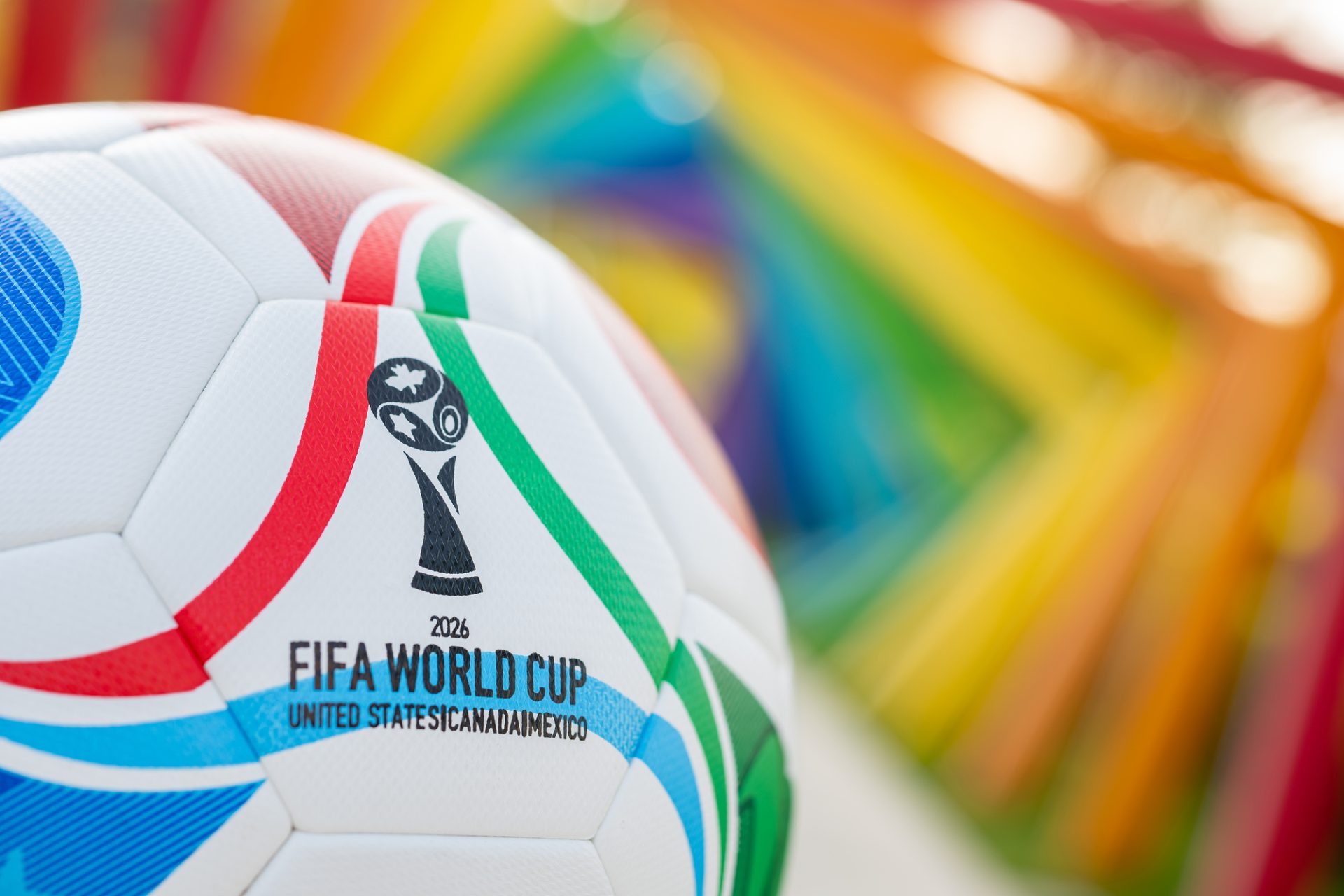
How the World Cup’s Microchip Ball Settles Offside Calls in Seconds


Table of Contents
Somewhere inside the official ball of the 2026 World Cup, a sensor no bigger than a coin is taking 500 readings a second. It does not care about the score, the crowd or the occasion. It simply records every twitch, spin and acceleration of the ball in three dimensions and beams that data to a control room, where it helps decide whether a goal stands or a striker was a toe offside. The Adidas Trionda looks like a football. It behaves like one too. But it is also the most closely monitored object on the pitch, and it has quietly changed how the most contentious decisions in the sport get made.
For casual fans watching England, the United States or anyone else this summer, the ball is easy to overlook. Yet the technology packed inside it explains why offside calls that once took agonising minutes now resolve in seconds, and why a goal scored within moments of a substitute stepping on could be confirmed almost instantly. Understanding the Trionda is a way of understanding how this World Cup actually works.
What the Name Actually Means
The Trionda takes its name from a blend of “tri,” meaning three, and “onda,” the Spanish word for wave. Triple wave, in other words, a nod to the three host nations spread across the United States, Mexico and Canada. The visual design carries the theme through, but the name is doing more than marketing work. Three countries, three federations and three time zones are hosting a single tournament, and the ball is one of the few things every match shares in common, from a group game in Guadalajara to a knockout tie in Toronto.
Adidas has supplied the World Cup ball since 1970, and each edition tends to come with a headline feature. This one is the technology you cannot see. The Trionda is what Adidas and FIFA call a connected ball, and the connection runs through a small piece of hardware buried in its construction.
The Chip Inside
The heart of the system is a side-mounted inertial measurement unit, an IMU chip, tucked inside one of the ball’s four panels. An IMU is the same broad class of sensor that tells your phone which way up it is held. In the Trionda it does something far more demanding. It captures the ball’s movement 500 times every second, tracking acceleration and fine changes in motion across all three dimensions. That is a torrent of data, and it is streaming the entire time the ball is in play.
The technology was developed by FIFA in partnership with Kinexon, a company based in Munich that specialises in real-time tracking. The sensor sits suspended at the centre of the ball, balanced so it does not affect the weight distribution or the way the ball flies. Players cannot feel it. A striker bending a free kick or a defender hacking a clearance has no sense that anything is different. That was the entire point. The first rule of building a smart ball is that it still has to be a ball.
How It Settles an Offside in Seconds
The real value of the chip shows up at the moments that used to make supporters tear their hair out. Consider a tight offside. The old semi-automated systems relied on cameras tracking player limbs and estimating the precise instant the ball was played. That estimate was the weak link. Get the moment of the pass wrong by a fraction of a second and the offside line shifts, sometimes enough to change the decision.
The connected ball removes the guesswork about that one critical instant. Because the sensor registers the exact moment the ball is kicked, recorded as a sharp spike in acceleration, the video assistant referee knows precisely when the pass was made. Combine that with the camera data tracking where every player stood at that instant, feed both into the system, and the offside call resolves far faster and with far more confidence than before. The chip does not replace the cameras. It anchors them to a moment of truth they could only previously approximate.
The same precision helped explain one of the early talking points of the tournament, when a goal scored almost immediately after a substitute entered the pitch was allowed to stand. The ball data made the timing indisputable. What would once have been a drawn-out review became a quick confirmation, because the system knew exactly when the ball was struck.
The Battery Problem Nobody Thinks About
A sensor recording 500 times a second needs power, which raises a question most fans never consider. What keeps it running, and what happens if it stops? The Trionda contains a small rechargeable battery that powers the chip continuously through a match. Before every fixture the ball is placed on a wireless charging dock, with energy transferred through inductive charging in the same way a modern phone tops up without being plugged in. There are no ports, no cables and nothing to puncture the surface.
Match officials keep multiple balls ready, all charged and all connected, so that if one needs swapping the data feed never drops. The ball that goes out of play for a throw-in is not the only one alive. The system is designed so that play continues without interruption even as balls are rotated, with each one feeding the same stream of information. It is a logistical operation hidden in plain sight, run by people most viewers will never see, ensuring the technology never becomes the story for the wrong reasons.
How We Got Here
The Trionda did not appear out of nowhere. Connected-ball technology made its World Cup debut at the previous tournament, where the match ball carried a similar sensor that helped officials with offside and contact decisions. That edition proved the concept worked under the pressure of the biggest matches, but it also exposed the limits. The data was useful, yet the surrounding systems were slower and the integration with camera tracking was less refined. Fans still endured long waits for some decisions while operators pieced the picture together.
What has changed for 2026 is the speed and the polish of the whole apparatus around the ball. The sensor itself is broadly familiar, but the pipeline that carries its data to the video assistant referee, fuses it with player-tracking cameras and renders a verdict has been rebuilt to run faster. The result is that a technology which felt experimental a few years ago now feels routine. That is usually how sporting progress goes. The first version proves it is possible, the second version makes it reliable enough that people stop noticing it is there.
Adidas and FIFA have also had to win over the people who matter most, the players and goalkeepers who must trust that a ball stuffed with electronics still flies true. Every World Cup ball draws complaints from someone, usually keepers who feel the flight is unpredictable. The engineering challenge with a connected ball is doubled, because the sensor must be perfectly centred and the panels balanced so that nothing about the weight or aerodynamics betrays the hardware inside. By most accounts the Trionda has cleared that bar, which is itself an achievement worth pausing on.
Part of a Wider Shift
The connected ball is one strand of a broader push to wire the modern World Cup. FIFA has rolled out enhanced semi-automated offside technology, AI-assisted tools and richer broadcast data, all aimed at making decisions faster and giving viewers more to chew on. The ball is the most elegant piece of it because it is the least intrusive. No extra cameras in a player’s eyeline, no wearable strapped to anyone, just a sensor doing its work inside the object the whole sport revolves around.
There are critics, and their concerns are fair. Some worry that the relentless drive toward technological certainty drains the game of the human argument that has always been part of its charm. Others point out that even perfect ball data cannot resolve subjective calls, the handballs and fouls where the question is intent and interpretation rather than position and timing. The Trionda answers the where and the when. It cannot answer the should.
The Ball as the Quiet Protagonist
For all the debate, the connected ball has already shaped how this World Cup feels to watch. Decisions arrive quicker. The dead time that used to follow a tight goal has shrunk. Fans in the stadium and at home spend less of the match staring at a screen waiting for a verdict. That is a small change in the rhythm of a game, but across a tournament of more than 100 matches it adds up to a different viewing experience.
The next time a goal is given or chalked off in a heartbeat, it is worth remembering the little sensor doing 500 calculations a second inside a ball that looks exactly like the one you kicked around as a kid. The Trionda is the quiet protagonist of this World Cup, a football that is also a measuring instrument, settling the arguments that used to define the sport before anyone has finished shouting about them.

Leave a Comment
More in News

Mourinho Blasts Referee After Atletico Avoid Two Red Cards in Madrid Derby

Cole Palmer Withdraws From England Squad as Gibbs-White Returns Again

Marseille Fans Turn on Owner McCourt as Gomes Can’t Prevent Fifth Straight Loss

Juventus Fans Turn Backs on Silence for Mazzola, Club Slams ‘Lack of Respect’

Trent Alexander-Arnold Returns to the England Squad for the First Time in Over a Year, and Cole Palmer Is Back Too After Their World Cup Snub
Trending on Futbol Chronicle

Mikel Arteta backs ‘warrior’ Bruno Guimarães to make Arsenal stronger

Map of All the Premier League Teams for 2025/26

Arab football federations back Gianni Infantino as FIFA president faces growing opposition
Why Soccer Is The Best Sport