How Tuchel Freed Bellingham To Attack
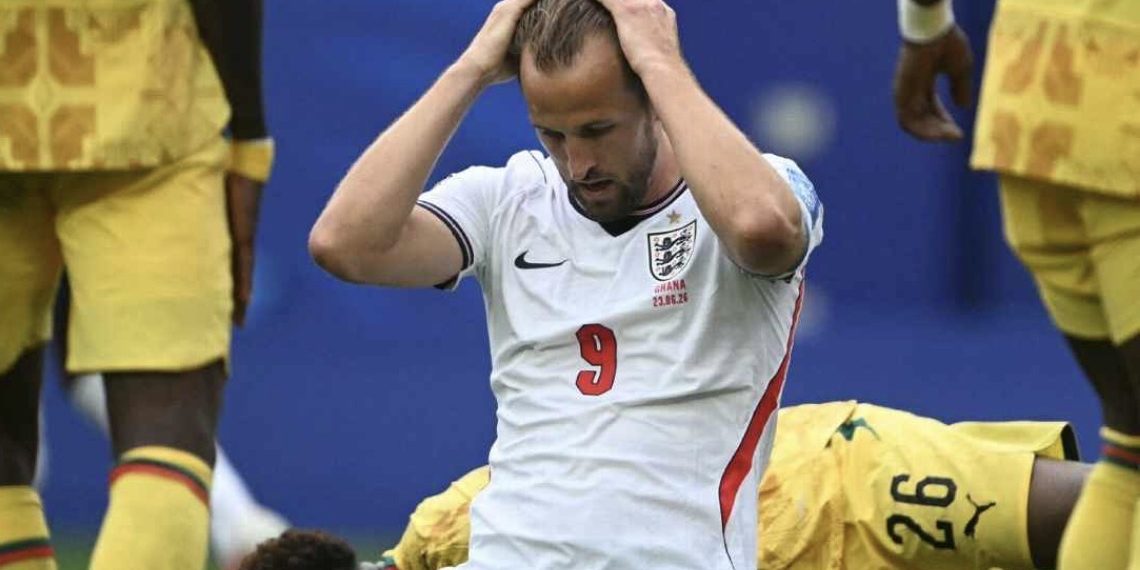

Table of Contents
Thomas Tuchel is fond of crediting the collective. “If any team has heart and belief, then it’s this team,” he said after England’s last-16 win over Mexico. Yet ahead of Saturday’s World Cup quarter-final against Norway, it is individual brilliance from Jude Bellingham, alongside Harry Kane, that has carried England to the last eight.
Bellingham, 23, is playing the best football of his international career under Tuchel, and doing it on the biggest stage the sport has to offer. His man-of-the-match display in the Azteca Stadium showed his all-round value to the side, but it is in attack that the change has been most visible. Four goals in five World Cup games already beat his combined total from the last two tournaments. Only Lionel Messi, Kylian Mbappe, Erling Haaland and his own team-mate Kane have scored more at this World Cup, making Bellingham the tournament’s top-scoring midfielder.
Three of those goals have put England in front: the first of his two against Mexico, and earlier strikes in the group stage against Croatia and Panama. Gary Neville, speaking on Sky Sports News this week, put it plainly. “He has carried England,” Neville said. “These last five matches, he’s been unbelievable along with Harry Kane, but Bellingham has been on another level. I can’t speak highly enough of him.” Sky Sports’ own Power Rankings back that assessment, rating Bellingham the fifth-best performer at the tournament, four places above Kane.
A Different Role On The Pitch
The shift is tactical as much as it is about form. Tuchel has pushed Bellingham higher up the pitch and given him freedom to roam, two changes that sit behind the numbers. His heat maps from the last three tournaments tell the story on their own. In Qatar four years ago, most of his involvement came either side of the halfway line. At Euro 2024, he played further forward but was largely confined to the left. This time, he has been active right across the final third, spending the bulk of his minutes as a number 10 rather than a number 8 and taking on the extra attacking responsibility that comes with it.
The chances have followed. Bellingham is now averaging 2.67 scoring chances per 90 minutes at this World Cup, up from 0.8 per 90 at Euro 2024 and 1.08 per 90 at the last World Cup. His expected-goals numbers have climbed at a similar rate, reflecting the quality of the openings he is now getting rather than just the volume, and he is also winning far more touches inside the opposition box than before. With Elliot Anderson and Declan Rice covering behind him, and Bellingham himself tracking back out of possession, he has been able to play close to Kane, and the pair have built an understanding that is now central to how England attack.
Tuchel’s own explanation for what makes Bellingham different focuses on temperament as much as technique. The England boss has described the midfielder as having the “bite” to drive the team forward and open space in the penalty area, a trait that helps explain why Kane, one of the world’s best strikers with 73 goals for club and country this season, has found extra room to work in behind opposition defences. England and France are the only two teams at this World Cup with two players on four goals or more, a marker of just how much of the goalscoring burden Kane and Bellingham have carried between them.
The Bond With Kane
“I think I’ve built a good relationship with Harry over the last four or five years,” Bellingham said recently. “It’s fantastic to play with him,” Kane added. Their partnership decided the win over Mexico. Kane’s near-post run created the space for Bellingham to head in Bukayo Saka’s cross for the opener, and the pair combined directly for the second: Bellingham fed Kane after a turnover, then continued his own run to finish off Kane’s low cross. It was the second time at this World Cup the two have set up one another, after Bellingham supplied the cross for Kane’s headed goal against Panama in New Jersey. Between them, Kane and Bellingham account for 10 of England’s 11 goals so far.
Bellingham’s tally of four sits behind Messi and Mbappe, both on eight goals after Thursday’s quarter-finals, and Haaland’s seven for Norway, but no midfielder left in the competition has been more productive in front of goal.
Kane’s own campaign has run in parallel with Bellingham’s. Already the owner of 73 goals for club and country this season, his movement in behind defenders has created space that a more withdrawn Bellingham would not have been able to exploit in previous tournaments. The two now look less like a striker and a supporting midfielder than two forwards sharing the same goal, which is precisely the outcome Tuchel set out to create when he pushed his midfielder further up the pitch.
More Than Goals
Tuchel has praised Bellingham for buying into the England “brotherhood” after previously questioning his attitude, and there is no doubting the work he puts in without the ball. “His effort, non-stop running, tackling, tracking back, that’s the type of player we want in our team,” Kane said. “Jude is a fantastic runner with the ball and without the ball, making runs in behind from deep. He’s so hard to track, he’s strong and physical.”
The data backs up the eye test. According to Opta, Bellingham ranks top among England’s players for runs into the final third, runs in behind the defence and runs that are followed by a team-mate’s shot. FIFA’s tracking figures for the tournament put him third for total sprints among every player at the World Cup, behind only Morocco’s Ismail Saibari and Belgium’s Timothy Castagne. “You can rely on Jude in these moments. He loves these pressure games,” Tuchel said.
There is a quieter value to his game too. FIFA’s data shows Bellingham has offered himself for a pass more often than any other player at the tournament, 347 times in total, comfortably clear of Bruno Guimaraes in second place. It helps explain why Tuchel is happy to let him roam rather than tie him to one zone of the pitch.
Tuchel’s own management has drawn credit too, and not just for the positional switch that has freed Bellingham. He fired his players up at half-time against Croatia to turn a nervy start into a comfortable win, brought on Anthony Gordon to change the tide against DR Congo, and got every major substitution right against Mexico when England spent nearly half the match with 10 men. Bellingham’s numbers have improved inside a team that is also being coached better in the moments that decide knockout football.
A Different Norway Test
Norway have earned their place in the last eight the hard way. Their route there has come with a lighter touch than most. Wins over Iraq and Senegal secured their progress out of the group with a game to spare, allowing Stale Solbakken to rest key players before the final group match against France, and knockout wins over Ivory Coast and Brazil followed that few outside Scandinavia saw coming. Alongside Haaland, 21-year-old winger Antonio Nusa has emerged as a direct running threat after his curling opener against Ivory Coast, giving England’s defence more than one problem to solve.
Norway present a different puzzle to Mexico. Erling Haaland has scored seven goals in four games without needing many touches, and Martin Odegaard sits alongside a Norway midfield built to feed him quickly. England’s own attacking spine will need to function at the other end of the pitch to the same standard it defends, and Tuchel’s willingness to let Bellingham play close to Kane, rather than shielding the back line, points to a team set up to win the game in the final third rather than simply avoid losing it.
England’s players did not pick the opponent, but the draw broke kindly all the same. Norway’s 2-1 win over Carlo Ancelotti’s Brazil in the previous round means England have avoided a heavyweight many considered a tougher last-eight test. Tuchel’s players know a place in the semi-finals still has to be won rather than handed to them.
None of it guarantees anything against Norway. Haaland has scored in every match he has played at this World Cup, and one moment of quality from him can undo an otherwise sound England performance. But if the last five games have shown anything, it is that Tuchel’s England now have two players capable of doing the same thing at the other end, and a system built to let them do it together.
England go into Saturday’s quarter-final in Miami with Bellingham playing a version of himself that neither Qatar nor Germany saw. Norway will have their own individual threat to worry about in Haaland, one that has already ended the World Cup for five-time champions Brazil, but England’s route to a first World Cup semi-final in eight years could well run through the same partnership that undid Mexico.

Leave a Comment
More in News

Moise Kean Will Miss Como’s Biggest Game of the Season After Cesc Fabregas Clashed With Italy’s Doctors
Oliver Glasner Returned to Crystal Palace and Fans Turned From Applause to Taunts as Forest Lost
Vinicius Red Card for Hair Pull Leaves Mourinho Snubbing the Press

Bowen’s Saved Penalty Costs West Ham a Shot at Top Spot

Cole Palmer Missed England’s World Cup Squad This Summer, and His Club Have Just Backed Him With a Deal Running to 2034
Trending on Futbol Chronicle

Josef Martinez Returns to MLS Spotlight With Columbus Crew Signing
Cristian Romero completes €40m move from Tottenham to Atlético Madrid

Michael Carrick admits Manchester United have “no excuses” after AC Milan defeat

Map of All the Premier League Teams for 2025/26