Iran Star Taremi Criticises World Cup Visa Issues As Tensions Overshadow Tournament Build-Up
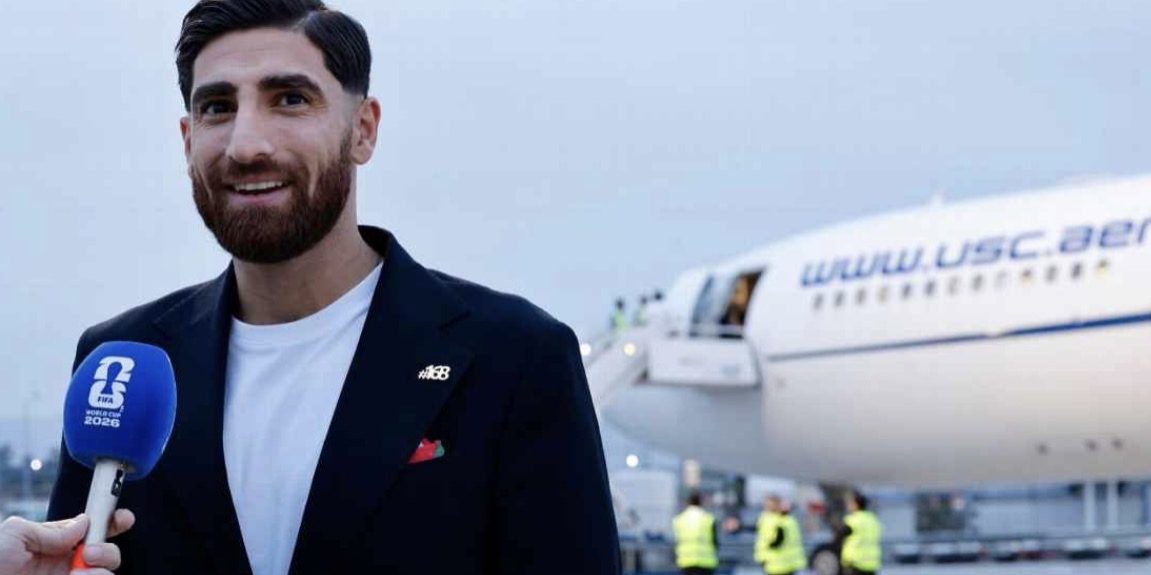

- Iran striker Mehdi Taremi says visa denials and travel restrictions are creating unnecessary tension around the World Cup.
- Fourteen members of Iran’s delegation remain unable to enter the United States despite FIFA efforts to resolve the situation.
- The national team has been forced to base itself in Mexico following disruption caused by the ongoing conflict involving Iran.
The World Cup is supposed to be football’s great meeting place. A tournament where borders blur, rivalries are left to the pitch and supporters from every corner of the globe gather under the same banner.
For Iran, however, the build-up to the 2026 World Cup has felt anything but normal.
Speaking from the team’s training base in Tijuana, Mexico, striker Mehdi Taremi admitted the atmosphere surrounding the tournament has been overshadowed by visa disputes, travel complications and growing political tensions.
The Inter Milan forward, preparing for his third World Cup appearance, said the situation is unlike anything he has experienced at previous tournaments.
“I’ve been to three World Cups and they always say once you get off the plane and you enter the host country, there’s just a unique atmosphere of friendliness and global-ness,” Taremi told ESPN.
“Unfortunately, I’m not feeling it right now. There’s a lot of tension right now in this World Cup. You feel it in the atmosphere and unfortunately, it’s because of actions like visa denials. Maybe that’s just my personal feeling.”
Iran arrived in Mexico on Sunday after relocating from a training camp in the Turkish city of Antalya. Originally, Team Melli had planned to prepare for the tournament in Tucson, Arizona, but FIFA advised the federation to move its base to Tijuana amid complications linked to the ongoing conflict involving Iran.
The move ensured the entire playing squad could travel together, but significant problems remain.
Fourteen members of Iran’s wider delegation have reportedly been denied visas to enter the United States, where all three of the country’s group-stage matches will be played.
Iran begin their campaign against New Zealand in Inglewood, California, before facing Belgium and Egypt later in the group stage.
Among those denied entry was Iran Football Federation vice-president Mehdi Mohammed Nabi.
Despite the setback, Nabi insisted discussions with FIFA remain ongoing.
“The team consists of not just the players and the coach, but also supporting people, technical staff and management,” Nabi said.
“We are all a team as one.
“So FIFA, we’re still pursuing the visas. FIFA has acknowledged that, and we’re still looking into this. Hopefully it gets resolved in the next few days. There should be no discrimination in a sport. Everyone should be treated equally.”
The visa dispute is only one challenge facing Iran ahead of the tournament.
The national team’s preparations have been heavily disrupted since conflict escalated earlier this year. Domestic football in Iran was suspended, forcing the squad to prepare abroad and creating uncertainty over whether the country would even participate in the World Cup.
While FIFA consistently maintained that Iran would take part, the disruption has inevitably affected players and staff.
Forward Alireza Jahanbakhsh admitted football has often taken a back seat.
“It’s been very difficult, I’ll be honest with you, for every single one of us with the whole situation,” Jahanbakhsh said.
“You have to keep checking on your family, on your loved ones, on your people back home and of course it’s affecting the group.
“As Team Melli, we try to do everything to make our people happy, especially in this situation.”
Despite those challenges, federation officials insist the squad remains focused on football.
“We don’t allow our players to get distracted,” Nabi said.
“Our players are professional and they focus on the training and the program we have. They don’t get distracted by the things that are happening outside.”
Another issue emerged this week when Iran’s football federation claimed FIFA had revoked its allocation of supporter tickets for matches in the United States.
Under tournament rules, participating nations are normally entitled to distribute around eight per cent of stadium capacity to their own supporters.
FIFA later confirmed it was working with Iranian officials to find a solution, citing restrictions connected to U.S. sanctions that complicate ticket sales involving residents inside Iran.
“FIFA is working closely with the IR Iran Football Federation to identify compliant solutions that maximize opportunities for Iranian supporters to attend matches,” the governing body said.
For Taremi, the hope is that supporters will still be able to rally behind the team, particularly given the large Iranian community living across North America.
The Los Angeles area alone is home to one of the largest Iranian populations outside the country.
“Obviously some people outside Iran, maybe they are against the government, but we are all Iranian,” Taremi said.
“We are united and we are looking for peace.
“I think they will come there to support us and we have to make them happy and bring joy for them.”
Amid political tensions, travel restrictions and uncertainty off the pitch, Iran’s players now face the challenge of focusing on football.
The World Cup may not have begun in the spirit they had hoped for, but Team Melli remain determined to ensure their story is remembered for what happens on the field rather than everything surrounding it.

Leave a Comment
More in News
Pierre Sage Booed by Palace Fans After Fifth Defeat in Eight Games

Las Vegas server waits on man during lunch shift. Then he hands her several $100 bills during his meal as a tip. Then he hands her an envelope
Alexander Isak Repays £125m Fee After Broken Leg and Four-Goal Debut Year

Michael Carrick Enters Sacking Season as Departing Managers Averaged 310 Days

Tony Pulis Says Man Utd Should Copy Arsenal’s Patience With Carrick
Trending on Futbol Chronicle
Michael Carrick points to lack of sharpness after Manchester United draw with West Ham
Josef Martinez Returns to MLS Spotlight With Columbus Crew Signing

What Is The Club World Cup?
Mikel Arteta backs ‘warrior’ Bruno Guimarães to make Arsenal stronger