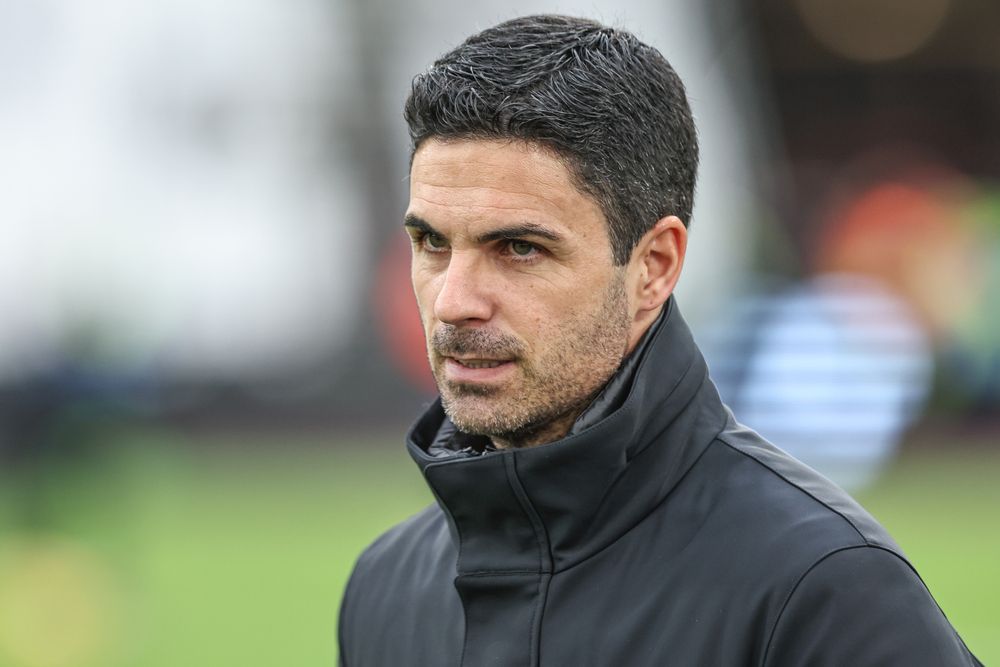
Klopp Returns to the Touchline as Van Dijk Vows to Ruin His Germany Debut
Table of Contents
- Jurgen Klopp takes charge of a football match for the first time in more than two years on Thursday evening, when his Germany side face the Netherlands in the Nations League in Amsterdam.
- Klopp was appointed in July on a contract running to the 2030 World Cup, replacing Julian Nagelsmann, who resigned after Germany lost on penalties to Paraguay in the last 32 of the World Cup.
- Virgil van Dijk, who played under Klopp for six years at Liverpool, says his old manager remains hugely important to him but that the Netherlands will try to spoil his first night in charge of Germany.
Klopp Says He Knows the Dutch Players Better Than Xavi Does
Jurgen Klopp last picked a team for a match in the summer of 2024, before he walked away from Liverpool worn down after nine years and six trophies. On Thursday evening, in the Johan Cruijff ArenA, he picks one again. Germany’s new head coach faces the Netherlands in the Nations League, and the touchline he returns to will not be the Kop. It will be a technical area in Amsterdam, across from a Barcelona legend making his own bow, with a squad still bruised from the summer it just had.
“All the players have the desire, and so we feel a fresh start,” Klopp said, previewing the game. He was not interested in easing into the job with a friendly. “In Amsterdam I haven’t heard of many friendly matches. So it starts straight away,” he said. Asked about the opponent he could have wished for, he shrugged off the idea of a gentle re-entry: “I don’t know who I would have preferred to play against.”
A Job Born Out of a Paraguay Penalty Shootout
Klopp’s appointment traces back to a result nobody in German football wanted to talk about again. Julian Nagelsmann resigned after Germany’s World Cup ended in a penalty shootout defeat to Paraguay in the last 32, an exit that left the federation searching for a manager who could put the national mood back together as much as the results sheet. They landed on Klopp, and he signed a contract that runs all the way to the 2030 World Cup.
He did not pretend the job was a soft landing. “It is my mission to make the national team squad a better team,” he said when he was unveiled. “It is an honour.” He also set out, unprompted, the terms on which he would leave it: “If the DFB says let us discontinue the job, then that’s it. And if you behave badly and don’t leave my family in peace, I’ll be gone.”
Klopp described the role as the end point of his career rather than a stepping stone. “Jurgen Klopp is not going to have any ‘career’ after the national team. This is the pinnacle,” he said. He was equally blunt about where Germany actually stand. “Jurgen Klopp being in the job doesn’t automatically mean we’re going to be world champions,” he said. “At the moment, we have 11 teams ahead of us. Yes, we can beat them, but for this to happen, you need to play very good, intense football.”
Between Liverpool and the Germany job, Klopp had not been out of football entirely. He left Anfield citing energy depletion after winning the Premier League, the Champions League and both domestic cups in his nine years there, and took a role as Red Bull’s global head of football before the Germany post came up. Thursday is his first time picking a team and standing in a technical area after leaving Liverpool.
The Cap That Was About More Than Football
When Klopp named his squad for this window, he did it wearing a baseball cap in German flag colours carrying the phrase “one of 83 million,” a reference to Germany’s population. The timing was pointed: it followed a state election in Saxony-Anhalt in which the far-right AfD party took 43% of the vote. Klopp cast it as a refusal to hand national symbols to one part of the political spectrum. “I don’t want to leave national pride to the wrong people. It fills me with pride to do this job,” he said. “When we spend time focused on football, it’s meant to foster a sense of community and make us feel better.”
“We need to rediscover the fun in all of this,” he added, a message aimed as much at a fractured football nation as at his players. He named 44 players across two squads for this camp: one group for the Netherlands game and a meeting with Greece in Augsburg three days later, a second for matches against Serbia in Munich and Greece again in Thessaloniki in October. Sixteen of the 44 have never won a senior cap. Deniz Undav was left out through fitness concerns, Joshua Kimmich has been moved into midfield after years at right-back, and Marc-Andre ter Stegen has been confirmed as first-choice goalkeeper.
Kimmich, one of the squad’s senior figures, was candid about the position Germany are starting from. “We know we come from a situation that isn’t easy,” he said.
Van Dijk’s Old Boss, Now the Opponent
Nobody in the Netherlands squad has a stranger view of Thursday’s game than Virgil van Dijk. He played under Klopp at Liverpool for six seasons, in a relationship that turned him from a Southampton defender into one of the best centre-backs of his generation and a Champions League and Premier League winner. Now Klopp is the man he is trying to beat. Van Dijk has been open about what his old manager still means to him, while making clear that respect will not soften the Netherlands’ approach to the match itself.
Klopp, for his part, has needled the other dugout rather than Van Dijk’s. His opposite number, Xavi Hernandez, took over the Netherlands from Ronald Koeman and is also facing his first match in the job. “(The Netherlands) are a very strong opponent, with a new coach (Xavi Hernandez),” Klopp said, before adding a line that will do the rounds before kick-off: “I know players from the Netherlands personally more than Xavi knows them.” It is the kind of jab that only makes sense from a manager who spent nine years living inside the Premier League’s Dutch contingent, from Van Dijk to Georginio Wijnaldum.
What Klopp Actually Wants From This Germany Team
Strip away the jokes and the cap and the politics, and Klopp’s football message on Thursday is a fairly simple one: stop conceding so easily. “The team needs stability, it needs a pivot,” he said. “I stand by my opinion: footballing quality shows when a team has stability in defensive behaviour.” It is a return to the version of Klopp that built Liverpool’s best sides, less about the gegenpressing folklore than about a team that trusts its own structure under pressure. “The first lesson for our shared future: we learn to enjoy ourselves under pressure,” he said.
He also made a point of tying himself personally to the group he has inherited, several of whom were part of the squad that lost to Paraguay. “I walk through fire for the players,” he said. For a federation that spent the summer trying to explain a shootout exit to a country that had expected a deep run, that kind of statement, from a manager with Klopp’s record and profile, lands harder before a ball is kicked.
What Comes After the Night in Amsterdam
Germany’s Nations League group also includes Greece, home and away, and a trip to Serbia, giving Klopp four matches in three weeks to start shaping a squad with a 2028 European Championship and a home run at major tournaments to think about beyond that. Xavi is building something just as new in Orange, after Koeman’s departure. Two coaches with enormous reputations from club football, both untested at senior international level, will stand on opposite touchlines in the same stadium on the same evening, watched by a Netherlands captain who has personal history with one of them and professional loyalty to neither.
Klopp has called the national team job the pinnacle of his career, the point after which there is nothing left to chase. Thursday, in a stadium he knows well from his Bundesliga and Champions League years, that chapter begins in earnest, against a former captain who has made it clear he will not be doing his old boss any favours.
A Rivalry Rich With History
Germany and the Netherlands have met on the pitch for more than seventy years, and the fixture rarely lacks context. West Germany beat the Dutch 2-1 in the 1974 World Cup final in Munich, a defeat that still stings for a Netherlands side built around Johan Cruyff and the Total Football system that lit up that tournament. The Dutch got a measure of payback fourteen years later, beating West Germany 2-1 in the Euro 1988 semi-final in Hamburg through goals from Ronald Koeman and Marco van Basten, on their way to the only European title in the country’s history. Xavi Hernandez, now standing on the opposite touchline to Klopp, built his own reputation as a World Cup and European Championship winner with Spain and a four-time Champions League winner with Barcelona, where he later returned as head coach. Neither man has managed at senior international level before Thursday, and both arrive with reputations shaped almost entirely at club football. That shared inexperience in this specific job, set against a fixture with so much history attached to it, is part of what makes Thursday’s meeting in Amsterdam worth watching beyond the two high-profile managers taking their first steps in new roles.

Leave a Comment
More in News

Millwall Promise Strongest Action After Alleged Racist Chants Aimed at Eom Ji-sung

Cristian Chivu Admits He Got Inter Too Fired Up at Half-Time
Clinton Morrison Calls Leny Yoro’s Red Card at Atletico Madrid Soft

New York Man Wants To Pick Up Lunch 2 Minutes After Chipotle Opens. Then He Looks In The Window: ‘Those Employees Def Talking About You’

Enzo Maresca Hits Back: ‘What Do You Want Us to Do?’
Trending on Futbol Chronicle
Celta Vigo postpones LaLiga opener after fungus outbreak damages stadium pitch
Michael Carrick admits Manchester United have “no excuses” after AC Milan defeat
Michael Carrick points to lack of sharpness after Manchester United draw with West Ham
Josef Martinez Returns to MLS Spotlight With Columbus Crew Signing