Marcus Rashford Was Frozen Out at Manchester United and Reinvented Himself in Barcelona for England
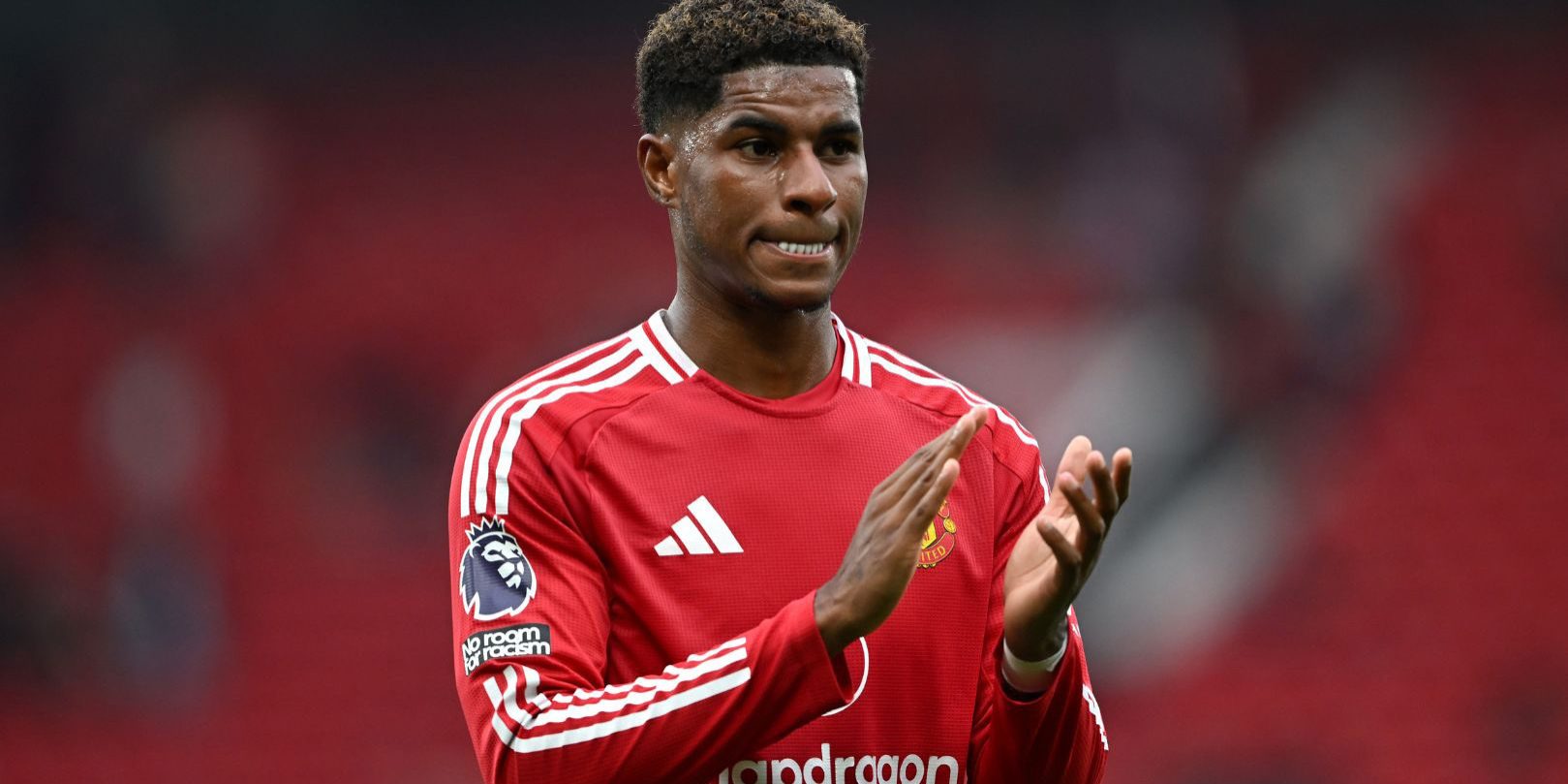

Table of Contents
Eighteen months ago, Marcus Rashford could not get on the pitch. Ruben Amorim had frozen him out at Manchester United, the club he had supported as a boy and joined at the age of seven. The forward who once carried England’s attack and shamed a government into feeding hungry children during a pandemic was training alone, watching matches from home, and wondering whether his international career was already over. When Thomas Tuchel named his first England squad as head coach, Rashford was not in it by reputation. He was in it because he had rebuilt himself from the studs up, first on loan at Aston Villa and then, improbably, as one of the most productive attackers in Spain.
“Thank you very much to Unai Emery, Hansi Flick, Thomas Tuchel, Aston Villa, FC Barcelona, and England for believing in me when things were difficult,” Rashford wrote after learning he had made the World Cup squad. He called it a “full-circle moment.” The phrase carried more weight than the usual platitude. Rashford had travelled a long way to say it.
The Fall Nobody Saw Coming
For a decade, Rashford was a fixture. He scored on his Manchester United debut, then again, then kept scoring. He went to the 2018 World Cup and the delayed Euro 2020 final, where he was one of the three young England players who missed in the penalty shootout against Italy and absorbed a wave of racist abuse that the Football Association and the wider country were forced to confront. He stood up to all of it with a dignity that made him, for a time, one of the most admired figures in British public life.
Then the football stopped flowing. A series of managers at Old Trafford could not coax consistency out of him. His goal return dried up. When Amorim arrived and made clear that effort in training was non-negotiable, Rashford found himself on the outside. By December he was out of the picture entirely, a 27-year-old academy graduate effectively told there was no role for him at the only senior club he had ever known. For a player whose identity was so tied to Manchester United, the rejection cut deep.
The loan to Aston Villa in January was a lifeline more than a triumph. He needed minutes and he needed confidence, and Emery’s side gave him both. It was not spectacular, but it was a start. The bleeding stopped. He remembered what it felt like to be wanted.
Barcelona Changed Everything
The move that fundamentally altered his trajectory was the one almost nobody predicted. Barcelona, under Hansi Flick, took a chance on a player many in England had written off. Within six months he had become one of the team’s most important attackers. The numbers tell the story plainly: 14 goals and 14 assists, a return that placed him among the most decisive forwards in Europe across the season. He was no longer a project or a reclamation case. He was a starter at one of the biggest clubs in the world, trusted in the biggest matches.
What changed was partly tactical and partly psychological. Flick used him in positions that let him run at defenders and arrive in the box rather than asking him to hold the line of a struggling side. The freedom suited him. But the deeper shift was confidence. Players who have been told they are not good enough often carry that voice with them. Rashford spent six months silencing it goal by goal, assist by assist, in front of a Camp Nou crowd that had no history with him and judged him purely on what he did with the ball.
His former club hovered over the conversation. When Rashford issued his statement after the England call-up, he thanked Emery, Flick, Villa, Barcelona and England. He did not mention Manchester United. The omission was read, correctly, as a quiet line drawn under a chapter that had ended badly. Football365 reported that Tuchel had even urged Rashford to speak directly with Flick about cementing his Barcelona future, a sign of how seriously the England manager took the forward’s club situation.
Why Tuchel Kept the Door Open
Tuchel has never hidden his belief in Rashford’s ceiling. He has said the forward “can be one of the best in the world” if he reaches his full potential, the kind of statement managers usually reserve for players half Rashford’s age. But Tuchel also made the terms of the relationship clear. “He is in a good place, he’s in our squad because he deserves it,” the German said at a pre-tournament press conference. “He needs to prove himself in Barcelona every three days, which is good for us.”
That blend of faith and demand has defined Tuchel’s approach to a squad he inherited rather than built. He recalled Jordan Henderson, a selection branded “a bit left field” by Alan Shearer, and he kept the door open for Rashford when the easier path would have been to move on. Tuchel is the first German to manage England, tasked with ending six decades without a major men’s trophy, and he has shown a willingness to back players whose stories do not fit a tidy narrative. Rashford is the clearest example.
The forward’s inclusion also gives England something they have lacked: a genuine option who can change a game from the bench or stretch a defence from the start, sharpened by the relentless rhythm of a Barcelona season. In a squad rich with attacking talent, Rashford has earned his place not on what he once was, but on what he became after the worst stretch of his career.
The Weight He Has Always Carried
To understand why Rashford’s resilience runs so deep, it helps to remember what he has shouldered off the pitch. During the pandemic, while still in his early twenties, he led a campaign that forced the British government to reverse course and extend free school meals to vulnerable children through the holidays. He did it because he had lived it. He has spoken openly about relying on free school meals and food banks as a boy in Wythenshawe, raised by a mother working multiple jobs to keep food on the table. The campaign earned him an MBE and a level of public respect that few footballers ever reach.
That experience cut both ways. It made him a national figure far bigger than his football, but it also meant that when his form dipped, the scrutiny was merciless and personal. Every quiet match was framed as a fall from grace. A player who had been held up as a model citizen became an easy target the moment the goals stopped. Carrying that weight while trying to rediscover your game is a burden most of his peers have never had to imagine. Rashford absorbed it, kept his composure, and let his football do the answering once he found the right environment. The maturity that drove the school-meals campaign is the same maturity that allowed him to walk away from Manchester United without bitterness and rebuild in a foreign league. The cause that made him famous and the comeback that revived him spring from the same source.
What the Comeback Says About the Game
Rashford’s revival lands at a moment when English football is increasingly comfortable with players leaving the Premier League to find themselves abroad. For years the assumption was that an England career required a home address in Manchester, London or Liverpool. Jude Bellingham at Real Madrid and now Rashford at Barcelona have helped break that. A move to Spain is no longer an exile from the national team. It can be the thing that saves a national-team place.
There is a human lesson too, one that resonates beyond the tactics. Rashford was at his lowest at the club that made him, surrounded by the familiarity that was supposed to protect him. He recovered by leaving, by being a stranger in a new dressing room where nobody owed him anything. Sometimes a fresh set of eyes sees the player you still are rather than the player you used to be. Barcelona looked at Rashford and saw a forward worth backing. He repaid them, and in doing so repaid himself.
A Different Player at a Home Away From Home
As England open their World Cup campaign in the United States, Rashford arrives not as the wounded star of Euro 2020 but as a forward who has already answered the hardest question a footballer can face: whether he could come back at all. The penalty miss against Italy, the abuse that followed, the slow decline at United, the cold winter on the margins. He has walked through all of it and emerged with his best club form in years.
Whatever happens in the group stage and beyond, the comeback is already complete. Marcus Rashford was frozen out, written off and shipped to Spain, and he turned every one of those setbacks into the foundation of a redemption that put him back in an England shirt. For a player who has spent his career carrying weight far heavier than a football, the full circle feels earned.

Leave a Comment
More in News
‘You Ain’t Going to Win’: Carrick Was Right, United’s Numbers Show It
Gianni Infantino Gets Re-Election Boost as Asia Chief Drops His Criticism
Oliver Glasner Insists Forest Deserve More After Five Defeats in Eight Games
Xabi Alonso Turned Pedro Neto Into Chelsea’s Wing-Back After £100m Price Tag
Michael Carrick Refuses to Rule Out Dropping Bruno Fernandes in Emotional Address
Trending on Futbol Chronicle
Celta Vigo postpones LaLiga opener after fungus outbreak damages stadium pitch
Why Soccer Is The Best Sport
Mikel Arteta backs ‘warrior’ Bruno Guimarães to make Arsenal stronger
Michael Carrick points to lack of sharpness after Manchester United draw with West Ham