Only Ten of Haiti’s World Cup Players Were Born in Haiti
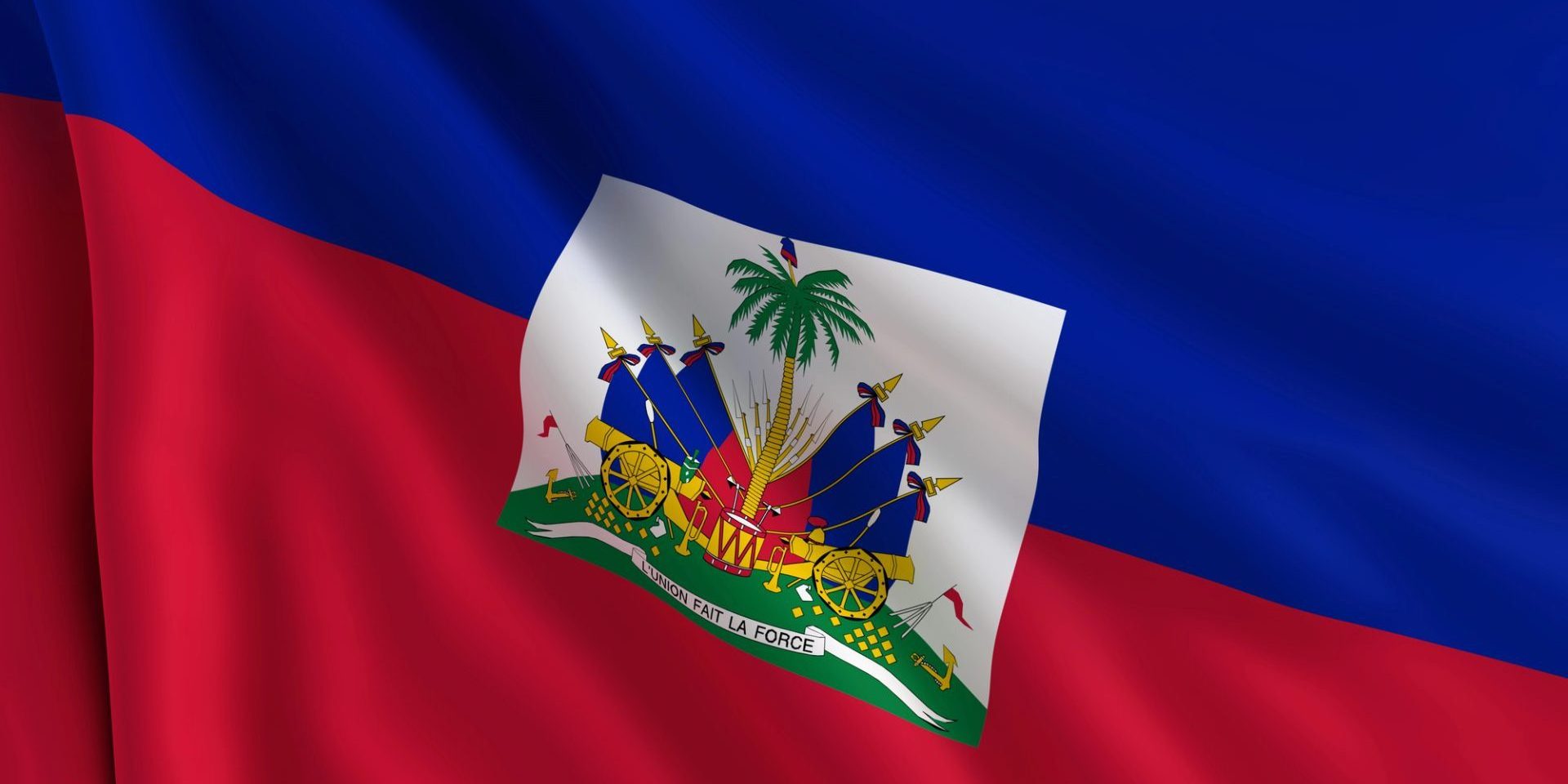

Table of Contents
When Haiti walked out for their first World Cup match since 1974, they carried the hopes of a Caribbean nation of roughly 11 million people. Yet only ten of the 26 players in the squad were actually born there. Twelve were born in France, one in Canada, one in Switzerland and two in the United States. Just one member of the squad, midfielder Woodensky Pierre of Violette Athletic Club, plays his club football in Haiti itself. The team representing Haiti at football’s biggest tournament is, in the most literal sense, a team of the Haitian diaspora, and that makes their story far richer than the familiar underdog tale.
Haiti’s return to the World Cup after a 52-year absence is being celebrated across the Caribbean and in Haitian communities from Paris to Miami. But the composition of the squad tells a deeper story about migration, opportunity and how a nation facing profound hardship at home can still assemble a team good enough to reach the sport’s grandest stage. This is not simply a fairy tale. It is a map of where Haitian families have gone, and what their children have built once they got there.
A Squad Built Across Oceans
The numbers, laid out by The Haitian Times when the roster was unveiled, are striking. Of the 26 players, all but one developed abroad, primarily in France, Belgium, England, Portugal, the United States and Canada. These are not players who learned the game on Haitian pitches and were scouted into European academies. They are, for the most part, the children of Haitian emigrants who grew up inside some of the best football development systems in the world and chose to represent the country of their parents and grandparents.
Consider Hannes Delcroix. He was born in the Artibonite Valley in Haiti, but moved with his parents to Belgium as a child. There he trained at the academy of Anderlecht, one of the country’s most storied clubs, and even played for Belgium’s youth international teams before committing his senior future to Haiti. He now plays professionally in Switzerland. His path, from a Haitian valley to a Belgian academy to a Swiss league to a World Cup in Haiti’s name, is the squad in miniature.
Why France Shaped the Team
No country has shaped this Haiti side more than France. The Haitian diaspora in France is relatively small, estimated at around 100,000 people, far smaller than the Haitian communities in the United States. But those families settled in a country with one of the most successful football training systems on earth, the same system that has produced a conveyor belt of World Cup winners for the French national team.
Many children of immigrants in France grow up in the housing estates that ring Paris and other cities, facing real social and economic barriers. As researchers writing in The Conversation have detailed, sport, and football in particular, often represents the clearest route to a better life. The local clubs are well organised, the coaching is excellent and the pathway to professional academies is established. Children of Haitian descent funnelled into that system have emerged as polished footballers, and a dozen of them now wear Haiti’s colours. The same dynamic that built France’s golden generations has, as a by-product, helped build Haiti’s.
The Coach Who Pulled It Together
Holding this geographically scattered group together is Sébastien Migné, a 53-year-old Frenchman who played professionally for four clubs between 1989 and 2002 before moving into coaching. He spent years as an assistant and youth coach, then took on senior national-team roles across Africa before arriving with Haiti. Managing a squad drawn from half a dozen countries is a particular challenge. Players arrive speaking different first languages, schooled in different football cultures, many of them having never lived in the country they represent.
Migné’s task has been to forge a shared identity out of that diversity, to make players who grew up in Paris, Brussels, Lisbon and Florida feel like a single Haitian team. It is a job that involves as much psychology and diplomacy as tactics. The reward arrived when his side qualified, ending a wait that stretched back more than half a century to a generation of Haitian footballers most of his current players never saw.
Echoes of 1974
To grasp what this return means, you have to reach back to the only previous Haiti side to play at a World Cup. In 1974, in West Germany, a Haiti team drawn entirely from the domestic game arrived as rank outsiders and produced one of the tournament’s most famous moments. Striker Emmanuel Sanon scored against Italy, ending a record run of more than 1,100 minutes without conceding for the legendary goalkeeper Dino Zoff. Haiti lost the match and exited at the group stage, but Sanon’s goal entered Caribbean folklore. For half a century it stood as the high point of Haitian football, a memory passed down through families who had never seen the team play live.
The contrast with the current squad is stark and instructive. That 1974 team was homegrown to a man, a product of Haitian pitches and Haitian coaching at a time when the domestic game was stronger and the country more stable. The 2026 team is its mirror image, a side assembled almost entirely from talent raised abroad. The two squads, separated by 52 years, tell the story of what happened to Haiti in between. The decline of domestic infrastructure, the waves of emigration, the search for opportunity overseas. The same flag, the same anthem, two completely different routes to the same stage.
For older Haitians who remember Sanon, watching this diaspora generation carries a complicated joy. The team is back where it belongs, but the path it took to get there is a reminder of everything that changed. That tension, pride braided with loss, runs through the whole experience of supporting this side.
More Than a Flag of Convenience
It would be easy, and wrong, to dismiss a diaspora team as players reaching for any international cap they can get. The reality is more complicated and more moving. Many of these footballers had the option to chase recognition with the wealthy European nations where they were raised. Choosing Haiti meant choosing the harder, less glamorous path, tying themselves to a country wrestling with political instability, gang violence and economic crisis, a place some of them know mainly through family stories and visits.
That choice carries meaning for Haitians everywhere. A nation that has dominated headlines for its suffering gets, for the duration of a World Cup, to be known for something joyful. Children in Port-au-Prince and in the Haitian neighbourhoods of Brooklyn and Montreal get to see their flag at the centre of the global game. The players become a bridge between the Haiti their parents left and the wider world those parents moved toward, proof that the diaspora has not forgotten where it came from.
What Haiti’s Story Reveals
Haiti is far from alone in this. Across the 2026 World Cup, the expanded 48-team format has drawn in nations whose squads lean heavily on players raised abroad, and the tournament has become, among other things, a portrait of global migration. Morocco’s run to a semi-final at the previous World Cup was powered by players born in Europe. Many smaller nations now scout the diaspora as a matter of strategy. Haiti is simply the most concentrated example, a team almost entirely composed of the children of those who left.
There is a bittersweet truth underneath the celebration. A squad this dependent on foreign-developed talent reflects how difficult it remains to build elite footballers inside Haiti itself, where infrastructure, funding and stability are scarce. The very migration that made this team possible is rooted in the hardships that pushed families away in the first place. Lone domestic player Woodensky Pierre stands as a reminder of the homegrown talent that Haitian football could develop with the resources its diaspora found elsewhere.
A Team That Belongs to Everyone Who Left
When Haiti take the field, the watching audience is not confined to one country. It stretches across the Atlantic to the estates of Paris, north to Montreal and Brooklyn, and home to the streets of Port-au-Prince. The team is a living record of a people scattered by circumstance and held together by something stronger than geography. Only ten of these players were born in Haiti, but all 26 chose to be Haitian when it counted.
That is the real story of this squad. Not that a small, struggling nation produced a World Cup team against the odds, though it did, but that a global community separated by oceans found a way to stand together under one flag. For a country that has known so much loss, the sight of its sons playing on football’s biggest stage, drawn from every corner of the world its families reached, is a kind of homecoming. Haiti waited 52 years for it, and the team that finally arrived belongs to everyone who ever left.

Leave a Comment
More in News
Mourinho Blasts Referee After Atletico Avoid Two Red Cards in Madrid Derby

Cole Palmer Withdraws From England Squad as Gibbs-White Returns Again
Marseille Fans Turn on Owner McCourt as Gomes Can’t Prevent Fifth Straight Loss

Juventus Fans Turn Backs on Silence for Mazzola, Club Slams ‘Lack of Respect’

Trent Alexander-Arnold Returns to the England Squad for the First Time in Over a Year, and Cole Palmer Is Back Too After Their World Cup Snub
Trending on Futbol Chronicle

Map of All the Premier League Teams for 2025/26
The Best World Cup YouTubers to Follow in 2026
Michael Carrick admits Manchester United have “no excuses” after AC Milan defeat
What Is The Club World Cup?