
Scotland Waited 10,244 Days for a World Cup Goal and John McGinn Ended It in Boston
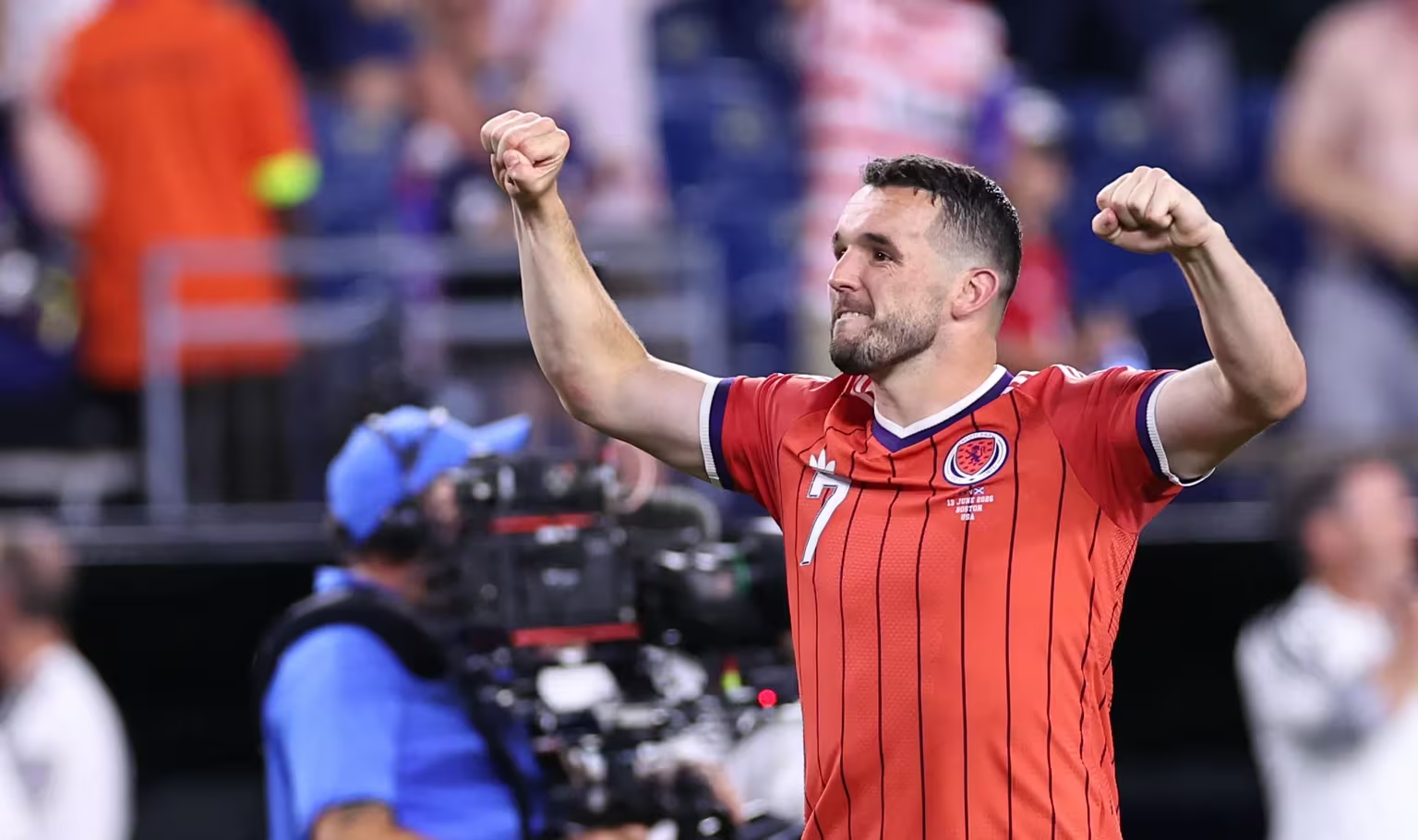
Table of Contents
The number is almost too neat to be true. Ten thousand, two hundred and forty four days. That is how long Scotland waited between World Cup goals, from Craig Burley’s strike against Norway in the summer of 1998 to the moment John McGinn arrived in the Haiti penalty area on a warm night near Boston and ended nearly three decades of hurt in a single swing of his right boot. When the ball hit the net in the 28th minute, a corner of New England turned tartan, and a generation of Scottish supporters who had grown up on near misses and qualifying heartbreak finally had a World Cup goal to call their own.
Scotland beat Haiti 1-0. On the face of it, a tight win over a side ranked well below them is not the stuff of legend. But for a nation that had not appeared at a World Cup since France 98, and had never once made it out of the group stage in any tournament it reached, the result carried a weight that the scoreline alone cannot explain. Steve Clarke’s team sit top of Group C, and for the first time in living memory Scotland are not just at a World Cup. They are winning at one.
The Goal That Ended the Wait
The move itself was unfussy, which somehow made it more fitting. Scotland worked the ball into the right channel, the cross came in, and McGinn timed his run to meet it the way he has done for Aston Villa for the better part of a decade. There was no deflection to apologise for, no scramble, just a clean finish from a player who has carried the team’s attacking burden through some lean years. He wheeled away towards the support, arms wide, and behind him the Tartan Army erupted in a noise that had been building for twenty eight years.
For McGinn, the timing felt earned. He has been a constant in Clarke’s side, the midfielder who scores the goals Scotland cannot otherwise find, the man whose energy sets the tempo. To be the one who broke the drought, in Scotland’s first World Cup match since before many of the current squad were born, gave the moment a storybook quality. Craig Burley, whose 1998 goal had stood alone for so long, could finally hand the baton on.
Twenty Thousand Strong in Boston
The most remarkable scenes were not on the pitch but around it. An estimated 20,000 to 30,000 Scotland supporters made the trip across the Atlantic for the group stage, descending on Boston in numbers that startled the locals and turned the area around the stadium into a sea of kilts, Saltires and song. The Tartan Army has long held a reputation as among the most travelled and good natured support in world football, and they brought every ounce of that reputation to New England.
This is a fan base that has made an art of turning disappointment into celebration. For decades they followed a team that specialised in heartbreak, in conceding late, in losing the matches that counted. They sang anyway. They drank with rival supporters, befriended host cities, and earned goodwill awards at tournaments their team failed to reach the latter stages of. To see them finally rewarded with a World Cup, and then a World Cup goal and win, was to watch loyalty repaid after the longest wait imaginable.
The economic and cultural footprint of that travelling support is its own story. Bars in Boston reported their busiest nights in memory. Locals who had never followed soccer found themselves swept into impromptu choruses of Scottish songs. For a tournament being sold on its global reach, the Tartan Army provided one of its first genuinely viral images, tens of thousands of fans from a nation of five million making more noise than supporters of far larger countries.
How Steve Clarke Built This
None of this happened by accident. When Steve Clarke took charge of Scotland in 2019, the national team was a byword for underachievement, a side packed with honest professionals that never quite added up to the sum of its parts. Clarke, a quiet and meticulous coach who learned his trade alongside Jose Mourinho at Chelsea, set about changing the culture as much as the tactics. He settled on a back three that suited his defenders, demanded organisation, and built a team that was hard to beat before it was easy to admire.
His Scotland reached the European Championship in 2021, their first major tournament in 23 years, and then qualified again for the next edition. Those experiences, painful as some of the results were, taught a group of players how to handle the biggest occasions. Qualifying for this World Cup was the natural next step, and the manner of it, holding their nerve in tight matches, reflected everything Clarke had instilled. The win over Haiti was not a fluke. It was the product of six years of patient construction.
Clarke has resisted the temptation to overhaul his squad with each cycle, trusting players such as McGinn, Andrew Robertson and the emerging talents around them. Among the brightest is Ben Gannon Doak, the young winger whose pace gives Scotland a threat in behind that previous teams lacked. The blend of experience and youth gives this group a balance that Scottish sides of the past, for all their effort, often missed.
The Mountain Still to Climb
Topping the group after one match is cause for joy, but the road ahead is steep. Group C also contains Brazil, one of the favourites for the entire tournament, and Morocco, the side that reached the semi finals in 2022 and announced themselves as a genuine force in world football. Scotland will need at least a draw, and quite possibly a win, against one of those two to give themselves a realistic chance of reaching the knockout rounds for the first time in their history.
That has always been the Scottish ceiling. Eleven World Cup and European Championship appearances before this summer, and not once past the group. The 1974 side went home unbeaten and still did not qualify for the next stage. The 1978 team beat the eventual finalists Netherlands and went out anyway. Scottish football is littered with glorious failures, with nights of brilliance that led nowhere. To finally break that ceiling would mean more to the country than almost any single result in its sporting history.
The expanded 48 team format helps. With more group runners up progressing than in the old structure, a single win and a draw might be enough to see Scotland through. The McGinn goal and the three points against Haiti have given Clarke’s men a platform that no previous Scotland team has enjoyed at this stage of a World Cup. The question now is whether they can hold their nerve when Brazil and Morocco come calling.
The Making of John McGinn
That McGinn was the man to end the wait will surprise nobody who has followed his career. He came through at St Mirren, the club where his grandfather Jack McGinn once served as chairman and later led the Scottish Football Association, giving the family name a place in the game’s history long before John made his own. He moved to Hibernian, scored in a Scottish Cup final win that ended a 114 year wait for the trophy, and earned a move to Aston Villa, where he has become a midfield mainstay in the Premier League and helped drag the club back into European competition.
Along the way he picked up the nickname the Scottish Iniesta, bestowed half in jest by his Villa teammate Jack Grealish but worn with pride by supporters who recognise his importance. He is not a luxury player. He runs, he tackles, he drives the team forward, and he scores the goals that win matches Scotland would once have drawn or lost. For a national side that has often lacked a midfielder capable of producing a decisive moment, McGinn has been the answer for years. It was fitting, then, that the biggest moment of all fell to him.
Why It Means So Much
To understand the scenes in Boston, you have to understand what Scottish football has been through. This is a country of just over five million people that produces an outsized passion for the game, a place where the sport is woven into the identity of cities and towns. Yet for 28 years its supporters watched World Cups as outsiders, following other nations’ dramas while their own team failed to qualify. A whole generation grew up never having seen Scotland at the tournament that defines the sport.
McGinn’s goal closed that gap in an instant. It connected the current team to the sides of 1974 and 1978 and 1998, to the players and supporters who had carried the dream through the barren years. It told every young fan in the crowd that Scotland belonged on this stage after all. Whatever happens against Brazil and Morocco, that cannot be taken away.
There will be harder nights ahead, and the romance of a return could yet end in another familiar disappointment. But for one evening near Boston, none of that mattered. Scotland scored at a World Cup, won at a World Cup, and a travelling army that had waited a lifetime sang until their voices gave out. After 10,244 days, John McGinn gave them the moment they had stopped daring to expect, and a small football nation remembered exactly why it never gave up.

Leave a Comment
More in News
‘You Ain’t Going to Win’: Carrick Was Right, United’s Numbers Show It
Gianni Infantino Gets Re-Election Boost as Asia Chief Drops His Criticism
Oliver Glasner Insists Forest Deserve More After Five Defeats in Eight Games
Xabi Alonso Turned Pedro Neto Into Chelsea’s Wing-Back After £100m Price Tag
Michael Carrick Refuses to Rule Out Dropping Bruno Fernandes in Emotional Address
Trending on Futbol Chronicle
Celta Vigo postpones LaLiga opener after fungus outbreak damages stadium pitch

Map of All the Premier League Teams for 2025/26

Josef Martinez Returns to MLS Spotlight With Columbus Crew Signing
Michael Carrick points to lack of sharpness after Manchester United draw with West Ham