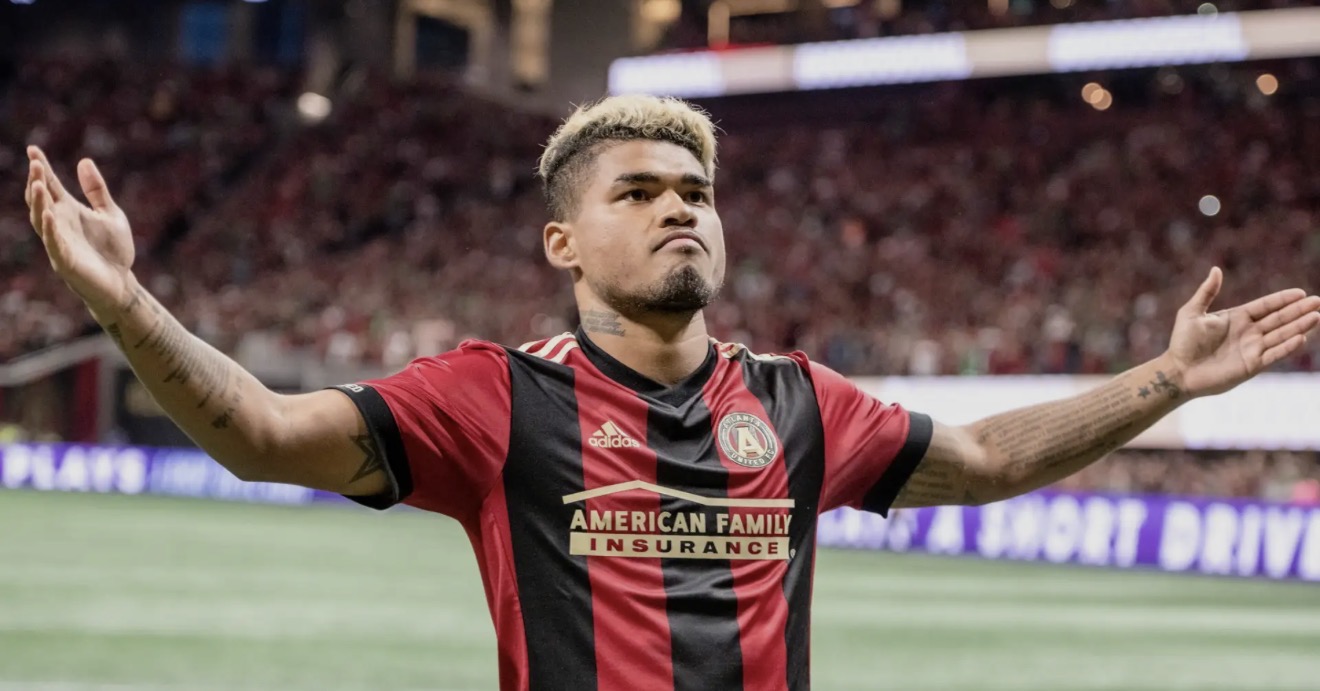
The Tillman Brothers Left Bayern Munich and Germany Behind to Play for the United States
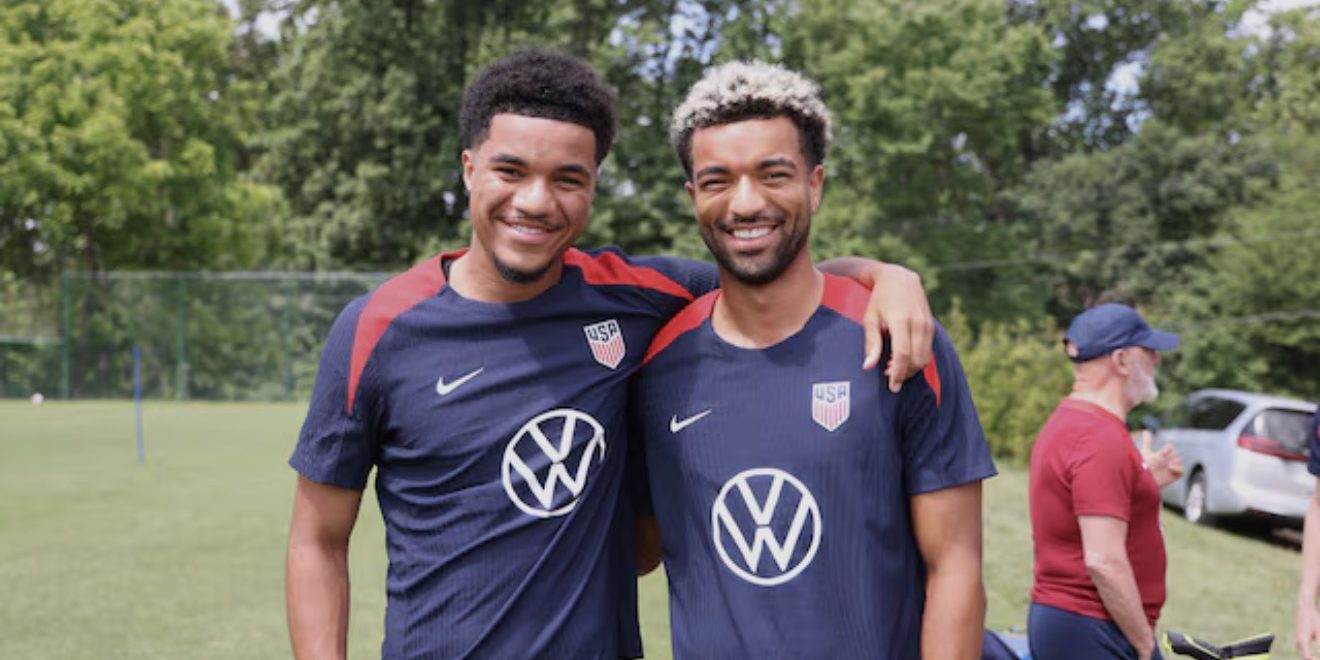

Table of Contents
When Malik Tillman runs out for the United States at this World Cup, he carries a passport story that could have gone the other way. He was born in Nuremberg, raised in the German football system, schooled at Bayern Munich, the most successful club in his country of birth. By every conventional measure he should be a Germany player. Instead he chose the United States, the nation of his father, and then helped pull his older brother across the same line. The Tillmans are now the ninth set of brothers to represent the U.S. men’s national team, and the way they got there says a lot about how American soccer is finally winning fights it used to lose.
Two Boys From Nuremberg at the Bayern Academy
The Tillman brothers grew up the way most German prospects do, climbing the youth ranks of their local club. Malik, born on 28 May 2002, and his older brother Timothy rose through the academy at SpVgg Greuther Furth before both earned moves to Bayern Munich in 2015, when Malik was just 13. For an American family living in Germany, that was the dream and the complication in one. Bayern is a factory that produces German internationals. The pull toward the German national team setup is built into the place, and both boys were eligible to represent Germany through birth as easily as they could represent the United States through their father.
For years that dual eligibility hung over the family. Germany has long treated its youth pipeline as a closed loop, and players raised inside it rarely look elsewhere. The United States, by contrast, had spent a generation chasing dual nationals and frequently losing them to the bigger footballing power. The history of American soccer is littered with players who were eligible, courted, and then chose the country with the deeper trophy cabinet. The Tillmans had every reason to follow that pattern.
The Choice That Defined Malik’s Career
Malik made his decision first, committing to the United States and tying his international future to the country of his father rather than the country of his upbringing. It was not a sentimental gesture so much as a clear-eyed read of where his path was clearest. American soccer offered him a route to a World Cup on home soil and a central role in a rising team, where Germany offered fierce competition for every attacking midfield spot and no guarantees. He backed himself, and the gamble has paid off in a starting place at the tournament his adopted country is hosting.
His club career has tracked that same willingness to bet on himself. After breaking through at Bayern, he moved to find regular football, building a reputation as a creative, goal-scoring midfielder who could operate between the lines and arrive late in the box. Coaches have valued his intelligence in tight spaces and his knack for picking the right pass at the right moment. Under Mauricio Pochettino, who took over the national team in October 2024 and rebuilt it after a chastening Copa America, Tillman has become one of the attacking options the U.S. trusts to unlock stubborn defenses.
That trust sits inside a forward line stacked with talent. Christian Pulisic, Folarin Balogun, Weston McKennie and Gio Reyna give Pochettino a depth of attacking choice the United States has rarely enjoyed. Tillman has earned his place among them not as a token dual national but as a footballer who fits the team’s identity, comfortable on the ball and unselfish in the final third. For a player who could have spent his career fighting for scraps in the German setup, the contrast is stark.
Bringing Timothy Across the Line
The most telling part of the Tillman story is what happened after Malik committed. His older brother Timothy, also born in Germany and also eligible for both nations, had spent the early part of his senior career in the German game. But the gravitational pull of family, and of a national team that truly wanted him, eventually won out. Timothy filed his one-time switch from Germany to the United States, FIFA approved it, and the brothers were reunited in the same national setup. They became the ninth pair of siblings to play for the U.S. men’s team, a small but resonant entry in the program’s record book.
It is hard to overstate how much that small detail reflects a broader shift. A decade ago, the idea of two Bayern-schooled brothers both choosing the United States over Germany would have seemed fanciful. American soccer was the junior partner in those conversations, the option players took when the bigger door closed. The Tillmans flipped that logic. They looked at where the game was going, at a home World Cup and a team on the rise, and they decided the United States was the better bet for both of them.
That is the kind of recruiting win that compounds. Every dual national who picks the United States makes the next one easier to convince. When a player sees brothers from the Bayern academy thriving in the American setup, the old assumption that the U.S. is a step down loses its grip. Pochettino’s squad is built in part on exactly these decisions, on players who could have gone elsewhere and chose instead to be part of something being constructed in real time.
What the Tillmans Represent for U.S. Soccer
The United States has always been a country of immigrants, and its national soccer team has increasingly come to look like that reality. This squad blends homegrown products of the American academy system with dual nationals raised across Europe, players who bring continental technique and a different football education into the group. The Tillmans, German-born and Bayern-trained, are a clean example of the second category, the kind of player who would once have slipped through the country’s fingers.
For Pochettino, the value is practical as well as symbolic. A player schooled at Bayern arrives with habits and standards drilled into him from age 13, an understanding of how elite football is supposed to feel day to day. Spread that across a roster and it raises the floor of the whole group. The United States is no longer assembling a team of willing runners and hoping for the best. It is fielding footballers who learned the game inside Europe’s best institutions and chose to bring that education home.
A Squad Defined by Decisions Like Theirs
Look across this United States roster and the Tillman story stops feeling like an outlier and starts looking like a template. Folarin Balogun was born in New York, raised in London and developed at Arsenal before choosing the United States over England and the country of his Nigerian heritage. Players up and down the squad carry similar files, eligible for multiple nations, raised in one football culture and representing another. Pochettino has leaned into that reality rather than apologizing for it, assembling a group that reflects the country it represents, a nation built by people who came from somewhere else and decided to call it home.
The strategic upside is real. Dual nationals raised in European academies arrive with technical schooling that the American system, for all its progress, still cannot fully replicate. They have trained alongside future internationals from age 12, absorbed the standards of clubs that expect to win, and learned to handle pressure that domestic youth soccer rarely produces. When several such players choose the United States, the team’s quality rises faster than any development plan could manage alone. The Tillmans, products of the Bayern Munich academy, are exactly the kind of acquisition that accelerates a program. It is the difference between hoping a generation matures in time and simply recruiting players who already have, and it is why Pochettino’s group looks better equipped than any American squad before it.
None of this guarantees a deep run. Tournaments turn on fine margins, on a refereeing call or a moment of fortune, and the United States will face opponents who do not care how cleverly the roster was assembled. But the foundation is sturdier than it has ever been, and the men who built it are footballers who chose to be there. That choice, repeated across the squad, is the quiet engine behind the team’s belief that this World Cup can be different.
There is a human cost hidden in these choices that often goes unspoken. Picking one nation means turning your back on another, sometimes the country where you were born and raised, where your friends and early coaches still live. For the Tillmans, choosing the United States meant declining the football establishment that shaped them. That is not a small thing to do at the start of a career, and it speaks to a conviction about identity that runs deeper than where a player happens to grow up. They decided that being American counted for more than the convenience of the path in front of them.
Malik Tillman’s path, from Nuremberg to a starting role at a home World Cup, is the story American soccer has been trying to write for thirty years. The boy who should have been German, who trained in the shadow of the Allianz Arena, who could have chased caps in the most decorated program in his country of birth, looked at the United States and saw a future worth choosing. Then he reached back and brought his brother with him. On the biggest stage the American game has ever hosted, the Tillmans are proof that the country no longer loses these battles. It wins them.

Leave a Comment
More in News
Mourinho Blasts Referee After Atletico Avoid Two Red Cards in Madrid Derby

Cole Palmer Withdraws From England Squad as Gibbs-White Returns Again
Marseille Fans Turn on Owner McCourt as Gomes Can’t Prevent Fifth Straight Loss

Juventus Fans Turn Backs on Silence for Mazzola, Club Slams ‘Lack of Respect’

Trent Alexander-Arnold Returns to the England Squad for the First Time in Over a Year, and Cole Palmer Is Back Too After Their World Cup Snub
Trending on Futbol Chronicle
The Best World Cup YouTubers to Follow in 2026
Cristian Romero completes €40m move from Tottenham to Atlético Madrid
The Best Soccer Players of All Time: The 10 Greatest Ever Ranked
Mikel Arteta backs ‘warrior’ Bruno Guimarães to make Arsenal stronger