
Two More Iran Women’s Football Players Seek Asylum in Australia, Bringing Total to Seven
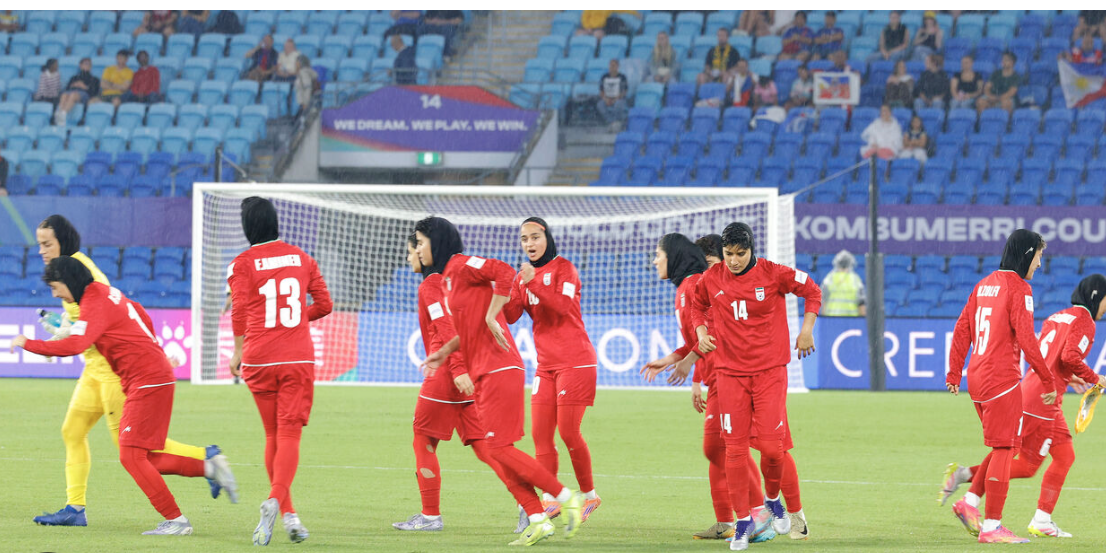
• Two additional players from the Iran women’s national team did not board their flight home from Australia and are seeking asylum.
• Seven members of the 26-player squad have now remained in Australia after refusing to sing the national anthem at the Asian Cup.
• Iranian state media labelled the players “traitors”, raising fears about their safety if they returned home.
Two more members of the Iran women’s national football team have sought asylum in Australia after failing to board their flight home, bringing the total number of players remaining in the country to seven.
Police confirmed that the two additional members of the original 26-player squad did not board the team’s final departure flight from Sydney Airport on Tuesday night. The rest of the squad left the country amid growing concerns about their safety following backlash in Iran.
Several players were criticised by Iranian state media after they refused to sing the national anthem before their opening match at the AFC Women’s Asian Cup. The players were later branded “wartime traitors” on state television.
Earlier in the day, the team departed a hotel on the Gold Coast under police guard. Video published by Nine newspapers appeared to show one player being pulled onto the team bus by a teammate as security escorted the group to the airport.
Protesters attempted to block the team bus from leaving the hotel, while demonstrators opposed to the Iranian government also gathered outside the airport later in the evening. Police confirmed the situation was managed without further incident.
Among the players who remained in Australia are captain Zahra Ghanbari and teammates Fatemeh Pasandideh, Zahra Sarbali, Atefeh Ramezanizadeh and Mona Hamoudi. Two more players were confirmed to have stayed behind after the team’s departure.
Australian Prime Minister Anthony Albanese said the option to seek asylum remained available to any member of the squad who wished to pursue it.
Iranian refugee advocate Ara Rasuli, who has been involved in assisting the players, said the Australian government had taken steps to ensure their safety.
“They are in a lot of danger,” Rasuli said. “There are all sorts of different threats, such as taking the families into custody or seizing their assets. That is why most of the girls are choosing to go back home because the threats to their families are a major issue.”
Former Australia men’s national soccer team captain Craig Foster called for reforms in global sport governance, saying athletes should not be placed in such situations during international competitions.
“There will have to be accountability by the Asian Football Confederation and by FIFA as to what did not occur and what processes were not in place,” Foster told AAP. “This should have been avoidable.”
Authorities in Australia confirmed that the Australian Federal Police has been assisting the Department of Home Affairs as part of efforts to support members of the Iranian team seeking protection.
In a statement, the AFP said it had worked closely with community leaders and organisations connected to the Iranian diaspora in Australia.
The situation follows previous cases where athletes sought protection abroad during international sporting events, including members of the Afghan women’s cricket team who fled to Australia after the Taliban returned to power in 2021.

Leave a Comment
More in News

Trent Alexander-Arnold Returns to the England Squad for the First Time in Over a Year, and Cole Palmer Is Back Too After Their World Cup Snub

Gabriel’s Boot Caught Emiliano Martinez in the Head, and a Five-Person Premier League Panel Ruled It Was Never a Red Card

Floyd Samba Scores a Debut Double as a Teenager

Tottenham Spent £300m This Summer and Have Not Scored in Four Premier League Games for the First Time in the Club’s 144-Year History

Cyle Larin Scored Once in 15 Games on a Failed Feyenoord Loan, and Is Now Outscoring Kylian Mbappe and Erling Haaland at Southampton
Trending on Futbol Chronicle

Why Soccer Is The Best Sport

Josef Martinez Returns to MLS Spotlight With Columbus Crew Signing
Cristian Romero completes €40m move from Tottenham to Atlético Madrid
Arab football federations back Gianni Infantino as FIFA president faces growing opposition