
Antoine Semenyo Quit Football at Fifteen and Now Leads Ghana’s Attack at the World Cup
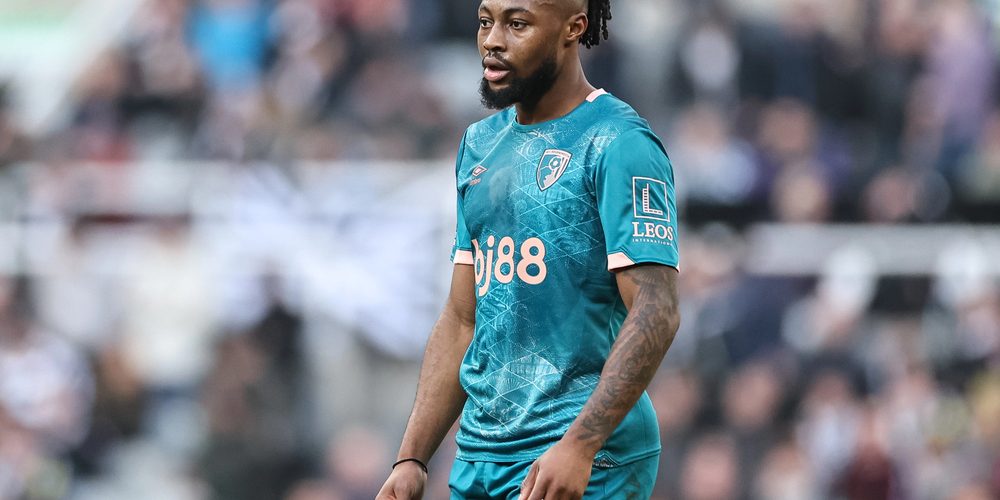
Table of Contents
At 15, Antoine Semenyo walked away from football. He had been to trials at Arsenal, Tottenham, Chelsea, Fulham and Millwall, and finished the round with Crystal Palace, and not one of them had signed him. A boy who had spent his childhood being told he was good enough reached an age where the rejections piled up faster than the offers, and he quit, disillusioned and convinced the game had no place for him. Just over a decade later, that same player carries Ghana’s attack into a World Cup, having joined Manchester City for an initial fee of around 62 million pounds. The distance between those two points is one of the most remarkable stories at this tournament.
Rejected by Six Academies Before He Could Drive
The English academy system is a brutal sorting machine. It scoops up thousands of hopeful children, keeps a handful, and releases the rest with little ceremony. Semenyo went through more of it than most. Between the ages of 11 and 15 he was looked at by a string of London clubs, Arsenal, Tottenham, Chelsea, Fulham and Millwall among them, with a final trial at Crystal Palace that ended the same way as the others. No contract, no place, no clear future in the sport. For a teenager, the cumulative effect of being studied and discarded by club after club is corrosive, and Semenyo reached the point where he stopped believing it would ever happen.
That he stepped away at all is the part that lingers. Footballers who reach the top tend to be described as relentless, as people who never doubted, but Semenyo’s path included a real surrender. He had decided the game was finished with him. What pulled him back was not a sudden breakthrough but a slower return to playing for its own sake, away from the pressure of academies and the verdicts of scouts. The love of the game survived where the career had seemingly died, and that survival made everything afterwards possible.
The Long Road Through the Lower Leagues
When Semenyo found his way back into the professional structure, it was through the side door rather than the front. His development came at Bristol City, but his real education happened out on loan, in places far removed from the gleaming academies that had turned him down. He spent time at Bath City in non-league football, then Newport County in the lower divisions, then Sunderland. These are not glamorous postings. They are the rough, physical end of English football, where a young forward learns whether he can cope with defenders who kick first and apologise never.
Those loans did what no academy could. They toughened him, taught him to produce in matches that meant something to the clubs and the crowds, and built the resilience that a sheltered prospect never acquires. By the 2020-21 season he had returned to Bristol City and exploded into form, playing 50 matches and scoring seven times as he established himself as a genuine threat in the Championship. The boy who had quit at 15 was suddenly a player clubs in the division above were watching closely.
The move to Bournemouth followed, and it was there that Semenyo became a Premier League player in full. He scored 10 goals in 20 league appearances in a stretch that turned heads across English football, combining power, pace and an improving end product into a forward few defenders relished facing. The trajectory that had looked impossible a few years earlier was now pointing sharply upward, and the biggest clubs in the country began to take notice.
From Non-League to the Champions of England
In January, Manchester City moved. They paid Bournemouth an initial fee of around 62 million pounds for a forward who, a few years earlier, had been turning out for Bath City. The size of the transfer told its own story. This was not a sentimental gamble on a feel-good narrative but a calculated investment by one of the most demanding clubs in world football, a side that does not spend that kind of money on projects. Semenyo had earned the move through goals and performances, and he repaid the faith quickly, scoring 11 in 27 appearances after his arrival.
To grasp the scale of that leap, consider the geography of his career. Bath City play in front of a few hundred supporters in the non-league pyramid. Manchester City play in front of tens of thousands and compete for every major honour in the game. Semenyo travelled the entire length of that ladder, from a club outside the Football League to the reigning powers of English football, in the space of a few seasons. Players who rise that fast usually start in academies that polish them from childhood. Semenyo started by being rejected and quitting.
Carrying Ghana’s Hopes at the World Cup
Now that rise has reached the World Cup. Under the vastly experienced Carlos Queiroz, Ghana have built their attacking plans around Semenyo, with the former Ghana international Emmanuel Agyemang Badu describing him as the team’s poster boy and backing him to lead the Black Stars through Group L. It is a heavy responsibility for a player who not long ago had no career to speak of, and it places him directly in the spotlight at the biggest tournament in the sport, on the grandest stage his footballing life has ever offered.
There is a neat symmetry to Ghana’s fixtures. The Black Stars face England in Foxborough on 23 June, which means Semenyo will line up against the country whose academies rejected him as a boy. The clubs that looked at a teenage Semenyo and saw nothing worth signing now watch him as a Manchester City forward and a Ghana spearhead. Few players carry a more pointed sense of vindication into a World Cup group game, and few have a clearer answer to the people who decided, years ago, that they were not good enough.
His story also speaks to the wider gamble of the academy system, and to how often it gets things wrong. For every Semenyo who claws his way back, there are countless boys released at 15 who never return, talents lost not because they lacked ability but because the machine moved too fast and judged too early. That he survived the cull, quit, came back, and reached the summit is a reminder that development is rarely linear and that the scouts who pass on a player are not infallible. Semenyo is living proof that a closed door at 15 does not have to be the end.
The Player He Has Become
What makes Semenyo so difficult to handle now is the combination of attributes that the lower leagues sharpened in him. He is quick over the ground and powerful in a duel, capable of carrying the ball from deep and bullying defenders off it. The non-league education taught him to compete physically, the Championship taught him to produce end product, and the Premier League taught him to do both against the best opposition in the club game. Manchester City did not pay a fee in the region of 62 million pounds for potential. They paid it for a forward who had already proven he could deliver at the highest level week after week.
For Ghana, that profile is gold. International tournaments reward forwards who can create something from nothing, who do not need a perfect supply line to influence a game. Semenyo is exactly that kind of player, the sort who can pick the ball up in his own half, drive at a tiring defence and produce a moment of quality when the structure around him breaks down. Against opponents who will often sit deep and frustrate the Black Stars, a forward capable of manufacturing chances on his own becomes the difference between progress and another early exit.
His rise also changes what young Ghanaian and English players believe is possible. The conventional wisdom holds that if you are not snapped up by an academy as a child, the elite game has passed you by. Semenyo is the living rebuttal. He was rejected by club after club, walked away from the sport entirely, rebuilt himself in front of a few hundred fans at non-league grounds, and ended up at the champions of England and a World Cup. That path is not a blueprint anyone would choose, but it is proof that the door scouts slam shut at 15 is not always locked for good. For every boy released with a polite letter and a handshake, Semenyo stands as evidence that a verdict delivered in childhood is an opinion, not a sentence.
Whatever Ghana achieve at this World Cup, the man leading their line has already won something that cannot be taken away. He has answered the question that haunted him as a teenager, the question of whether he belonged in the game at all. He belongs at its very top. When Semenyo runs out against England, a boy who once gave up on football will be standing on the highest stage it has, carrying a nation’s hopes, in front of the clubs that let him go.

Leave a Comment
More in News

Ghana’s World Cup Squad Was Forged in England and Now They Meet the Three Lions

Jonathan David Was Doubted After Canada’s Opener and Answered With a World Cup Hat Trick

Six Argentine Coaches Lead Teams at This World Cup and One Man Shaped Them All

Yoane Wissa Scored DR Congo’s First World Cup Goal 52 Years After Their Debut

Why Thomas Tuchel Left Phil Foden, England’s Euro Final Star, Out of the World Cup
Trending on Futbol Chronicle

What Is Offsides in Soccer? The Offside Rule Fully Explained

Why Soccer Is The Best Sport

The Best World Cup YouTubers to Follow in 2026

Map of All the Premier League Teams for 2025/26