Balogun Says Red Card Saga Not His Fault
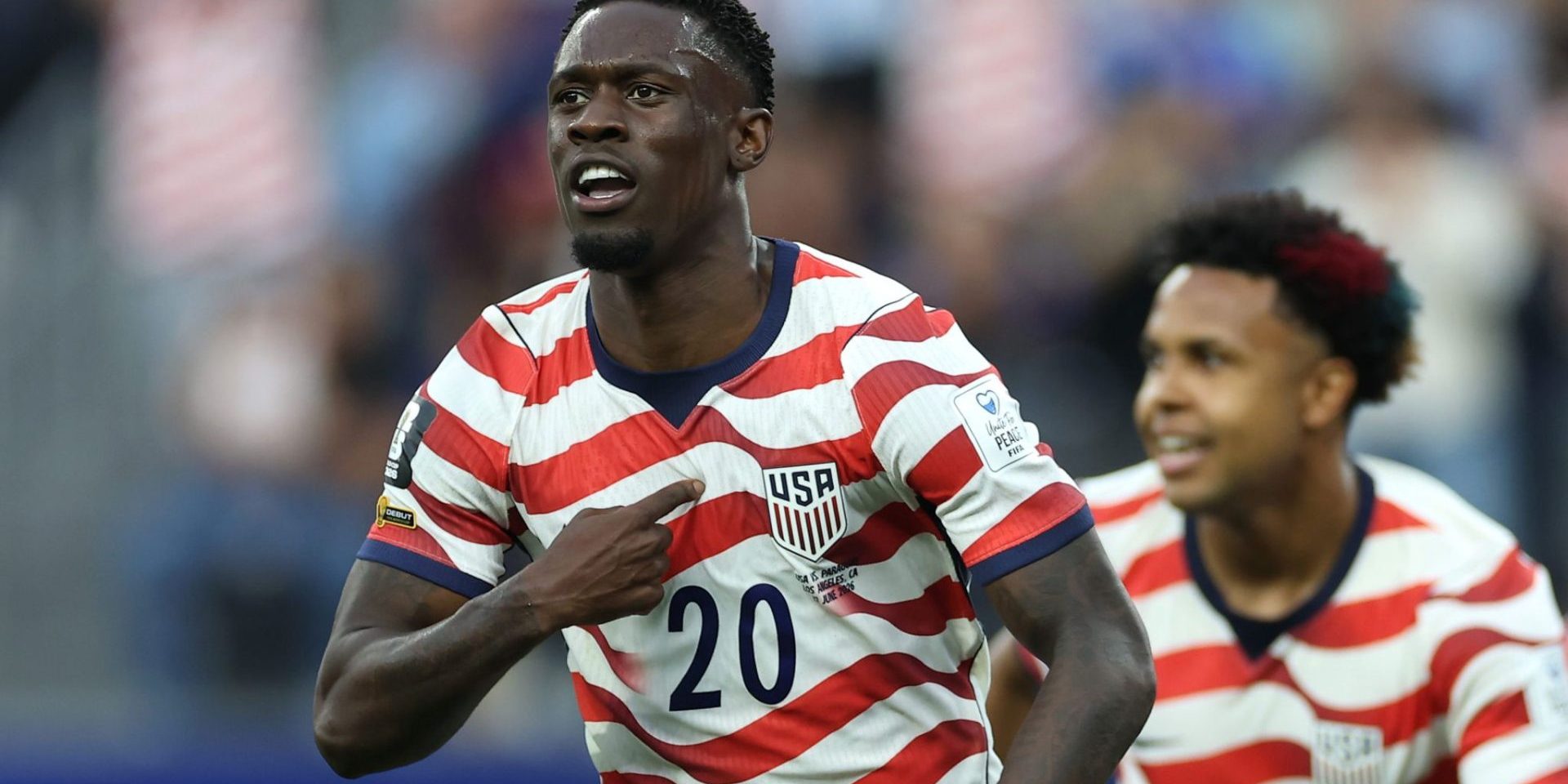
Table of Contents
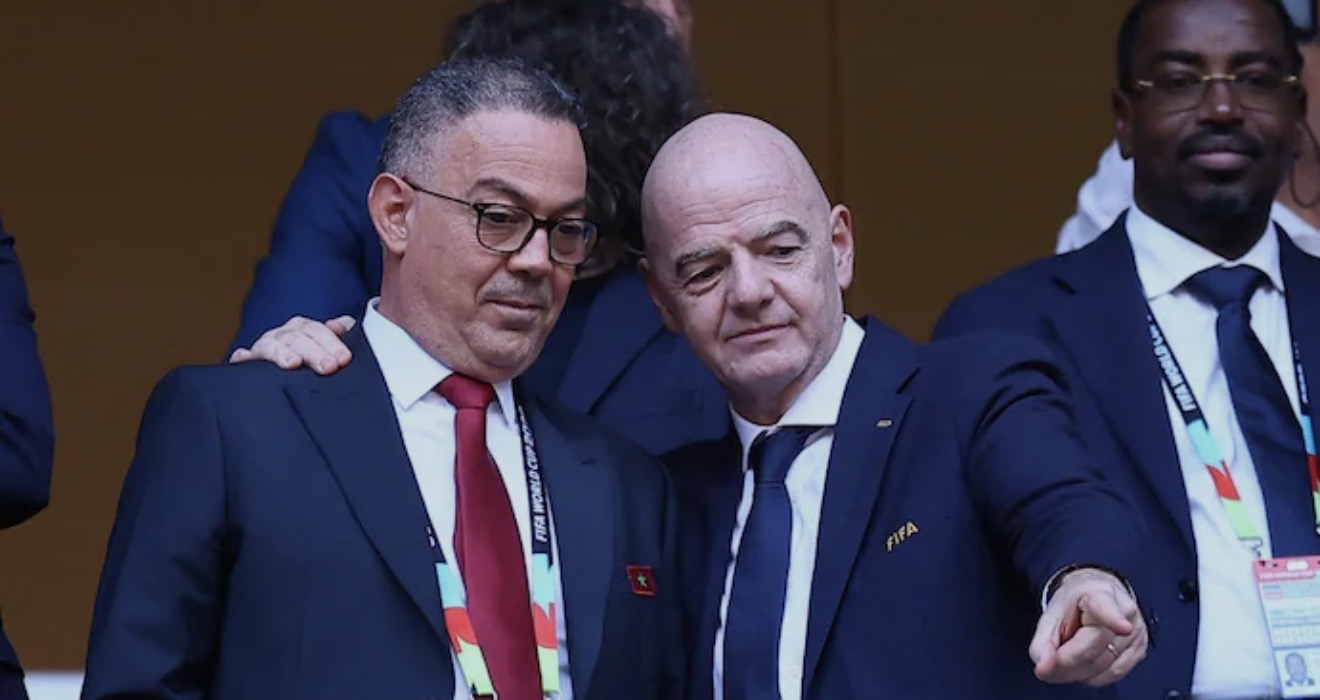
As USA’s World Cup dream ended in a 4-1 defeat to Belgium in Seattle, the biggest storyline of the week threatened to overshadow the result itself: Folarin Balogun’s suspended red card, and Donald Trump’s public involvement in the process that allowed the striker to play. In the aftermath of elimination, Balogun distanced himself from the entire episode, and it was Belgium head coach Rudi Garcia, rather than anyone in the USA camp, who stepped in to defend him.
The Making of a Co-Host’s Star
Balogun’s route to the tournament had already been well told before the red card controversy took hold. He was born in New York after his Nigerian parents, based in London, travelled to the US while his mother was pregnant and were unable to fly home before he arrived, making him eligible for the USA from birth. He was raised in England, rose through the Arsenal academy alongside Bukayo Saka, Emile Smith Rowe and Eddie Nketiah, and first made his name senior football on loan at Reims in France, where he scored 21 goals in 37 appearances. Monaco paid Arsenal £35m for him in the summer of 2023.
That same year, having represented England up to under-21 level, Balogun switched his international allegiance to the United States, flying to Orlando for meetings with US officials before making the decision. His first goal for his adopted country came in the 2023 CONCACAF Nations League final win over Canada. When Mauricio Pochettino took charge of the USA in 2024, Balogun is understood to have been the first player he flew to meet in person. A viral photo of Balogun taken on that Orlando visit prompted a wave of American fans to message him on social media, part of the persuasion that shaped his decision.
He arrived at this World Cup on the back of a hot scoring streak for Monaco, having scored in eight straight league games and contributed 11 goals in his final 14 matches of the season, including a brace against Paris Saint-Germain in the Champions League. Two goals on the opening night against Paraguay, both finished off different feet, confirmed him as a genuine second attacking focal point for the co-hosts alongside Christian Pulisic. USA have looked for a reliable focal point up front in the years after Jozy Altidore and, before him, Brian McBride, and Balogun’s opening-night display against Paraguay suggested he could finally be that man for a generation. He had also scored the winner against Senegal in a pre-tournament friendly, arriving in the United States with genuine form behind him rather than reputation alone.
A Red Card, Rescinded, and a Media Storm
Balogun, a 25-year-old New York-born forward with three goals in the tournament, had been sent off in the 64th minute of USA’s 2-0 Round of 32 win over Bosnia and Herzegovina, triggering an automatic one-match ban. The FIFA Disciplinary Committee announced on the Sunday before the Belgium game that the suspension would be set aside for a probationary period, ruling: “By operation of Article 27 FDC, the implementation of the automatic match suspension for USA player Folarin Balogun is suspended for a probationary period of one (1) year.” Belgium themselves appealed against that decision unsuccessfully, and it became a national talking point once Donald Trump said he had personally asked FIFA president Gianni Infantino to review it. Infantino, who watched the last-16 tie from the stands in Seattle, has defended the independence of FIFA’s disciplinary process throughout. Balogun started the match but had little influence on it, managing just 11 touches in the first half and 19 by full time, fewer than Belgium substitute Jeremy Doku, who was on the pitch for only 23 minutes.
Belgium led inside nine minutes when hesitant USA defending allowed Nicolas Raskin to square the ball for Charles De Ketelaere’s simple finish from a Leandro Trossard cross. Malik Tillman’s deflected free-kick levelled the scores in the 31st minute, the USA’s only shot on target of the half, but De Ketelaere restored Belgium’s lead within two minutes, heading in another Trossard delivery. Hans Vanaken’s long-range effort, following a mistake from goalkeeper Matt Freese, made it 3-1 in the 57th minute, and Romelu Lukaku added a fourth in stoppage time after another defensive error from Chris Richards.
Balogun’s Response
Balogun made clear after the match that he wanted no part of the row that had built up around him.
“I accepted the decision when I was given the red card, and I accepted the decision when I was told I was allowed to play,” Balogun said. “I didn’t have any involvement in the process, and that’s not something that has anything to do with me personally.”
Garcia’s Gesture
It was Belgium’s manager who offered the clearest defence of the USA striker once the final whistle had gone. Garcia revealed that Balogun had approached him after the match, and said he respected the gesture.
“I really liked that,” Garcia said. “It’s not his fault, he’s not the one to blame and that’s what I told him.”
Asked whether the controversy had affected his own squad’s preparation, Garcia said it had not.
Garcia said the US lineup was irrelevant to his team’s approach, as their focus was entirely on their own game plan. He said the squad is mature, and that he had told the players the only thing that counted was their own performance.
Pochettino Refuses to Make Excuses
USA head coach Mauricio Pochettino was asked directly whether the Balogun furore had affected his players’ performance, and said it should not be used as a reason for the result.
Pochettino said his job was simply to prepare the team, and that whether Balogun was available under the disciplinary rules, or if FIFA allowed the player to feature, was not something that posed a problem for him.
Pochettino said he personally felt disappointed with a number of people over how the situation had been handled, with politics, manipulation and questions of ethics and integrity dragged into the conversation around the team. He said that was not an excuse for the result, insisting the performance had nothing to do with the row.
History Repeats Itself
The defeat means USA’s search for a first World Cup quarter-final goes on, a wait now stretching back to the 2002 tournament in Korea and Japan. It was also the second time Belgium have ended an American World Cup campaign in the last 16: at Brazil 2014, Belgium won 2-1 after extra time in a match remembered for a record 16-save performance from USA goalkeeper Tim Howard.
A Flat Display
USA’s attacking players, so influential throughout the tournament, had a quiet night collectively. Christian Pulisic struggled to get into the game before he was withdrawn through injury, and Weston McKennie, whose late runs into the box had caused problems for opponents throughout the run to the last 16, did not manage a single touch inside Belgium’s penalty area. It was USA’s first defeat of the knockout rounds, arriving straight after their win over Bosnia-Herzegovina in the round of 32, which had itself ended a 24-year wait for a World Cup knockout victory.
Sky Sports’ Ron Walker, reporting from Seattle, noted that Balogun’s low involvement, just 19 touches across the full match, was one fewer than Doku managed in 23 minutes off the bench, and suggested the occasion could simply have been one game too many for a squad that had carried heavy expectation as co-hosts throughout the tournament, arriving on the back of that landmark, 24-year-delayed knockout win in the round before.
Walker went further in his analysis, arguing that Belgium’s performance bore little resemblance to a team that had flattered to deceive earlier in the tournament, and that the storm around Balogun’s inclusion appeared to have galvanised Rudi Garcia’s players as much as it distracted the hosts. On that evidence, he wrote, Belgium would fancy testing Spain in Los Angeles on Friday.
Belgium move on to face Spain in Los Angeles on Friday, with De Ketelaere, Vanaken and Lukaku all among the scorers from Seattle. For Balogun and the co-hosts, the tournament ends with the same question that followed them into the match: whether the noise around his red card ever needed to exist at all. For one afternoon at least, it was Belgium’s manager, not anyone in the USA camp, who put that argument to rest. Balogun, for his part, will return to club football having played every minute he was picked for, and having answered, in six sentences after the final whistle, more questions than the entire week of speculation around him ever did. Whatever comes next for the co-hosts off the back of this campaign, the forward’s own tournament goes down as three goals, one red card, one suspended ban, and a defeat in which he barely touched the ball. That contrast, between a player still building his international story and a controversy that briefly made him a symbol of something much bigger than football, was summed up by his own six sentences to reporters better than a week of headlines managed.

Leave a Comment
More in News

Thierno Barry Was Filmed Crying In A Private Training Session Last Season, And He Has Already Scored In Three Games This Campaign
Gravenberch’s Red Card Sparks Referee Row in Liverpool’s Defeat to City

Moise Kean Will Miss Como’s Biggest Game of the Season After Cesc Fabregas Clashed With Italy’s Doctors
Oliver Glasner Returned to Crystal Palace and Fans Turned From Applause to Taunts as Forest Lost
Vinicius Red Card for Hair Pull Leaves Mourinho Snubbing the Press
Trending on Futbol Chronicle
Michael Carrick points to lack of sharpness after Manchester United draw with West Ham
Celta Vigo postpones LaLiga opener after fungus outbreak damages stadium pitch
The Best Soccer Players of All Time: The 10 Greatest Ever Ranked
Michael Carrick admits Manchester United have “no excuses” after AC Milan defeat