Belgium Rage at FIFA After Trump Wins Balogun Reprieve
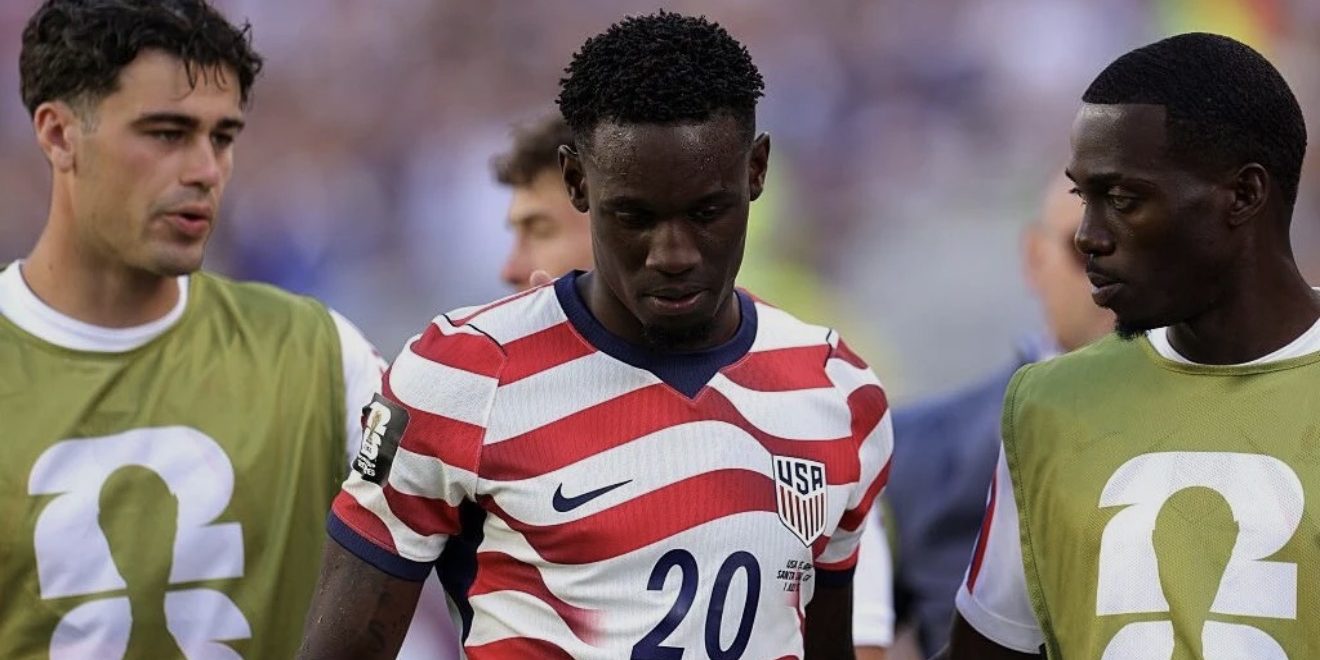

Table of Contents
Belgium issued a furious official statement on Sunday after FIFA suspended Folarin Balogun’s one-match red card ban, allowing the USA striker to play against them in the round of 16 at Lumen Field in Seattle. “We are astonished by this decision,” the Belgian FA said. “This decision is in direct contradiction to the provisions of the World Cup 2026 competition regulations.” The federation confirmed it was investigating every available option to challenge the ruling.
Balogun’s red card came in the group stage against Bosnia and Herzegovina. He had just scored when he challenged Tarik Muharemovic, and referee Raphael Claus initially waved play on. The video assistant referee prompted a review. Slow-motion replays showed Balogun’s boot connecting with Muharemovic’s upper ankle, and Claus upgraded his decision to a straight red card for serious foul play. FIFA formally confirmed the one-match automatic suspension two days later. The case appeared closed. Then Donald Trump placed a call to FIFA.
According to sources familiar with the discussions, Trump placed three calls to FIFA starting from Wednesday, three days before Sunday’s match. Before kick-off in Seattle, he posted on Truth Social: “Thank you to Fifa for doing what was right, and reversing a great injustice!” Neither the White House nor FIFA would comment on the content of those calls or confirm whether they had any bearing on the outcome.
Trump’s involvement in FIFA decisions at this World Cup has been a consistent presence throughout the tournament. He has met multiple times with FIFA president Gianni Infantino, positioned himself as co-host of the competition alongside Canada and Mexico, and made no secret of his desire to see the USA advance as far as possible on home soil.
The Taskforce and the Legal Argument
The Trump administration had assembled a White House World Cup taskforce ahead of the tournament, chaired by Andrew Giuliani. The taskforce is understood to have mounted a legal argument focused specifically on the use of slow-motion VAR footage to overturn Claus’s original no-foul call, arguing that the practice conflicted with FIFA’s own rules on video review evidence. How much weight that argument carried with FIFA’s judicial committee has not been made public.
What FIFA confirmed was its use of Article 27 of the disciplinary code. That provision allows the judicial committee to “fully or partially suspend the implementation of a disciplinary measure.” The committee exercised that authority without publishing the criteria it applied or explaining its reasoning. No further explanation was offered.
Article 27 is not a standard tool. The FIFA disciplinary code runs to more than 80 provisions and most tournament red card suspensions are handled automatically without any committee involvement. The clause exists for truly exceptional circumstances. Prior to this World Cup, its most notable use had also involved a player with a direct connection to the White House.
The Circular That Said Otherwise
World Cup 2026 Circular No 16, distributed to all 48 participating associations on 12 May this year, explicitly confirmed that automatic suspensions following group stage red cards would be enforced. All associations received it. All built their tactical preparations on the understanding that it meant exactly what it said. Belgium, expecting to face a USA side without Balogun, had prepared accordingly. Manager Rudi Garcia had less than 24 hours from FIFA’s announcement to revise every plan he had made.
Garcia had built his tactical approach around Balogun’s absence. The USA striker is one of the few players in the tournament with the pace and direct running to threaten a high defensive line at full sprint. With Balogun out, Belgium could set their defensive shape with greater freedom. With him available, every calculation changed in the final hours before kick-off.
The Belgian FA chose their words carefully. “In order to safeguard the legitimate rights of all participating teams and to protect the fundamental principles of fair play in our sport, both at this World Cup and at future editions of the tournament, the Belgian FA is investigating all potential options.” They named no individual. They made no specific accusation. But their statement, covering both the current tournament and future editions, left little doubt about how seriously they viewed the process.
The Ronaldo Precedent
Belgium were not the first team at this World Cup to face this situation. Cristiano Ronaldo received what was initially a three-match suspension after his red card against the Republic of Ireland in a qualifier. That was reduced to one match under Article 27, making him eligible for Portugal’s group games against Democratic Republic of Congo and Uzbekistan. In the week before that reversal, Ronaldo had been a guest of Trump at the White House.
Two Article 27 interventions. Two players among the tournament’s most commercially prominent. Two with connections to the same political figure. The Belgian FA did not spell out that pattern explicitly, but their statement’s reference to “future editions of the tournament” showed they were looking at the bigger picture.
Thomas Tuchel, absorbing the news from the Estadio Azteca after England’s win over Mexico, raised it in plain terms when asked whether the same process could apply to Declan Rice. “Where does this start and where does this end now?” he said. “Can we overturn it or not overturn it? Where do you draw the line? I have no answer.” Coaches across the remaining nations in the draw are now operating with the knowledge that the suspension system forming part of their competitive preparation is, in certain cases, conditional.
The 1962 Comparison
A historical parallel is sometimes raised in these discussions. In 1962, Garrincha was sent off in the World Cup semi-final against the host nation Chile. He played in the final. There was no formal suspension system at the time. No circular had been issued. What happened in 1962 was an absence of rules. What has happened in 2026 is a rule existing, being confirmed in writing two months before the tournament, and then being set aside in specific cases without transparent criteria.
That distinction is central to the Belgian FA’s position. If a published and recently reaffirmed rule can be suspended when a player has the right connections, the rule provides no certainty to any association that plans around it. Belgium planned around it. Their statement makes clear they believe their planning was undermined.
What Comes Next
The Belgian FA’s investigation of “all potential options” carries limited practical weight at this stage of a World Cup. Courts cannot convene in time to reverse a completed match. FIFA has given no indication it will review the decision. Whatever formal challenge Belgium mounts will be a post-tournament process, not an intervention that changes Sunday’s team sheets.
Whether FIFA moves to clarify the criteria under which Article 27 can be invoked, before the quarter-finals begin, is the most immediate governance question. No association has received official guidance on what conditions trigger the provision. Two uses in three weeks, neither accompanied by published reasoning, is a problem that will not resolve itself when the World Cup ends.
Belgium may leave Seattle having played the match regardless. But the statement they issued before kick-off serves notice that the argument will continue. Their closing line speaks to something larger than one round of 16 game: “the fundamental principles of fair play in our sport, both at this World Cup and at future editions of the tournament.” They want an answer. FIFA has not yet provided one.

Leave a Comment
More in News

Moise Kean Will Miss Como’s Biggest Game of the Season After Cesc Fabregas Clashed With Italy’s Doctors
Oliver Glasner Returned to Crystal Palace and Fans Turned From Applause to Taunts as Forest Lost
Vinicius Red Card for Hair Pull Leaves Mourinho Snubbing the Press
Bowen’s Saved Penalty Costs West Ham a Shot at Top Spot

Cole Palmer Missed England’s World Cup Squad This Summer, and His Club Have Just Backed Him With a Deal Running to 2034
Trending on Futbol Chronicle
What Is The Club World Cup?
Map of All the Premier League Teams for 2025/26
Josef Martinez Returns to MLS Spotlight With Columbus Crew Signing
Celta Vigo postpones LaLiga opener after fungus outbreak damages stadium pitch