
Benjamin Asare Sold Plastic Bags and Drove a Bus Before Shutting Out England
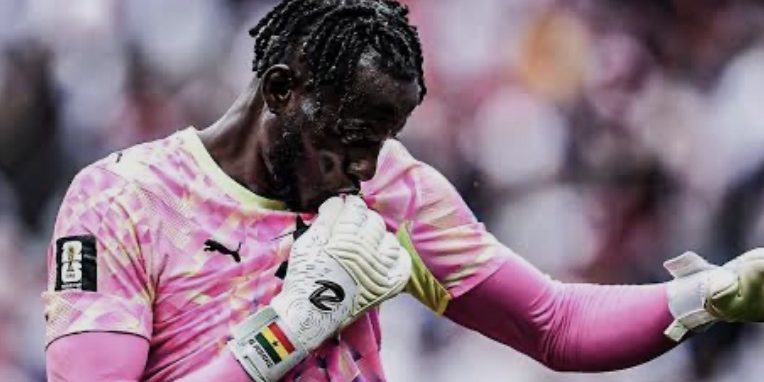

Table of Contents
Before he was the man who shut out England at a World Cup, Benjamin Asare sold polythene bags on the streets of Accra. He bent steel. He worked as a bus conductor, calling out stops and collecting fares to put money in his pocket while he chased a dream that, by any sensible measure, should have died years ago. On Tuesday night at Gillette Stadium in Foxborough, the goalkeeper from the Ghana Premier League stood in front of Harry Kane, Bukayo Saka and Declan Rice, faced nineteen shots, and did not concede once. By the time the final whistle blew on a 0-0 draw, fans were thronging the streets outside his family home back in Ghana to celebrate.
This is not how World Cup heroes are supposed to be made. Asare does not play for a glamorous European club. He has spent his entire career inside Ghana’s domestic game, a level the global audience never sees, and he arrived at this tournament as a reserve. Then injury opened a door, and a 33-year-old who had been told to retire walked through it and into history.
The injury that was meant to end it
The turning point that nearly finished his career came in 2021, during an Accra derby. Asare suffered a serious leg injury, the kind that ends careers and crushes dreams. The recovery stretched to eighteen months. The advice he received was blunt and, to most people, sensible: consider retirement. He was not a young prospect with time to spare. He was a domestic goalkeeper in his late twenties facing a rehabilitation longer than some careers.
He refused to listen. Within a year of returning he had rebuilt his reputation to the point where he was being talked about among the best goalkeepers in the country. Oloboi Commodore, the Great Olympics executive who first discovered him back in 2017, has spoken about how unlikely the comeback was. “He was not expecting somebody to come back from that injury and perform at that level,” Commodore said, as quoted by Graphic Sports. “In advanced countries where technology is solid, players struggle psychologically. For him to come back and maintain that consistency is quite shocking.”
The persistence ran through everything. Asare had known relegation, suffering the drop with Great Olympics at the end of the 2023-24 season despite keeping sixteen clean sheets, a statistic that captures both his quality and the limits of doing it alone. He kept going.
A call-up that came late, and then everything changed
The Ghana call never came until it almost did not need to. It was March 2025, after a disastrous Africa Cup of Nations qualifying campaign, when then-head coach Otto Addo finally drafted Asare into the senior squad. He was 32 years old. With that debut he became the oldest Hearts of Oak player to first appear for Ghana, and the first goalkeeper from the club to represent the national side in two decades.
Even then, a World Cup start looked fanciful. Asare was behind Lawrence Ati-Zigi in the pecking order. But his form refused to be ignored. He kept four clean sheets in five World Cup qualifiers and saved a penalty from South Korea’s Hwang Hee-chan in the Kirin Cup, the sort of moment that turns a squad player into a contender. When Ati-Zigi picked up a groin injury against Panama in Ghana’s opening match, Asare came on, kept a clean sheet, and earned the start against England. He has not looked back.
The night he frustrated the Three Lions
England came into the Ghana game expecting to win and to win comfortably. They had the ball, the territory and the names. What they did not have was an answer to Asare. He made six saves, commanded his box with the calm of a man who had waited his whole life for the stage, and produced a late stop to deny Kane that England’s manager Thomas Tuchel later admitted his captain “never misses.” The goalkeeper recorded thirty-one touches against England, more than most outfield players on the pitch, a measure of how often Ghana’s resistance ran through him.
It was his second clean sheet in two World Cup appearances, after Panama, and it placed Ghana in rare company. The Black Stars became only the fifth African nation to keep clean sheets in their first two World Cup matches, joining Cameroon in 1982, Morocco in 1986 and 2022, and Nigeria in 2014. Asare, meanwhile, joined Richard Kingson as one of only two Ghana goalkeepers to record two World Cup clean sheets.
Even Carlos Queiroz, Ghana’s vastly experienced coach and a man who makes a point of never singling out individuals, could not help himself afterwards. “Usually, I don’t like to talk. Never, never. I avoid talking about individual players,” Queiroz said. “But I think he deserves applause. He was brilliant.” The Ghana great Asamoah Gyan was among the legions hailing the performance. Back home, the celebrations outside Asare’s house spilled into the streets.
The jobs that came before the gloves
The detail that has caught the imagination, and rightly so, is the work Asare did to stay afloat before football could pay his way. Selling polythene bags is the kind of small, grinding hustle that keeps families fed in Accra, a few coins at a time. Bending steel is hard, physical labour. Working as a bus conductor means long days hanging off the side of a tro-tro, shouting destinations and counting fares in the heat and the traffic. These were not glamorous stepping stones. They were survival, the things a young man does when the dream has not yet paid a single bill and may never do so.
That history is what gives his clean sheet against England its full meaning. Plenty of goalkeepers at this World Cup grew up in academy systems, fed and housed and coached from boyhood, with every advantage modern football can provide. Asare came up the other way, learning his trade between shifts, in front of crowds that would fit into a corner of the stadiums he now plays in. When he denied Kane late in the game, it was not just a save. It was the sum of every early start and every doubt he had refused to accept, compressed into a single instinctive moment on the biggest stage there is.
Why a domestic keeper’s rise carries weight
Asare’s emergence is about more than one good night against a famous opponent. It is a rebuke to a long-held assumption in African football that the national team belongs almost exclusively to players based in Europe. For years, the path to the Black Stars ran through the academies and leagues of England, France, Germany and beyond. The squad that drew with England was itself full of players forged in the English game. Asare took the opposite route, staying home, grinding through the Ghana Premier League, and forcing his way in at an age when most are winding down.
His success offers a different kind of hope to every young player in Accra or Kumasi who cannot get a move abroad. It says the domestic league is not a dead end, that a goalkeeper selling bags and conducting buses can still end up on the biggest stage in the sport. In a footballing culture that often equates value with a European address, that is a quietly radical message, and a hugely inspiring one.
There is a broader point about goalkeeping, too. This tournament has produced a run of unlikely heroes between the posts, from Cape Verde’s veteran shot-stopper to Curacao’s experienced keeper, older men from smaller nations standing tall against the giants. The expanded 48-team format has handed countries like Ghana, Cape Verde and Curacao the chance to test themselves at this level, and it is often the goalkeeper, the one position where a single brilliant individual can hold off a superior team, who decides whether the underdog survives. Asare fits that pattern perfectly. He is the last line of a defence that has not been breached, the man who turns Ghana’s organisation and grit into clean sheets, and the reason a side that few fancied is now within touching distance of the knockout rounds.
Not done yet
Ghana now stand on the brink of the knockout stages for the first time since their heartbreaking quarter-final exit in 2010, with a meeting against one of the tournament’s bigger names potentially waiting. Asare’s former teammate Gladson Awako offered the kind of grounding advice that has defined the goalkeeper’s career. “Keep calm, keep his focus. It’s not done yet,” Awako said. “He’s played two games so far and kept his clean sheets. It’s not done yet.”
That last phrase could serve as the motto for the whole improbable rise. Asare has been written off before, told his body had given out and his chance had passed, and each time he answered by carrying on. He is 33 now, a goalkeeper who learned his trade in front of small crowds in a league the world ignores, suddenly the heartbeat of a World Cup campaign and a symbol of what refusing to quit can produce. The boy who sold plastic bags to survive has become the wall a nation hides behind. Whatever comes next in this tournament, nobody can take that away from him. And if his own story is any guide, it would be unwise to assume the best chapters are behind him.

Leave a Comment
More in News

Moise Kean Will Miss Como’s Biggest Game of the Season After Cesc Fabregas Clashed With Italy’s Doctors

Oliver Glasner Returned to Crystal Palace and Fans Turned From Applause to Taunts as Forest Lost
Vinicius Red Card for Hair Pull Leaves Mourinho Snubbing the Press

Bowen’s Saved Penalty Costs West Ham a Shot at Top Spot

Cole Palmer Missed England’s World Cup Squad This Summer, and His Club Have Just Backed Him With a Deal Running to 2034
Trending on Futbol Chronicle

What Is The Club World Cup?

Josef Martinez Returns to MLS Spotlight With Columbus Crew Signing
Mikel Arteta backs ‘warrior’ Bruno Guimarães to make Arsenal stronger

The Best Soccer Players of All Time: The 10 Greatest Ever Ranked