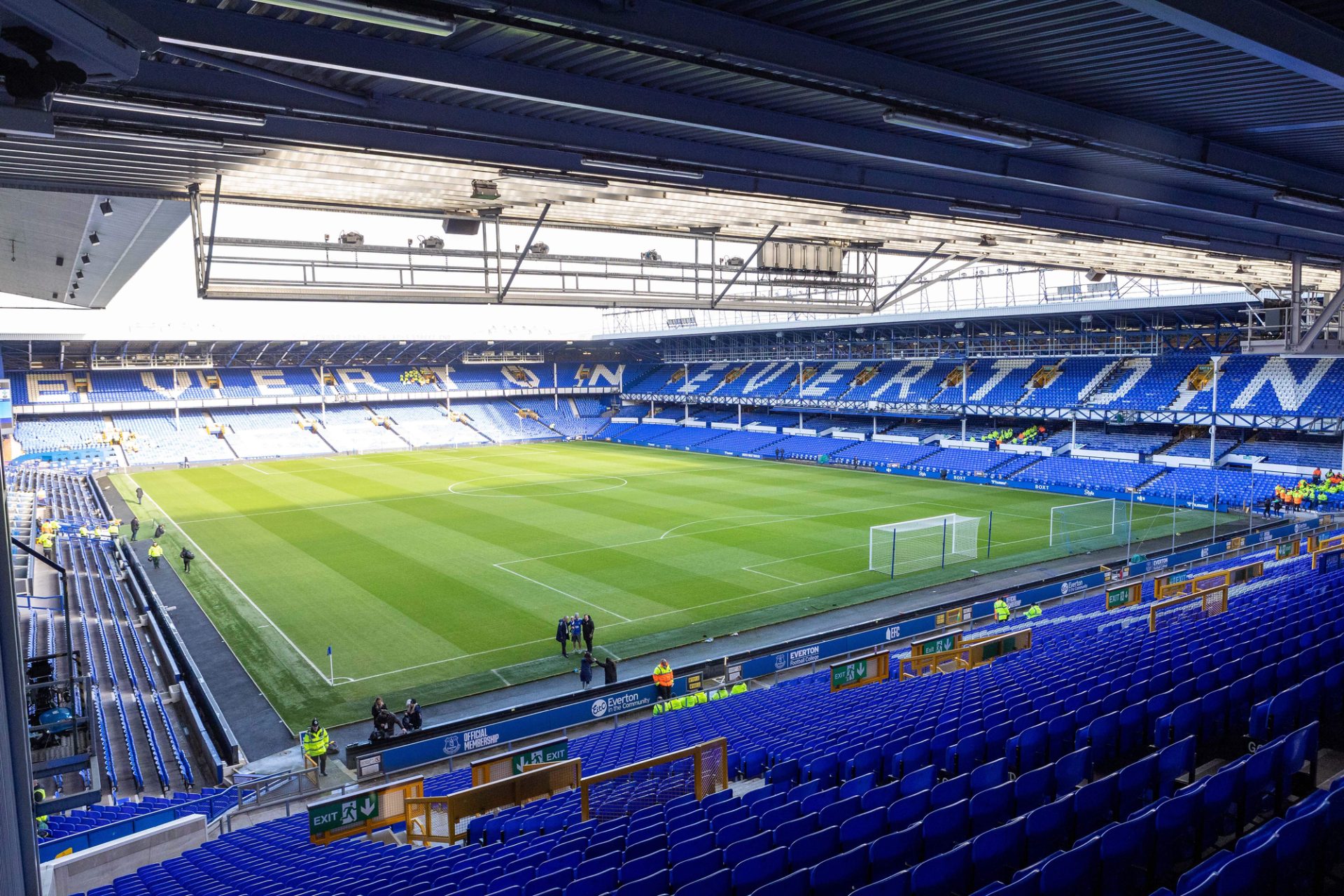
Cristiano Ronaldo Has Never Scored in a World Cup Knockout Game at His Last Tournament
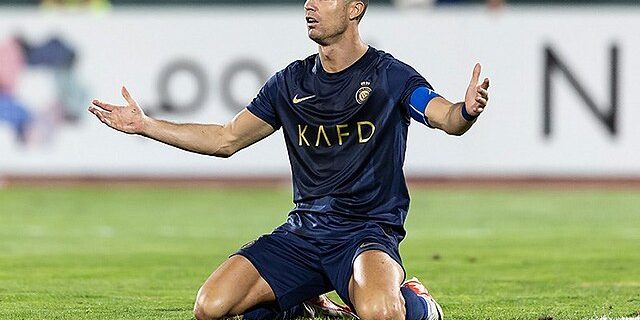
Table of Contents
There is a number that follows Cristiano Ronaldo around the 2026 World Cup like a shadow, and it has nothing to do with the records he already owns. Eight. That is how many goals he has scored in 22 World Cup matches across a career that has rewritten almost every other page of the record book. Every single one of those eight came in a group-stage game. Not one has arrived in a knockout tie. For the most relentless goalscorer the sport has produced, a man with 143 goals for his country, the World Cup remains the one stage where the script keeps refusing to bend his way.
At 41, the oldest outfield player at the tournament, Ronaldo has arrived at what is, by any honest reckoning, his last realistic chance to win the only major prize that has eluded him. Portugal’s campaign opened not with a coronation but with a shrug: a 1-1 draw against the Democratic Republic of the Congo in Houston, no goal for the captain, and a familiar debate reignited about whether the team is built around him or held back by him. While Lionel Messi, Kylian Mbappe and Erling Haaland all marked their opening matches with goals, Ronaldo’s drought stretched on.
The trophy that got away
Ronaldo has won everything a footballer can plausibly hope to win, and several things most never dare to. League titles in England, Spain and Italy. The Champions League five times. The European Championship with Portugal in 2016, watched from the touchline in tears after limping off injured in the final, then transformed into a roaring, gesticulating co-manager as his teammates held on against France. The Nations League. Individual awards stacked so high they have lost meaning. The World Cup is the gap in the cabinet, the absence that gnaws.
He has had his chances. Across 2006, 2010, 2014, 2018 and 2022, Portugal arrived with talent and left with regret. The closest near-miss came in 2006, when a young Ronaldo reached the semi-finals before Portugal fell to France. Since then, the runs have grown shorter relative to the expectation. In 2022, in Qatar, he was dropped to the bench for the knockout games, watching Goncalo Ramos score a hat-trick in his place, an image that felt at the time like the end of something. That he is back, four years on, still captain, still central to the plan, is itself a small act of defiance.
The hard truth buried in the numbers is that Ronaldo has never been at his best when the World Cup mattered most. His eight goals, all in the group phase, tell the story plainly. The biggest matches, the ones that decide tournaments, have passed without a Ronaldo goal. For a player whose identity is welded to delivering in the decisive moment, it is the one accusation he cannot statistically wave away.
A drought that arrived at the worst time
Form has not helped the cause. Ronaldo came into the tournament cold in front of goal, and the opener against Congo did nothing to thaw it. The miss-laden afternoon in Houston extended a barren run that critics had been circling for weeks. When a 41-year-old goes through a drought, every blank game invites the same question, asked a little louder each time: is this the moment the body and the calendar finally win?
The analysis after the Congo draw was unsparing. Thierry Henry, working as a pundit, suggested Ronaldo was getting in the way of Bruno Fernandes and that the team, not the individual, needed to be the priority in front of goal. It was a pointed line from one great forward about another, and it cut at the central tension of Portugal’s tournament. Is this a side that wins because of Ronaldo, or one that would win more freely without the gravitational pull of its captain dragging everything toward him?
The manager who keeps the faith
Roberto Martinez has answered that question the only way a Portugal manager realistically can. He has stood by his captain. After the Congo draw, Martinez defended his decision not to substitute Ronaldo, calling the idea of taking him off illogical given what he still offers in the box. The manager’s position, stated plainly in the build-up, is that when Portugal are chasing a goal, Ronaldo has to be on the field. It is loyalty, but it is also calculation: even a fading Ronaldo bends defences around him, occupies markers, and remains capable of the single decisive contact that flat games turn on.
There is risk in it. Building a tournament team around a 41-year-old who is not scoring invites the charge of sentiment over strategy. Yet Martinez also knows the alternative carries its own danger. To sideline Ronaldo and then lose is to invite a reckoning no Portuguese coach wants. The captain is not merely a player; he is the emotional centre of the national team, an institution in his own right, and managing him is as much a question of politics as of tactics.
Why he keeps going
The obvious question, the one casual viewers keep asking, is why. Ronaldo has nothing left to prove and a fortune that means he never needs to work again. He has spent recent seasons in Saudi Arabia, well outside the white heat of European competition. He could have walked away after Qatar with his dignity and his records intact. Instead, he drove himself back to a sixth World Cup, an achievement no man had managed before him, and put his reputation on the line one more time in front of a global audience primed to debate his decline.
The answer seems to be that the absence of a World Cup is precisely what drives him. For a competitor wired the way Ronaldo is, the missing trophy is not a footnote, it is an itch that two decades of triumph elsewhere has never scratched. He has watched Messi, his great rival and measuring stick, lift the trophy in 2022. That alone is reason enough for a man who has built his life around the refusal to be second. The drought, the criticism, the talk of decline: all of it is fuel for a player who has always performed best with something to prove and someone telling him he cannot.
What it means for the wider game
Ronaldo’s last World Cup carries a significance beyond Portugal. He and Messi have defined a fifteen-year era, two players who pushed each other to heights the sport may not see repeated. This tournament is the closing chapter of that shared story on its biggest stage, the final time both men compete for the prize at the same World Cup. Whatever happens to Portugal, watching Ronaldo at 41, still demanding the ball, still expecting to be the answer, is a chance to witness the end of an age in real time.
For younger fans, it is a study in how greatness ages. The explosive winger of 2006 is gone, replaced by a penalty-box predator who survives on positioning, timing and an unbreakable belief that the next chance is the one he scores. There is a lesson in that adaptation, in the way a player reinvents himself to stay relevant a decade past his physical peak. And there is a poignancy in watching the reinvention strain against a calendar that comes for everyone eventually, even him.
It is worth remembering, too, what his sheer presence does to a tournament’s attention. Ronaldo draws cameras and crowds the way few athletes alive can. Portugal’s matches at this World Cup are among the most-watched of the group stage in part because so many people, admirers and critics alike, want to see how the story ends. Stadiums fill with replica shirts bearing his number. Opposition fans who would never cheer for Portugal still want to say they saw him play. That gravitational pull, the ability to make any fixture an event, is its own kind of legacy, separate from the goals and the trophies, and it will follow him out of the international game whenever he finally goes.
There is also the matter of what he leaves behind for Portugal. A generation of players, from Bruno Fernandes to Rafael Leao to Vitinha, grew up watching Ronaldo drag a modestly resourced football nation to the top table of the sport by force of will. Whatever the frustrations of the present, the team he eventually hands over is stronger, deeper and more confident than the one he inherited, and that is no small inheritance for a country of ten million.
The closing act
Portugal have the squad to go deep. Bruno Fernandes, Rafael Leao, Vitinha and a supporting cast good enough to win it mean the trophy is not a fantasy. The question is whether Ronaldo helps carry them there or whether the team, at some point, has to find a way to win in spite of his struggles. That tension will define their tournament, and it will define how this final chapter of his international career is remembered.
Eight goals, all in the group stage, none in a knockout, the World Cup the one summit he never conquered. At 41, with a drought to break and a chorus of doubters in full voice, Cristiano Ronaldo has one last run at the trophy that has shaped and haunted his career in equal measure. He has spent his whole life turning that kind of pressure into something. Whether he can do it one final time, on the grandest stage of all, is the question the entire football world will be watching to answer.

Leave a Comment
More in News
Mourinho Blasts Referee After Atletico Avoid Two Red Cards in Madrid Derby

Cole Palmer Withdraws From England Squad as Gibbs-White Returns Again
Marseille Fans Turn on Owner McCourt as Gomes Can’t Prevent Fifth Straight Loss

Juventus Fans Turn Backs on Silence for Mazzola, Club Slams ‘Lack of Respect’
Trent Alexander-Arnold Returns to the England Squad for the First Time in Over a Year, and Cole Palmer Is Back Too After Their World Cup Snub
Trending on Futbol Chronicle
The Best World Cup YouTubers to Follow in 2026
Cristian Romero completes €40m move from Tottenham to Atlético Madrid
Mikel Arteta backs ‘warrior’ Bruno Guimarães to make Arsenal stronger
Michael Carrick admits Manchester United have “no excuses” after AC Milan defeat