Deniz Undav Worked Eight Hour Factory Shifts Before Becoming Germany’s World Cup Super Sub
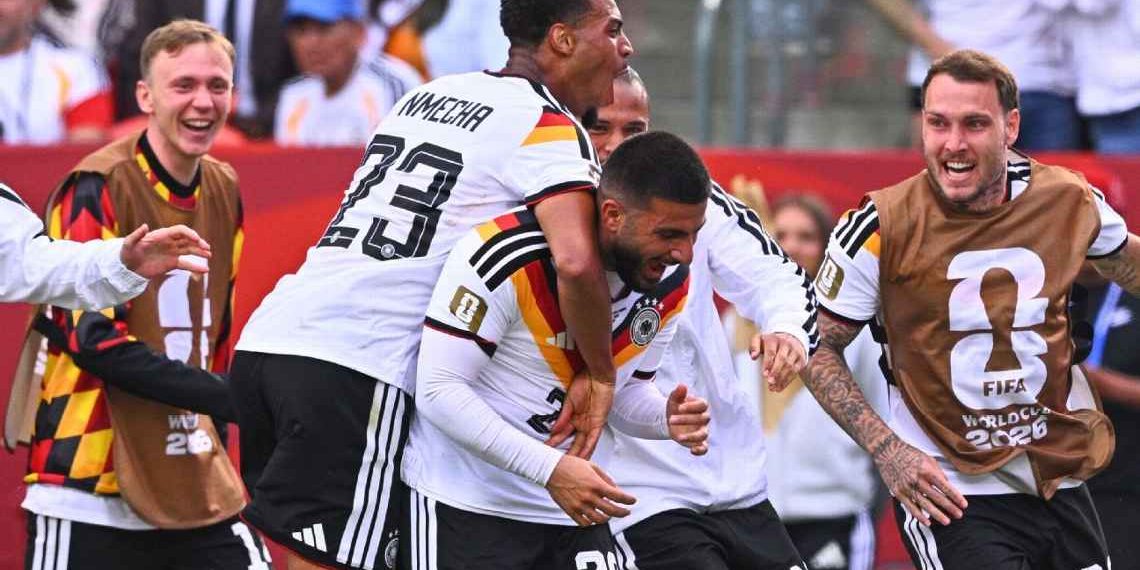
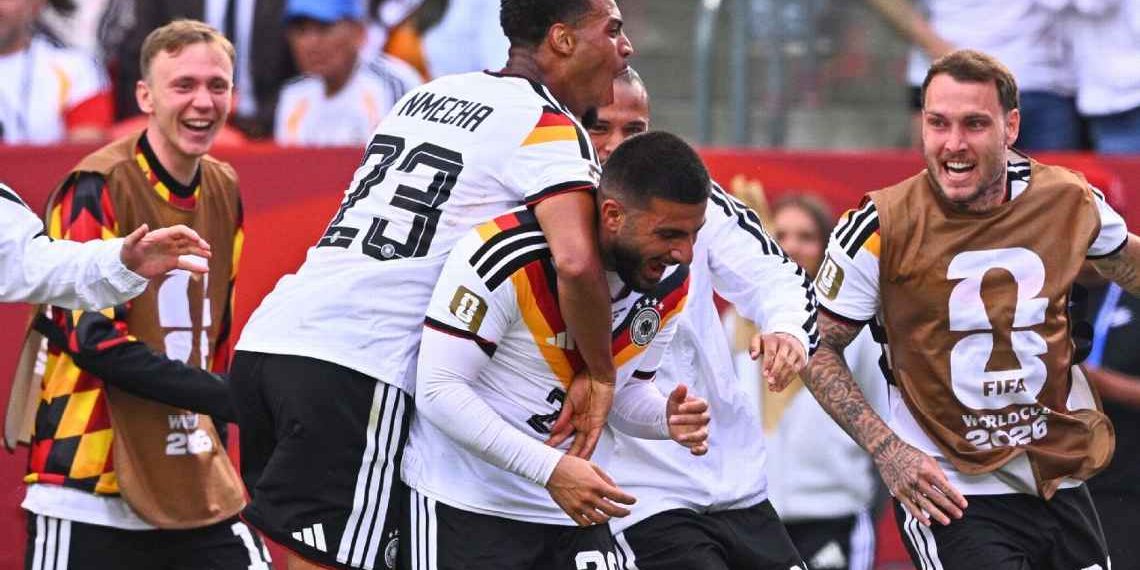
Table of Contents
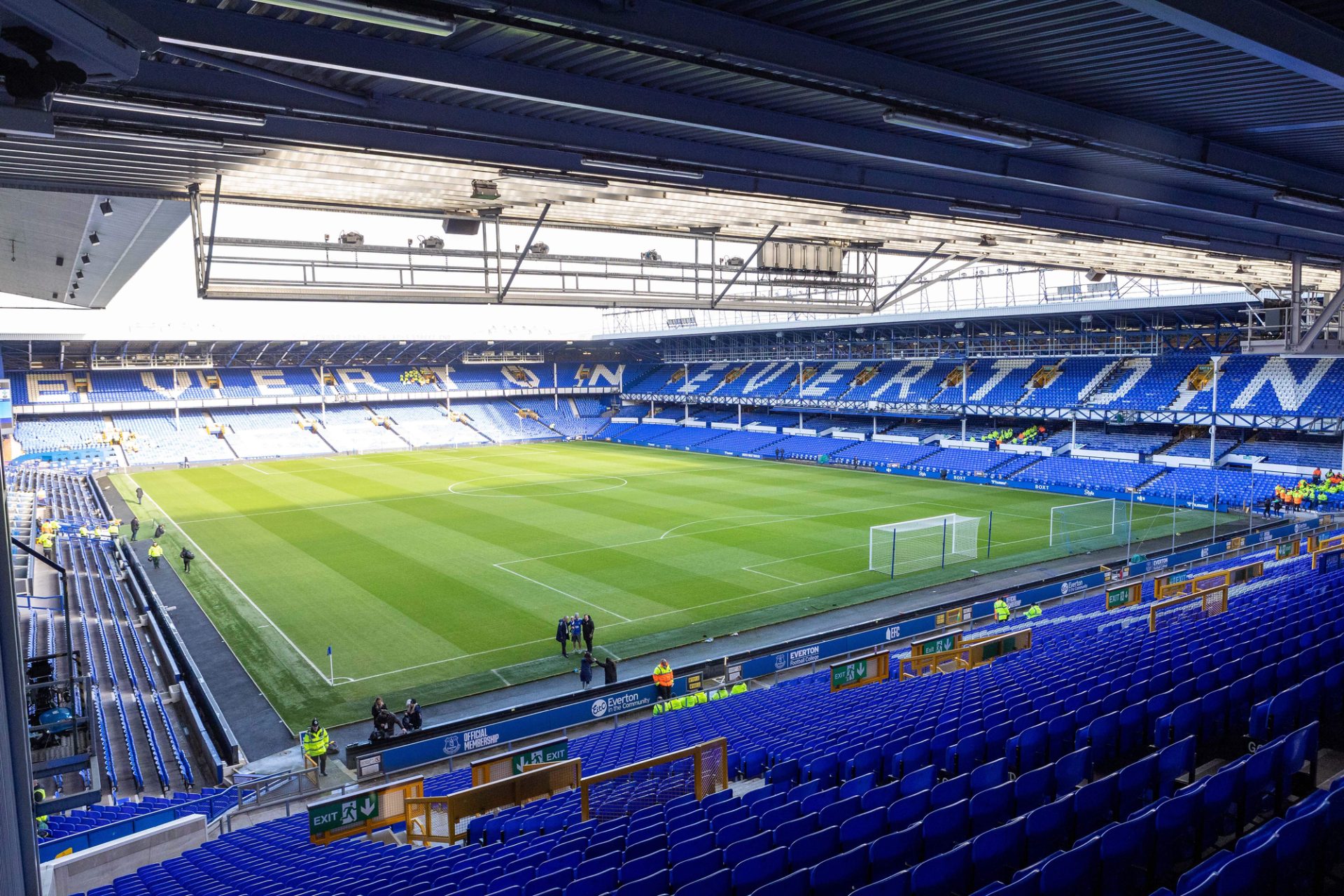
When Deniz Undav was seventeen, his day did not begin on a training pitch. It began on a factory floor in Lower Saxony, where he operated laser-cutting machines through eight-hour shifts for around 120 pounds a week. The football came afterwards, in the evening, for whichever lower-division side would have him. Werder Bremen had released him at fourteen, telling him in effect that he was not physically built to make it. Eighteen years later, he came off the bench in front of a World Cup crowd, scored twice in the second half to turn a losing position into a 2-1 win over Ivory Coast, and sent Germany into the knockout rounds for the first time since 2014. Few players at this tournament have travelled a longer road to get to it.
Undav has now scored nine goals in eleven appearances for Germany, a ratio that would flatter a striker who had been fast-tracked through the most expensive academies in Europe. He was not. He was discarded, sent down the pyramid, and made to earn every step back up it. That context is what makes his super-sub habit feel like more than a tactical quirk. It is the latest chapter of a career that almost never happened.
Released, Then Forgotten
The rejection by Werder Bremen is the kind of detail that gets dressed up in hindsight, but at the time it was simply the end of a teenager’s obvious path. The verdict was that Undav lacked the physical development to go far. He did not have a Plan B waiting. He played for TSV Havelse, then Eintracht Braunschweig’s reserves, then SV Meppen, the sort of clubs whose results are read out quickly at the bottom of the bulletin and rarely make the back pages. The factory job was not a colourful footnote. It was how he paid his way while chasing something most people around him had quietly written off.
What stands out about that period is how ordinary it was. There was no academy nutritionist, no individual development plan, no pathway laid out by a club desperate to protect its investment. There was a young man finishing a shift, eating in a hurry, and going to train because he could not let the idea of being a footballer go. Plenty of players have similar stories of lower-league grind. Very few of them end with two goals at a World Cup that put one of the game’s traditional giants into the last sixteen.
Belgium Changed Everything
The move that rewired Undav’s career took him out of Germany altogether. At Union Saint-Gilloise in Brussels, a club enjoying its own improbable revival, he found a stage that suited him. He helped them win promotion and then, once in the Belgian top flight, he exploded. The numbers from that spell read like a misprint for a player of his background: a tally that made him the division’s leading scorer and best player in the 2021/22 season, with around 45 goals across roughly 70 matches for the club. Suddenly the forward nobody in Germany had wanted was the most talked-about striker in Belgium.
A move to Brighton followed, and this is where the romantic arc stalls. The Premier League did not immediately fall for him. Game time was limited, the goals dried up, and for a while it looked as though the Belgian breakout might be remembered as a one-league wonder. Undav needed somewhere to play, not somewhere to sit, and the answer was a return to Germany with Stuttgart. The decision rescued him. His form there reignited, the goals returned, and the national team conversation, once unthinkable, became unavoidable.
The Art of Coming Off the Bench
Being a super-sub is not the insult it once was. It is a discipline. A forward sent on with thirty minutes left, into a tired and stretched game, has to read the rhythm of a match he has only watched, find space that opens and closes in seconds, and produce a moment of quality cold. Undav does it repeatedly, and against Ivory Coast he did it twice. The equaliser settled Germany’s nerves. The winner sent them through. Both arrived in the kind of crowded penalty area where instinct, not coaching, decides who gets the touch.
There is an argument, and Undav’s record gives it teeth, that he should start. Nine goals in eleven internationals is not the output of a squad player. But managers value what he gives them late, and there is a logic to it. A defence that has spent an hour against one type of striker often has no answer when a different one arrives with fresh legs and a point to prove. Germany have effectively turned Undav into a weapon they deploy when the game is at its most chaotic, and so far the gamble keeps paying.
What His Rise Says About the Game
Undav’s story lands at a useful moment for football’s ongoing argument about talent identification. The modern academy system is built to spot and sign the best children as early as possible, which means a vast number of late developers are released before their bodies and their game have caught up. Undav is the cautionary tale that the system would rather not look at too closely. A club decided at fourteen that he would not make it, and on the available evidence that day they may even have been right. The point is that fourteen-year-olds are not finished products, and the machinery of professional football too often treats them as if they are.
His success is not a knock on every academy decision, but it is a reminder that the pyramid still works as a second chance for those who refuse to step off it. The lower leagues, the reserve sides, the clubs that train two evenings a week around full-time jobs, all of it gave Undav a place to keep playing until someone finally noticed. For every forward plucked into a superclub at sixteen, there is a Deniz Undav grinding away three divisions down, and the game would be poorer if it stopped producing them.
A Nation That Needed the Lift
Undav’s goals carried a significance beyond his own story, because of where Germany have been. This is a country with four World Cup titles and a self-image built on tournament excellence, yet it had not reached the knockout rounds at the previous two World Cups. The 2018 holders went home after the group stage, beaten by South Korea in one of the competition’s great humiliations. Four years later, in 2022, they fell at the same hurdle again. For a footballing public raised to expect deep runs as a birthright, two first-round exits in a row had become a national wound.
So when Undav turned the Ivory Coast game around, the relief in the German camp was as visible as the joy. Reaching the last sixteen does not erase the disappointments of 2018 and 2022, but it stops the run, and it does so through a player who embodies graft rather than entitlement. There is something fitting about a side trying to rebuild its identity being dragged into the knockouts by a forward who learned his trade in the lower leagues rather than the spotlight. If Germany are to rediscover what made them formidable, a striker who never took a single step of his career for granted is not a bad symbol to build around.
From the Laser Machine to the Last Sixteen
It is worth pausing on the symmetry. A teenager once spent his days cutting metal on a factory line and his nights playing for clubs nobody outside the region had heard of, because he could not accept that football was finished with him. This week that same man walked onto a World Cup pitch with Germany trailing and walked off having decided the match. The knockout rounds now wait, and whatever happens next, Undav has already authored the kind of story the sport sells itself on but rarely actually delivers.
He will not be the last player Germany ask to change a game from the bench, and he may yet force his way into the side from the start. But the most striking thing about Deniz Undav is not the goals or the ratio or the role. It is that the boy a major club gave up on, who paid for his football with factory shifts, kept showing up long enough to be standing on the biggest stage in the game when it needed someone to score. The machines he once operated are still running somewhere in Lower Saxony. The forward who left them behind is into the last sixteen of a World Cup.

Leave a Comment
More in News

Eberl Says Kompany Needs Protecting From Himself After Training Collapse

‘I base that off the 2 states where I served, Pennsylvania and Tennessee’: Waitress of 10 years says you should never tip below the standard—even with bad service
Rodri Says Real Madrid Cannot Fool Him Before His First Clásico

Chicago man orders iPhone 18 Pro Max. Then he gets an email saying his package has been delivered—and signed for
Enzo Maresca Says Both Villa Goals Were Avoidable as Guehi Struggles Again
Trending on Futbol Chronicle
Michael Carrick points to lack of sharpness after Manchester United draw with West Ham
Michael Carrick admits Manchester United have “no excuses” after AC Milan defeat
Josef Martinez Returns to MLS Spotlight With Columbus Crew Signing
Arab football federations back Gianni Infantino as FIFA president faces growing opposition