
From the New York Cosmos to the Premier League, Haji Wright Took the Long Way
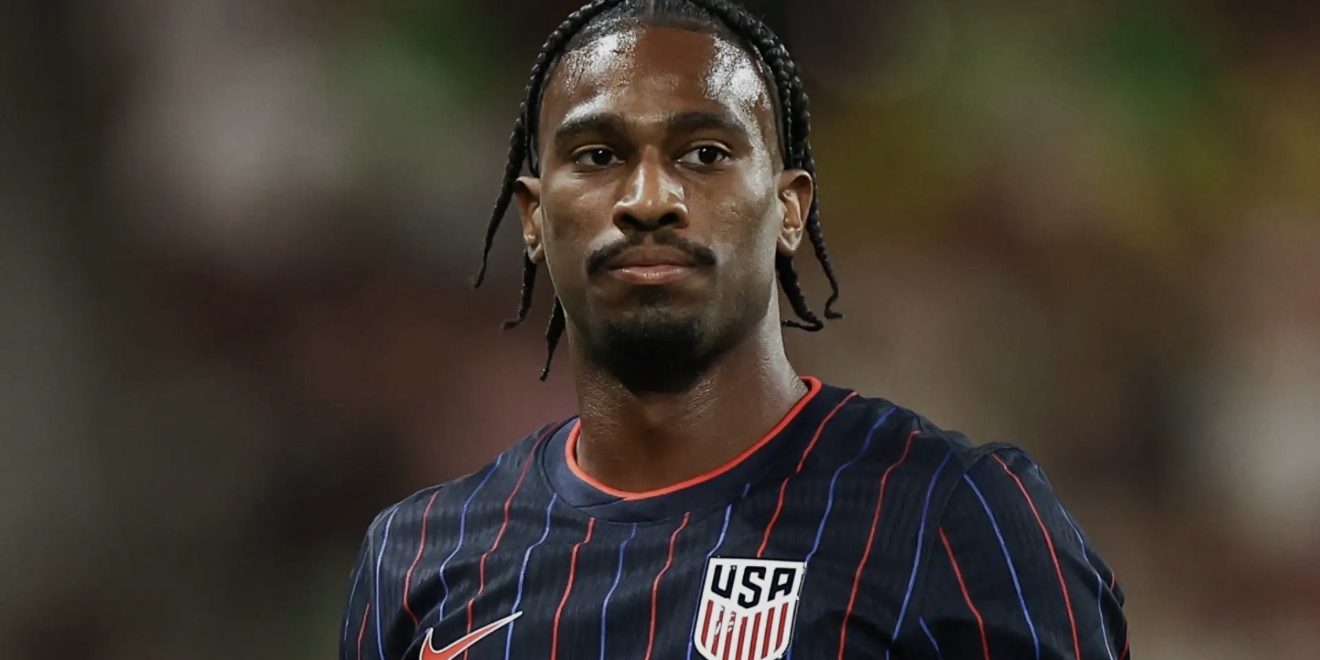

Table of Contents
When Coventry City clinched promotion to the Premier League on May 4, the player who dragged them there was an American forward most English fans had barely heard of two years earlier. Haji Wright finished the season as the leading scorer in the Championship, England’s relentless second tier, with 17 goals. A few weeks later he boarded a flight to a home World Cup as one of three strikers Mauricio Pochettino trusted to fire the United States deep into the tournament. For a player who once could not find a club willing to give him minutes, the timing reads like fiction.
Wright’s story is not the tidy academy-to-stardom arc that gets made into highlight reels. It is messier, and better. He left Los Angeles as a teenager, bounced through four countries and at least five clubs, and spent years as the kind of forward scouts described as raw, inconsistent, almost there. The almost finally dropped off this season, and the man who arrives at the World Cup is proof that a slow path can still end in the right place.
A Los Angeles kid who left at 17
Haji Amir Wright was born in Los Angeles in March 1998 and came up through the LA Galaxy youth system, the same pipeline that has fed the U.S. program for a generation. He did not wait around for a Galaxy first-team chance. At 17 he signed with the New York Cosmos, the reborn version of the famous old club, and made his professional debut in 2015 while most kids his age were finishing high school.
The move that shaped him came next. In 2016, German giant Schalke 04 took him to the Bundesliga, and Wright found himself sharing a locker room with another young American chasing the same dream, Weston McKennie. The two would later anchor the same national team. At Schalke, Wright made only a handful of first-team appearances and scored once, and by 2019 the club let him go. He was 21, a former wonderkid label already fading, and the easy story would have been a quiet return home.
The years nobody puts on a poster
Instead Wright went looking for games wherever they existed. He played for VVV-Venlo in the Netherlands. He spent time at SonderjyskE in Denmark. He kept moving, kept scoring just enough to earn another contract, and kept hearing that he had not put it all together. These are the seasons that never make the documentary, the ones where a young forward learns whether he actually wants the life or just liked the idea of it.
Turkey is where it turned. Wright signed permanently for Antalyaspor in 2022 and scored 16 goals in all competitions, the first time his end product matched the physical gifts that scouts had always seen. At six feet three with genuine pace, Wright had the frame of a classic center forward and the awkward, long-limbed running style that defenders find hard to time. In the Super Lig he finally started punishing them. That season did two things at once. It earned him a move back to a bigger league, and it put him on Gregg Berhalter’s radar for the United States.
The teammate who stayed in touch
One thread runs through the chaos of those wandering years. McKennie, who came up alongside Wright at Schalke, kept rising while his friend kept moving, and the two stayed close. By the time both pulled on a U.S. shirt, the story had a neat symmetry. Two American teenagers had landed in the same German locker room a decade earlier, and both made it to a home World Cup, though they took wildly different routes to get there. McKennie went straight up. Wright went sideways through half of Europe and arrived anyway.
That kind of friendship counts for something in a national team. Pochettino has spoken about wanting players who know each other, who trust the man next to them, who have history that goes beyond a training camp. Wright walks into the squad with one of its most important figures already in his corner, a relationship built in their first professional season far from home. The kid who could not nail down a Schalke place still came out of that club with something durable.
The penalty that announced him in Qatar
Wright made his senior U.S. debut in 2022 and forced his way into the World Cup squad for Qatar that winter. He left it with a moment most American fans can still picture. In the round of 16 against the Netherlands, with the U.S. chasing the game, Wright stretched out a boot and flicked a near-post finish past the Dutch keeper to pull a goal back. The comeback fell short and the Netherlands went through, but the image stuck. The unknown forward off the bench had scored at a World Cup before many in the crowd could spell his name.
That goal bought him belief, and in August 2023 it bought him a return to a major league. Coventry City paid a club-record fee of around nine million euros to bring Wright to the Championship on a four-year deal, a serious investment for a club outside the Premier League. He scored on his home debut in a 3-0 win and never really stopped.
Carrying Coventry to the Premier League
This past season Wright became the player Coventry bet on. He led the Championship in goals with 17, the difference-maker in a promotion race that the second tier runs as a war of attrition across 46 games. Promotion to the Premier League is worth a reported fortune to a club, and the forward who delivers it earns a particular kind of local immortality. Coventry fans who watched him bully Championship defenders all winter understood what the rest of England was about to learn.
The promotion also reframed his international standing. When Pochettino sat down to pick his final 26 for the World Cup, the striker debate was crowded. Folarin Balogun had emerged as the headline forward. Ricardo Pepi carried his own story out of El Paso. Josh Sargent, a Qatar starter, had the resume. Somebody with a track record was going to miss out, and the player whose form could not be ignored was the one who had just topped the Championship charts. Wright made it. Sargent did not.
Wright also grew up as a footballer in those final months, not just as a scorer. He dropped into midfield to link play, he pressed from the front when Coventry needed to win the ball high, and he led the line on days when nothing fell for him and he kept running anyway. Managers notice the striker who works on his quiet afternoons. By the time the season ended, Coventry had a center forward who had topped the scoring charts and a national-team coach who had a forward rounding into his best form at the perfect moment.
What he gives Pochettino in the knockouts
Pochettino did not bring Wright to the World Cup to sit and watch. The Argentine builds teams that press and run, and a knockout tournament in American summer heat rewards a manager who can change the shape of an attack late in games. Wright is the kind of forward who alters a match without needing the ball at his feet for 90 minutes. He stretches defenses, he holds the ball up against bigger center backs, and he has the finishing instinct that announced itself in Qatar.
There is a tactical argument that Wright is the most natural No. 9 in the squad, a true center forward in a group that often leans on Balogun’s movement and Pulisic’s brilliance from wide. In a tight round-of-32 or quarter-final, the player who can come off the bench and win a header or run a tiring back line is precious. Wright spent a decade becoming exactly that player, in obscure leagues, on short contracts, far from the spotlight that now finds him.
The wider point is what his selection says about this U.S. team. Pochettino did not build his squad from reputation. He built it from current form, and few players arrived in better form than the man who just won the Championship’s golden boot. Wright represents a version of the American game that does not depend on early hype, the player who got better in his late twenties because he kept grinding when the easy thing was to come home and disappear into a comfortable MLS career.
If the United States make a run on home soil this summer, there is a strong chance Wright scores a goal that defines it, and the casual fans who discover him will assume he came from nowhere. He did not. He came from New York, then Germany, then the Netherlands, then Denmark, then Turkey, then a promotion fight in the English Championship. The long way around led him to a World Cup in his own country. Few players in the tournament have earned their place quite so slowly, or quite so completely.

Leave a Comment
More in News

Granit Xhaka Receives a £136,000 Suspended Fine After Admitting He Forged a Covid Vaccine Certificate

Everton’s American Owners Explore a Sale of the Club Just Two Years After Their £400m Takeover

Sheffield United’s Bettis Says the Club Will Avoid a 12-Point Penalty Over Its Ownership Crisis

Woman Goes To New York Bar—She Really Shouldn’t Have Asked To Sit At Bartop: ‘Feel Like I Should’ve Clocked In’

Kylian Mbappe’s Nightclub Visit and Alps Cycling Video Drew a Mourinho Reprimand as Real Madrid’s Dressing Room Stays Icy
Trending on Futbol Chronicle
Josef Martinez Returns to MLS Spotlight With Columbus Crew Signing
Michael Carrick admits Manchester United have “no excuses” after AC Milan defeat
What Is Offsides in Soccer? The Offside Rule Fully Explained
Cristian Romero completes €40m move from Tottenham to Atlético Madrid