Jarell Quansah Left Liverpool for Germany to Force His Way Into England’s World Cup Squad
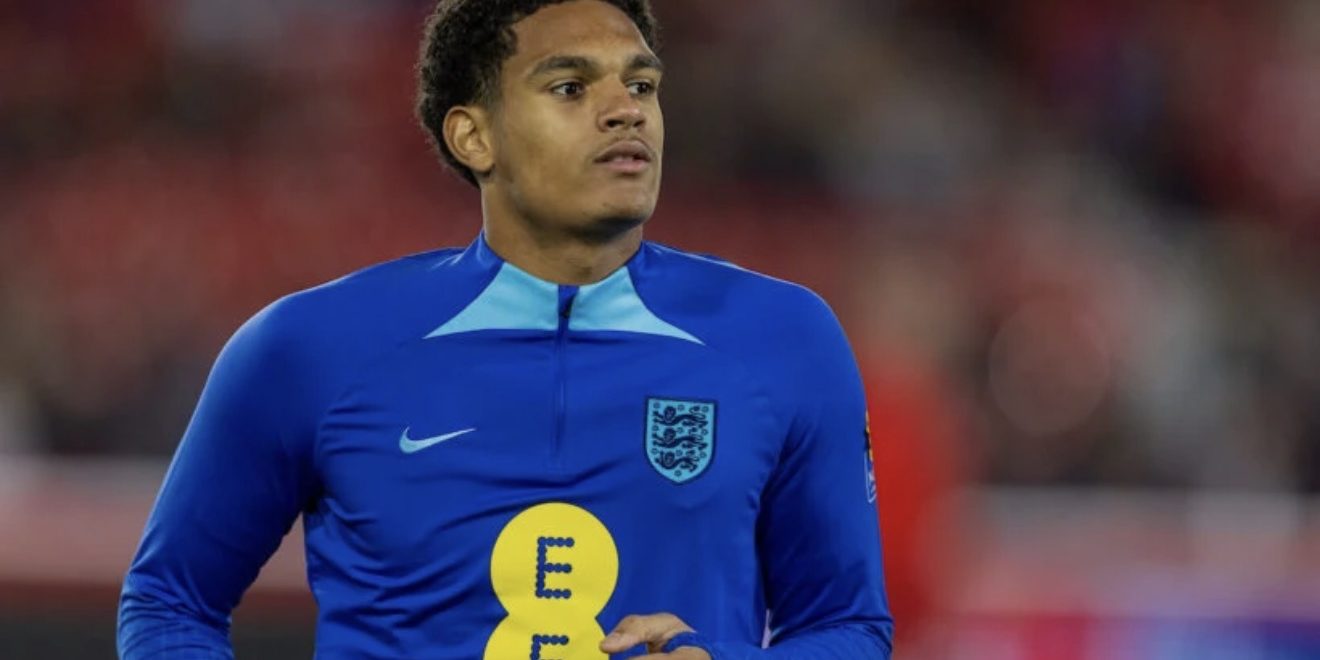

Table of Contents
When Harry Maguire learned he had been left out of England’s World Cup squad, he did not hide his feelings. “I’ve been left shocked and gutted by the decision,” he wrote. “I’ve loved nothing more than putting that shirt on and representing my country over the years.” It was the reaction of a player who had been a fixture of England’s defence for the best part of a decade, a man who had played in semi-finals and finals, and who had just produced one of the strongest seasons of his career at Manchester United. The player who took his place had made a single competitive start for the senior side. His name is Jarell Quansah, and the gamble that put him on the plane began a year earlier with a decision almost nobody understood at the time.
Walking away from Anfield
In the summer of 2025, Quansah did something that footballers at his stage of development almost never do. He left Liverpool. Not on loan, not in a temporary search for minutes, but in a permanent transfer to Bayer Leverkusen worth in the region of 40 million pounds. He was 22, a homegrown talent at one of the biggest clubs in the world, with a contract and a place in the squad. The conventional path was to stay, fight for his spot, and trust that his moment would come. Quansah chose the harder, riskier road instead.
His reasoning was simple and, in hindsight, clear-eyed. He wanted to play. At Liverpool he was a useful squad member, rotated in and out, valued but rarely guaranteed. He calculated that the only way to force himself into Thomas Tuchel’s thinking for the World Cup was to become an undroppable starter somewhere he would be trusted week after week, including in the Champions League. “Leaving Liverpool was needed,” he said of the move that the rest of English football questioned. A year on, the decision looks less like a gamble and more like one of the shrewdest career calls any England player has made in this cycle.
The making of a defender
Quansah came through the Liverpool academy, the same production line that has turned out a string of homegrown talents, and broke into the first team as a composed, ball-playing centre back with the physical tools to handle the Premier League. He made his senior England debut in November 2025, a late entrant into the international picture compared with some of his peers, and that timing made his World Cup case all the more remarkable. He went from uncapped to squad member to the man chosen ahead of a veteran of three major tournaments in the space of roughly six months.
What appealed to Tuchel was versatility. Quansah is not a one-position defender. He can play as a left or right centre back, drift across the back line, and fill in at right back when needed, the kind of flexibility a manager craves when he can only take 26 players to a tournament. In a squad where every place is precious, a defender who covers three or four roles is worth more than a specialist who covers one. Tuchel, a coach who prizes tactical adaptability above almost everything, saw a player who could solve several problems at once.
At Leverkusen the bet paid off in the most visible way possible. Regular starts, Champions League nights against elite opposition, and the responsibility of anchoring a defence in a demanding league hardened a talent that had been developing in fits and starts at Anfield. The German game, with its emphasis on high lines and aggressive defending, suited him. By the time the World Cup squad was named on 22 May, Quansah was no longer a prospect. He was a proven starter at a serious European club, and the numbers and performances backed up his selection.
The Maguire question
None of this softens the blow for Maguire, and the contrast between the two players frames one of the most debated calls of Tuchel’s tenure. Maguire had been excellent for Manchester United, reinventing himself after years of criticism and finishing the season as one of the club’s most reliable performers. By the logic of form alone, he had a strong case. Tuchel chose differently, and in doing so signalled the kind of squad he wanted to build: younger, more mobile, more flexible, and willing to defend higher up the pitch in the heat of a North American summer.
It is a ruthless business, and Tuchel has not shied away from ruthlessness. Phil Foden and Cole Palmer, two of the most gifted attacking players in the country, were also left out. Trent Alexander-Arnold missed the cut. The message was consistent. Reputation and past service would count for little. The manager picked the players he believed fit his system and his vision of how England would win seven matches in a month, and Quansah fit in a way Maguire, for all his quality, did not.
A choice that could have gone elsewhere
There is another layer to Quansah’s story that adds to its richness. As a player of Ghanaian heritage, he was eligible to represent Ghana, and at a tournament where England were drawn to face the Black Stars in the group stage, the path not taken carries a particular weight. Quansah committed to England, and now he stands inside the squad rather than across from it, one of a generation of dual-eligible players whose decisions shape the fortunes of more than one nation.
It speaks to a wider truth about the modern England setup. The talent pool is deeper and more diverse than it has ever been, and the competition for places is fierce enough that a player can move countries, leagues, and price brackets in a single year and still have to fight for recognition. Quansah did all of that and emerged with a World Cup place. The journey from Liverpool squad player to Leverkusen mainstay to England international happened faster than anyone outside his immediate circle predicted.
What comes next
Quansah arrives at the tournament not as a guaranteed starter but as a genuine option, a defender Tuchel trusts enough to have chosen over a household name. Whether he plays a leading role or serves as cover, his presence is a vindication of a decision that ran against every instinct of cautious career management. He bet on himself, left the comfort of Anfield, and proved he was right.
For young English players watching, the lesson is hard to miss. Sometimes the route to the top of the international game runs away from the biggest clubs rather than through them. Quansah saw a closed door at Liverpool, opened a different one in Germany, and walked through it all the way to a World Cup. Harry Maguire’s painful exit is the other side of that same coin, a reminder that in Tuchel’s England, form and fame guarantee nothing, and that the players who adapt fastest are the ones who get to go.
Why Germany changed him
The detail that gets overlooked in Quansah’s rise is just how different the demands of the Bundesliga are from the role he had grown used to in England. At Leverkusen he was asked to defend enormous spaces, to step into midfield to win the ball, and to play out from the back under pressure in a side built to dominate possession. Mistakes were exposed quickly and ruthlessly, and there was nowhere to hide on the nights the Champions League anthem played. That environment accelerates a young defender’s education in a way that bench minutes at a title-chasing club simply cannot.
Coaches who have worked with him describe a player who absorbs information quickly and rarely makes the same error twice. The composure on the ball that marked him out as a teenager has been matched by a growing reliability in the less glamorous parts of defending: the positioning, the timing of challenges, the willingness to head and clear when the situation demands it rather than always trying to play. It is the kind of maturity that tournament football rewards, where a single lapse can end a campaign.
A symbol of Tuchel’s England
More than any single selection, Quansah has become a shorthand for what Tuchel is trying to do. The German did not take the England job to manage sentiment or protect reputations. He took it to win, and he has assembled a squad that reflects a cold assessment of who gives the team the best chance over a punishing month of football. A versatile, in-form, Champions League-tested 23-year-old is exactly the profile a modern tournament side is built around.
If England go deep this summer, Quansah’s selection will be cited as evidence of a manager unafraid to back his own judgement against the weight of public opinion. If they fall short, the decision to leave out experienced defenders will be among the first things scrutinised. That is the bargain Tuchel struck when he named the squad, and Jarell Quansah, the boy who left Liverpool to chase a place no one was promising him, sits right at the center of it.

Leave a Comment
More in News

Thierno Barry Was Filmed Crying In A Private Training Session Last Season, And He Has Already Scored In Three Games This Campaign
Gravenberch’s Red Card Sparks Referee Row in Liverpool’s Defeat to City

Moise Kean Will Miss Como’s Biggest Game of the Season After Cesc Fabregas Clashed With Italy’s Doctors
Oliver Glasner Returned to Crystal Palace and Fans Turned From Applause to Taunts as Forest Lost
Vinicius Red Card for Hair Pull Leaves Mourinho Snubbing the Press
Trending on Futbol Chronicle
The Best Soccer Players of All Time: The 10 Greatest Ever Ranked
Why Soccer Is The Best Sport

The Best World Cup YouTubers to Follow in 2026
What Is Offsides in Soccer? The Offside Rule Fully Explained