Mauricio Pochettino Said the USA Was Worse Than He Believed and Built a Contender Anyway
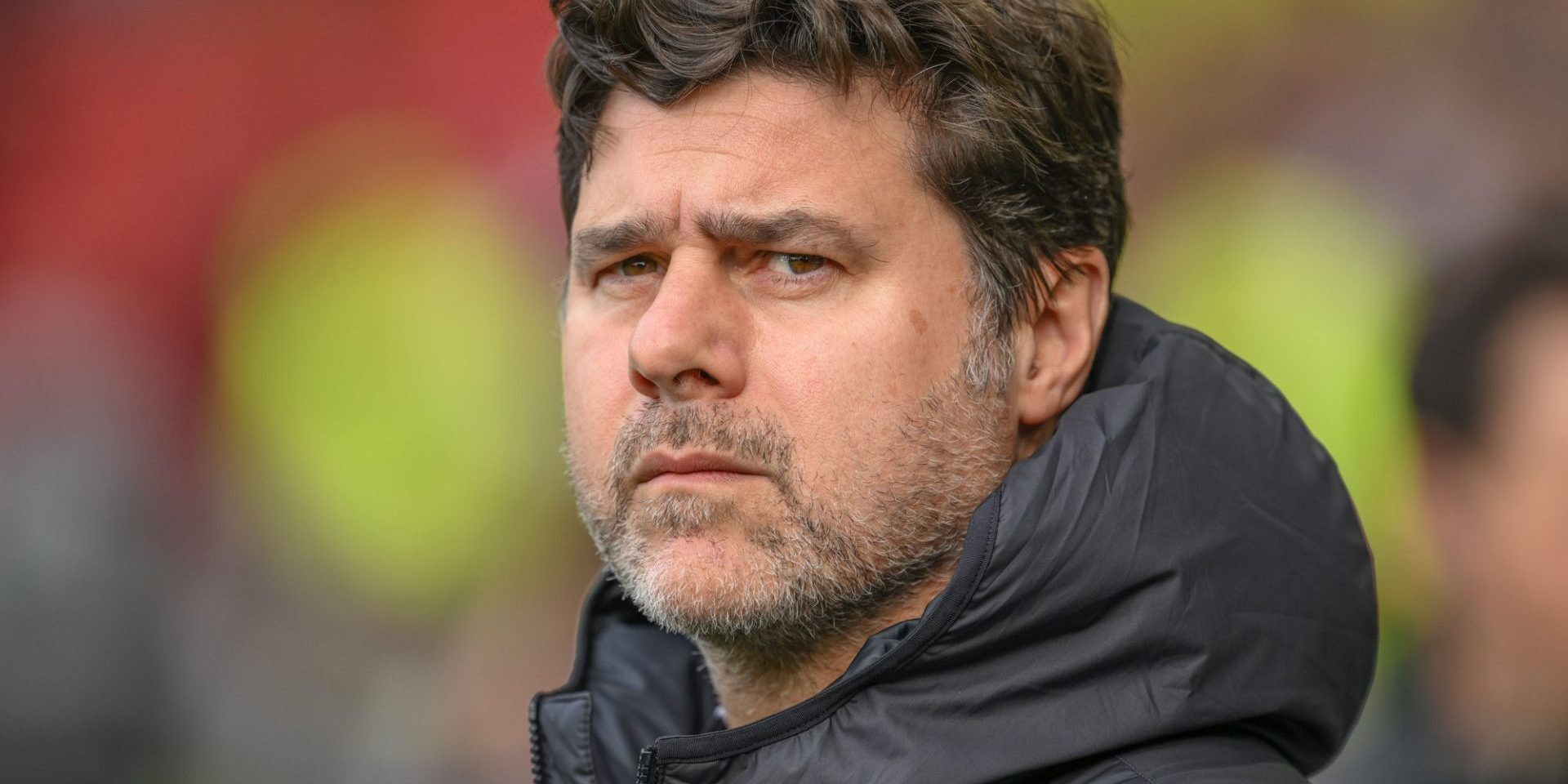
Table of Contents
Four lemons sit in a bowl on Mauricio Pochettino’s desk. He believes they soak up negative energy. An unused surfboard, hand-painted by the hotel’s sous chef, leans in the corner of his makeshift office overlooking the Pacific in Dana Point, California. On the wall behind him, written by his own hand in marker, are the quotes that have carried the United States men’s national team from one of the lowest points in its modern history to the top of its World Cup group on home soil.
“Why Not U.S.” reads the motto, plastered above the rest. It is a pun and a mission statement at once, and it captures the strangeness of what Pochettino has pulled off in twenty months. When the Argentine took the job in 2024, he was the most decorated coach the federation had ever hired, a man who had built his name at Tottenham, Paris Saint-Germain and Chelsea. What he found when he arrived was not what the salary suggested. In an interview with Yahoo Sports, he described the gap between expectation and reality in blunt terms.
“We misjudged,” Pochettino said. “The situation was worse than we really believed.”
A big punch, and a necessary crash
The excitement, by his account, did not last long. The staff that arrived alongside him was ready for a World Cup. The program around them, he discovered, was not. Pochettino described the early realisation in the language of a man who had walked into a room expecting one thing and found another.
“We receive a big punch,” he said. “We say, what the hell? Because we were so excited.”
He did not rush to paper over it. Instead he let things bottom out. The low point came in March 2025 at the CONCACAF Nations League finals outside Los Angeles, where the United States finished fourth out of four qualified teams, beaten and booed in a half-empty SoFi Stadium. For most coaches that would have been a five-alarm emergency. Pochettino treated it almost as a plan coming together.
“We expected it,” he said. “It was more of a plan. It was painful, but it was necessary. It was a good crash.”
From there he stripped the team back to its foundations. He took a young, experimental squad to the 2025 Gold Cup, blooded new players, and began rebuilding the culture rather than the results. The results followed anyway. The United States closed 2025 unbeaten across its final five matches, every one of them against teams bound for this World Cup. The seed, to borrow his own metaphor, had finally taken root.
South American grit and a question that unified a room
The change his players talk about is less tactical than spiritual. Tim Weah, the winger whose father George won the Ballon d’Or and never reached a World Cup, said Pochettino introduced something the group had been missing.
“South American grit,” Weah called it. “When you look at teams like Argentina and Paraguay, when you look at Brazil, the Colombias, they always have that edge because of their mentality, and they’re just nonstop. It’s something I don’t think we had before.”
Having installed the edge, Pochettino went to work on belief. In a team meeting in November 2025, he stood in front of his players and told them the story of South Korea reaching the semi-finals as co-hosts in 2002, and of Morocco doing the same against all odds in 2022. Then he asked them a single question that has since become the team’s identity.
“Why not us?”
“It unified everyone,” he said. The phrase migrated from the meeting room to the wall of his office, alongside lines like “The talent has brought us here, but it is heart, effort and unity that will make us unforgettable,” and, on a whiteboard in English and Spanish, “Don’t fear the void; it’s where the soul learns to fly.” A cynic would call them slogans. Pochettino treats them as the operating system of a team that did not used to believe.
From an empty stadium to a roaring one
The proof arrived in the group stage. The United States opened with a commanding win over Paraguay, then ground out a 2-0 victory over Australia, clinching first place in Group D with a game to spare. It was the first time in the modern era the Americans had won their opening two World Cup matches, and they did it with a plus-five goal difference and a style that, as Yahoo Sports put it, mixed a pirate’s swagger with an artist’s grace. They were not just winning. They were good to watch.
For Pochettino, the transformation was most visible in the stands. He still remembers the SoFi Stadium of March 2025, nearly empty for that Nations League humiliation. He returned to the same venue for the World Cup opener and did not recognise it. He remembers, too, the 2025 Gold Cup final against Mexico in Houston, where a pro-Mexican crowd of 70,000 sang over the American team in its own country.
“Crying in the dressing room because I feel so sad,” he said of that night. “We play in our own country and 70,000 Mexican fans are singing.” The contrast with the noise that has followed his team through this tournament, raucous and finally on his side, has clearly moved him. “Different vibe, different energy, so engaged with us,” he said. “That was amazing.”
An outsider falling for the country
Pochettino does not live in the United States. He keeps homes in London and Barcelona, and he came to the job as a foreigner with no particular feel for American sport. That has changed. Last autumn he attended an Ohio State versus Texas college football game, sat in the middle of the noise, and found himself wondering why soccer could not command the same devotion. He has fallen for country music, discovering Lainey Wilson through the television series “Yellowstone” and seeing Teddy Swims in concert in New York. He is even learning the words to John Denver’s “Country Roads,” the song his players and their fans now belt out together after wins.
“Difficult to follow the lyrics,” he admitted. “I am learning.”
His contract expires after this World Cup, and the offers from Europe will come, given the clubs he has managed and the reputation he carries. Yet he has not closed the door on staying. What interests him is not only winning a tournament but leaving something behind, a bond between a national team and a public that has historically kept soccer at arm’s length.
Why the doubters were not wrong to doubt
It is worth remembering how this appointment was received. When the federation handed Pochettino a record contract in 2024, plenty of American observers questioned whether a European super-club coach with no prior connection to the program could understand what he was taking on, or whether he would simply collect his salary and leave. The Nations League collapse in March 2025 looked, at the time, like proof that the scepticism had been justified. The team appeared rudderless, the project stalled, and the money spent on a marquee name seemed to be buying nothing.
What the critics could not see was that Pochettino had decided the team needed to fail before it could be rebuilt. He has since described that period as a controlled demolition, a clearing of the ground rather than a collapse. The young squad he sent to the 2025 Gold Cup was an experiment in finding out who could handle the demands he was about to impose. The unbeaten run that closed the year was the first sign the experiment had worked. By the time the World Cup arrived, the team that had been booed off in Los Angeles was a different animal, harder, sharper and certain of itself. The doubters were reading the results. Pochettino was reading the process, and the process was always the point.
The legacy he actually wants
Asked about his future, Pochettino reframed the entire question. Winning, he insisted, is not the only measure of what he is building.
“If the American people start to show passion in our sport too, why not be here being part of something that can create a legacy?” he said. “For me, the most important legacy is the connection between the national team and the fans. The legacy is not to win the World Cup. Of course, we want to win, but that connection is the legacy we need if one day we want to be very successful and be consistent.”
It is a remarkable thing for a coach to say in the middle of a tournament his team might just go deep into. The United States will play a third-placed side in the Round of 32 on July 1 in Santa Clara, the next test of how far this group can ride the belief Pochettino has drilled into them. Reaching the quarter-finals for the first time in twenty-four years would be a milestone. Pochettino, characteristically, has aimed the team at something larger and harder to measure. He inherited a program that had hit the floor, told its players to stop fearing the void, and turned a punchline into a question worth asking out loud. Why not us. On the evidence of this summer, nobody around the team is laughing anymore.

Leave a Comment
More in News

Thierno Barry Was Filmed Crying In A Private Training Session Last Season, And He Has Already Scored In Three Games This Campaign
Gravenberch’s Red Card Sparks Referee Row in Liverpool’s Defeat to City

Moise Kean Will Miss Como’s Biggest Game of the Season After Cesc Fabregas Clashed With Italy’s Doctors
Oliver Glasner Returned to Crystal Palace and Fans Turned From Applause to Taunts as Forest Lost
Vinicius Red Card for Hair Pull Leaves Mourinho Snubbing the Press
Trending on Futbol Chronicle
Arab football federations back Gianni Infantino as FIFA president faces growing opposition
The Best Soccer Players of All Time: The 10 Greatest Ever Ranked
What Is Offsides in Soccer? The Offside Rule Fully Explained

What Is The Club World Cup?