Recharged Klopp Ready for Germany as Third World Cup Failure Forces Reckoning
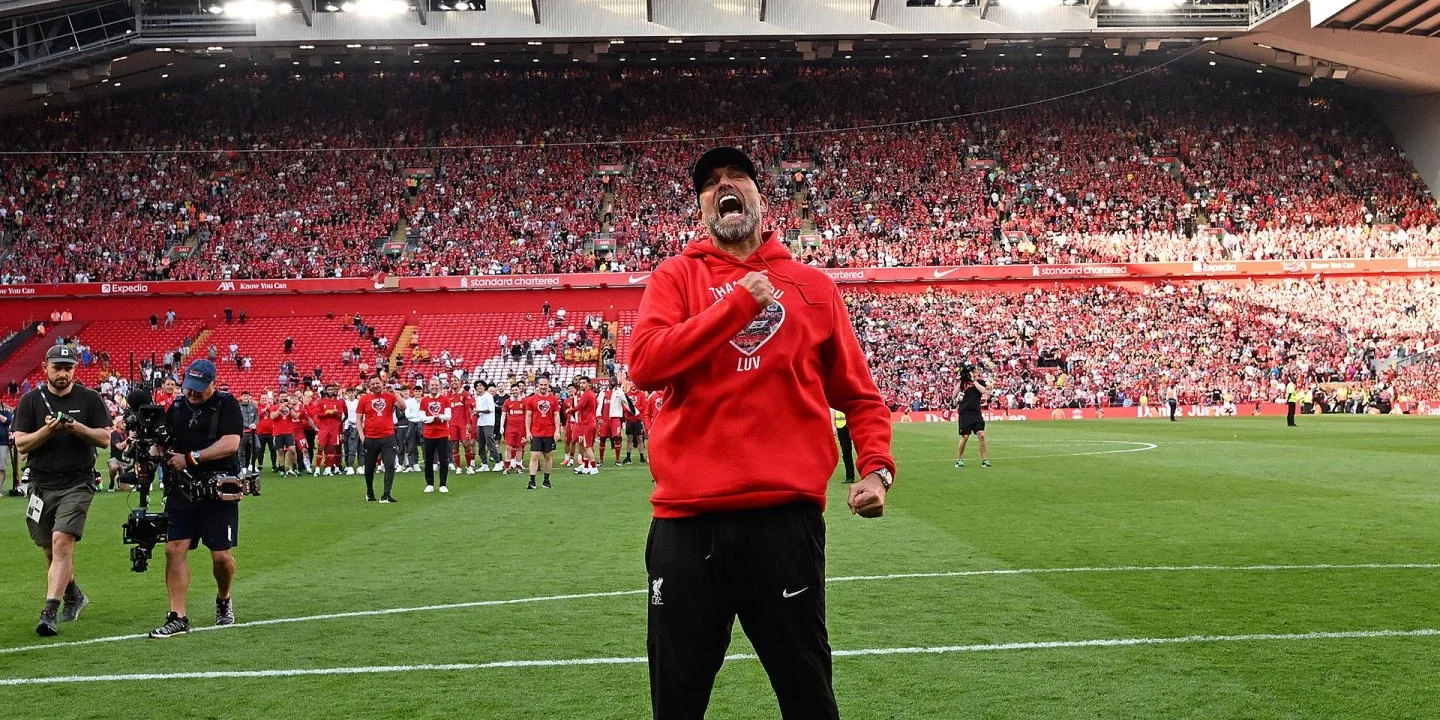
The World Cup was still going on around him. Jürgen Klopp had been sitting in TV studios in the United States, working as a pundit for German television, watching a tournament his country had already left behind. On June 29, Germany lost on penalties to Paraguay in the last 32. It was their third successive World Cup exit before the quarterfinals. Four days later, the German Football Association confirmed it had approached Klopp about taking over the national team. And Klopp confirmed he was listening.
“Julian has stepped down and the federation is working on the succession and has approached me in the course of those considerations,” Klopp told the German broadcaster Magenta TV.
He had more to say. The energy that had been missing when he departed Liverpool at the end of the 2023-24 season, exhausted after nine years at the club, had returned. Now, he said, that energy has returned: “I am more than recharged, I am ready.” And then the line that defined Germany’s footballing moment as clearly as anything else spoken in the aftermath of the Paraguay defeat: “German football is obviously at a turning point now. Now we need to change things fundamentally.”
Julian Nagelsmann’s resignation came four days after Germany lost their World Cup penalty shoot-out against Paraguay in Boston. Nagelsmann had taken over as head coach in September 2023, replacing Hansi Flick after Germany’s group-stage exit at the 2022 World Cup. He led Germany to the quarter-finals of their home European Championship in 2024, where they lost to eventual champions Spain. At this World Cup, Germany topped their group, reached the last 32, and then were beaten on penalties, the first time they had been eliminated from a World Cup in a penalty shoot-out in their history.
Nagelsmann presented his explanation for the defeat to DFB officials in Frankfurt on Thursday. By Friday, the German Football Association had confirmed his contract, which ran to the 2028 European Championship, would end with immediate effect. The exit was managed, as these things often are in German football administration, with formal courtesies extended on all sides.
“The German Football Association expressly thanks Julian Nagelsmann for his work,” DFB president Bernd Neuendorf said. “He is characterised by a high level of commitment and extraordinary ambition.”
Rudi Völler, the DFB’s sporting director, added that Nagelsmann “is and remains an excellent coach” and expressed confidence he would “continue to follow his path successfully.” German football administration speaks in this register at moments like these: measured, appreciative, forward-looking. The actual feelings behind the words are rarely what the words themselves convey.
What the words do convey accurately is the gravity of what Germany are dealing with. Three World Cups without reaching the quarterfinal. A nation that won the tournament in 2014, that has won it four times and reached the final eight times, that produces elite club football at scale, that has one of the largest football cultures in Europe: and they cannot get out of the first knockout round.
The 2018 group-stage exit in Russia was written off as a catastrophic anomaly. The 2022 group-stage exit in Qatar exposed something structural. The 2026 last-32 defeat to Paraguay, a country that had never previously knocked Germany out of a World Cup, has opened the possibility that something more fundamental is wrong. Klopp named it plainly. A turning point. Fundamental change needed.
Germany’s last World Cup knockout win was the 2014 final. Twelve years ago. Everything built in the twelve years that followed, the Euro hosting that generated such national excitement in 2024, the tactical reinventions, the coaching changes, the shift from experience to youth and back again, has failed to produce what German football believes it should consistently produce: deep runs in major tournaments.
Klopp’s name surfaced in connection with the Germany job long before Nagelsmann resigned. His departure from Liverpool at the end of that season was accompanied by immediate speculation about what role he would take next. The answer, when it came, was unexpected: he joined Red Bull as head of global soccer, a wide-ranging executive role that kept him connected to football without putting him back on a training ground. He described the break as necessary. After nine years at Anfield, winning the Premier League, the Champions League, the FA Cup and the League Cup, he needed to stop.
Sky Germany reported that Klopp has a verbal agreement in place that would allow him to leave Red Bull to take the Germany job. The details of how that agreement was structured and what conditions it contains have not been disclosed. What it signals is that the path from his current role to the national team has been kept open, deliberately or otherwise, from the day he left Anfield.
Klopp is 59. He managed Mainz before taking over at Borussia Dortmund, where he won back-to-back Bundesliga titles and reached the Champions League final. His career at Liverpool produced the most sustained period of success the club had experienced in decades. He is, by most assessments, the most successful German coach of the modern era.
The DFB’s statement was careful to say that Klopp had indicated his “fundamental readiness” to take over, not that the appointment was confirmed. There are discussions to be had, terms to be agreed, questions about his precise vision for German football to be addressed. Klopp acknowledged this himself. “Intensive discussions” were needed with the federation. He wanted to agree “a way ahead with the changes required.”
Those words suggest Klopp is not simply offering to warm the seat until the 2028 European Championship. He is offering a project. His language about the need to change things “fundamentally” implies structural reform, not incremental adjustment. Whether the DFB, with all the institutional inertia of a major football federation, is ready for that conversation is a separate question.
Nagelsmann’s departure reached as far as the German government. Friedrich Merz’s spokesperson, Stefan Kornelius, told reporters at a government news conference that “the chancellor thanks Julian Nagelsmann for his commitment and service in recent years as national team coach.” The crossover between German football and German politics is well established, but the brevity of that statement says something about the mood. There is no glory to celebrate here. There are thanks to give, and then there is the difficult work of rebuilding.
Nagelsmann, for his part, left with dignity intact. The statement he released reflected the genuine distress of a 38-year-old coach who had prepared carefully and been eliminated in circumstances that hurt.
“The decision was anything but easy for me,” he said. “My top priority has always been the success of the team. After such a bitter disappointment, it deserves the chance of a new beginning. I am sorry and hurt from the bottom of my heart that we disappointed you and couldn’t give you any more football nights at this World Cup.”
The German press, according to reports, had been informed that Nagelsmann was urged to leave voluntarily after presenting his post-mortem to federation officials. Bild reported a severance package of about seven million euros, roughly one year’s salary, to end the contract early. The shootout defeat carried its own historical sting. Germany had gone into the Paraguay match with a perfect record in World Cup penalty shootouts, having won all four they had contested: against France in 1982, Mexico in 1986, England in 1990 and Argentina in 2006. That aura of inevitability from twelve yards, built over four decades, dissolved in Boston in a single evening. For a footballing culture that has long treated penalties as a question of preparation and nerve rather than luck, the manner of the exit cut as deep as the fact of it.
Klopp’s record as a club manager explains the urgency of the DFB’s approach. At Liverpool he ended a thirty-year wait for a league title in 2020, a year after winning the Champions League in Madrid. He built teams defined by energy, pressing and emotional force, qualities Germany’s recent sides have conspicuously lacked. No other available German coach carries anything like that authority.
The mechanics of the departure were, in the end, conventional. The manager lost. The manager leaves. The federation finds someone new.
What makes this case different is the person waiting in the wings. Klopp is not a conventional successor. He is the most charismatic German football figure of his generation, with a record that speaks for itself and a stated intention to do something more than just manage games. He wants to change how German football thinks about itself and how it operates. That ambition, combined with the scale of what has gone wrong in three successive World Cups, makes this moment significant.
German football has been told, by one of its own, that it has reached a turning point. The question now is whether those running the sport are willing to take the turn Klopp is describing, or whether they will absorb his energy and enthusiasm into a system that quietly resists the fundamental change he is calling for. That question will not be answered quickly. But the conversation has started, and Klopp is the one who started it.

Leave a Comment
More in News

Thierno Barry Was Filmed Crying In A Private Training Session Last Season, And He Has Already Scored In Three Games This Campaign
Gravenberch’s Red Card Sparks Referee Row in Liverpool’s Defeat to City

Moise Kean Will Miss Como’s Biggest Game of the Season After Cesc Fabregas Clashed With Italy’s Doctors
Oliver Glasner Returned to Crystal Palace and Fans Turned From Applause to Taunts as Forest Lost
Vinicius Red Card for Hair Pull Leaves Mourinho Snubbing the Press
Trending on Futbol Chronicle
Michael Carrick admits Manchester United have “no excuses” after AC Milan defeat
Arab football federations back Gianni Infantino as FIFA president faces growing opposition
Josef Martinez Returns to MLS Spotlight With Columbus Crew Signing
Map of All the Premier League Teams for 2025/26