Riyad Mahrez Scored Twice to Drag Algeria Into the World Cup Knockouts
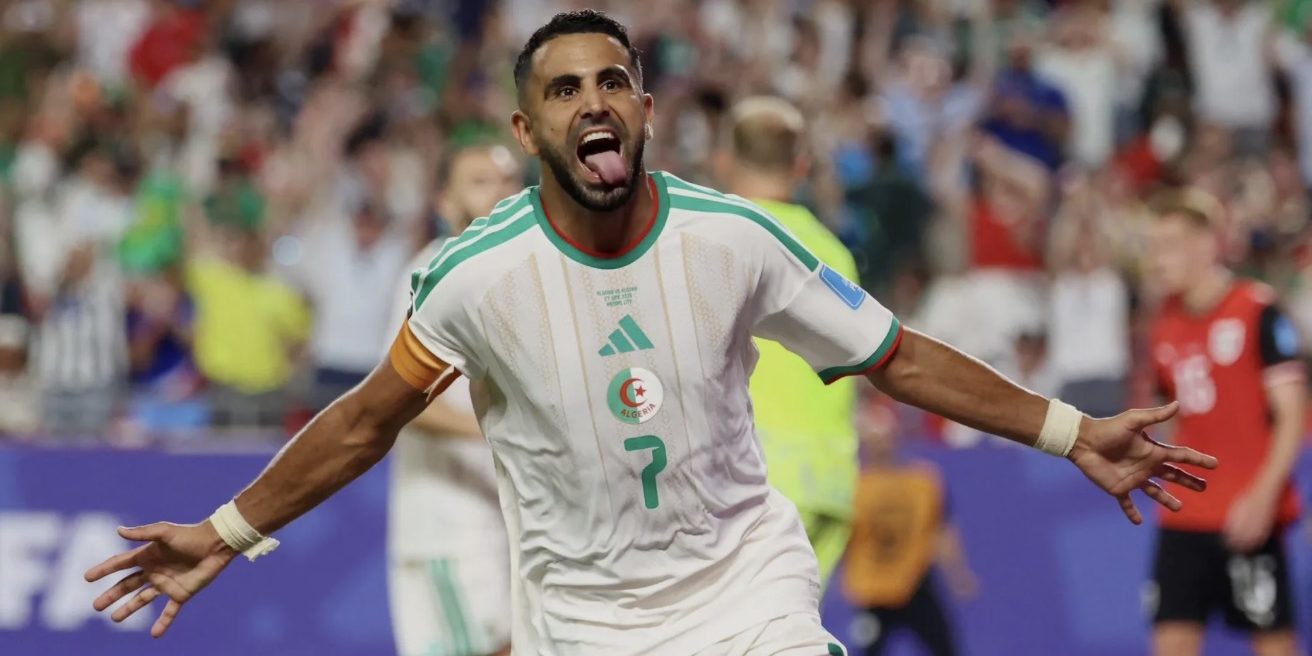

Table of Contents
The ball sat on the penalty spot in Kansas City and Riyad Mahrez did what he has done since he was a slight teenager nobody in Paris wanted. He paused. He looked up. Then he passed it into the corner with the casual disdain of a man who had settled the question long before the goalkeeper moved. It was his second goal of the night against Austria, and it hauled Algeria back from a losing position in a 3-3 draw that carried the Desert Foxes into the World Cup knockout rounds.
For Mahrez, now 34, the moment ran deeper than a group-stage scoreline. Algeria had not played at a World Cup since he was a young winger still learning the international game. They missed 2018. They missed 2022. A generation of Algerian talent watched two tournaments pass from their living rooms while rivals took the stage. On Saturday, captaining a side that needed almost everything to fall its way, Mahrez made certain the wait ended with his own boot.
From a Sarcelles Estate to a Stadium Bearing His Name
Mahrez grew up in Sarcelles, a northern suburb of Paris built on tower blocks and noise, the child of an Algerian father and a Moroccan mother. He was small and skinny, the kind of player academy scouts glance at once and forget. Clermont, Le Havre and the rest of France’s production line passed him by in his early teens. He kept playing on concrete and patchy grass, kept beating bigger boys, and waited for someone to look twice.
His father Ahmed died when Riyad was 15, a loss that still shapes how he talks about the game. Mahrez has said he plays for him in every match. The town has since named a football arena after its most famous son, with a plaque honouring his late father set into the ground. A boy once judged too frail to matter now has his name fixed above the gates of the place that raised him.
The football world caught up late. Le Havre gave him a chance in France’s second tier. Leicester City took him in 2014 for a fee that now looks like a clerical error, and two years later he was the creative heartbeat of the most improbable league title in English history. Manchester City and a procession of trophies followed. Through all of it, the international thread stayed knotted to Algeria, the country of his father rather than the country of his birth.
The Night That Beat Austria and Buried Iran
Group J offered Algeria no kindness. Argentina, the holders, dismantled them 3-0 in the opening match and left few observers expecting a recovery. Algeria answered by grinding past Jordan 2-1, Mahrez setting up Nadhir Benbouali before Amine Gouiri struck the winner with eight minutes left. That result kept them alive. The finale against Austria would decide everything.
It became one of the wildest games of the group stage. Six goals, swinging momentum, and a captain who refused to let his team drown. Mahrez scored twice, the second from the spot, and the 3-3 draw lifted Algeria into third place on four points. With both Algeria and Austria finishing level on results, Austria edged second on goal difference, but Algeria’s tally was strong enough to claim one of the eight best third-placed berths. The same scoreline shut Iran out of the knockouts on the cruellest of margins. Football rarely deals in clean justice, and on this night Algeria took the kinder half of it.
A Golden Generation That Almost Never Arrived
This Algeria side has talent stacked behind its captain. Mohamed Amine Amoura has emerged as a forward of real menace, Gouiri carries Premier League pedigree, and a clutch of dual-nationality players raised in France chose the green and white over easier paths elsewhere. For years that depth produced heartbreak rather than tournaments. Algeria won the 2019 Africa Cup of Nations, Mahrez bending in a stoppage-time free-kick against Nigeria that still plays on a loop across the country, then failed to convert continental glory into a World Cup place. The 2022 qualifying campaign ended with a last-gasp Cameroon goal and a sense that the team’s best years might slip away unseen on the global stage.
Reaching North America repairs some of that. It hands a gifted group the audience it spent years chasing, and it gives Mahrez, deep into his thirties, a knockout tie he can shape. Few captains carry a nation’s mood the way he does. When he plays well, Algeria believes. When he scored twice against Austria, a country exhaled.
Switzerland Stands in the Way
The reward is a Round of 32 meeting with Switzerland, one of the most organised defensive teams in the tournament and exactly the kind of opponent built to frustrate a side that lives on its captain’s invention. Algeria will need more than one moment of brilliance. They will need the discipline that has too often deserted them at the decisive instant, and they will need Mahrez to find space against a team that gives away very little of it.
Beat Switzerland and Algeria reach the last 16 for the first time since 2014, when a young Mahrez watched from the fringes as his country took Germany to extra time. Twelve years on, he is the one expected to drag them there. For a player who has won almost everything in club football, a deep World Cup run with the country of his father would sit apart from all of it.
Algeria carry a World Cup history laced with both glory and grievance. In 1982 they beat West Germany in one of the great tournament shocks, only to be eliminated after West Germany and Austria played out a result in Gijon that suited both and sent Algeria home. FIFA changed its scheduling rules because of it. That memory still lingers in Algerian football, a reminder that the team has been wronged on this stage before. Reaching the knockouts in 2026 offers a small measure of repayment, a chance to write a different ending on the biggest platform the sport has.
Why This Run Carries a Continent
Algeria do not advance alone. African sides have made the expanded 48-team World Cup their own, with several reaching the knockout rounds and refusing to play the role of grateful guests. The format has handed the continent more places and more belief, and teams that once travelled to make up the numbers now travel to win ties. Algeria’s progress slots into that larger shift, a tournament in which the gap between the traditional powers and the rest looks thinner than it has in decades.
There is a diaspora story threaded through it too. Mahrez is one of many players born in France who pulled on the shirt of their parents’ homeland, choosing identity over convenience. That choice, repeated across squads from Algeria to Morocco to Senegal, has reshaped international football’s map. The children of migration are deciding World Cup ties, and they are doing it for the countries their families left.
For Algeria, the meaning is simpler and more personal. A nation that endured two World Cups on the outside is back inside the tent, carried there by a captain who learned the game on Sarcelles concrete and never stopped playing for a father who did not live to see this.
The Numbers Behind the Captain
Mahrez has spent more than a decade as Algeria’s reference point, the player team-mates look for when a match tightens. He sits among the country’s most prolific scorers of the modern era, and the two goals against Austria added to a tally built across qualifiers, Cup of Nations campaigns and the rare World Cup nights his country has been able to give him. The remarkable part is not the volume. It is the timing. Mahrez scores when Algeria need it most, and he has done so since the 2019 free-kick that beat Nigeria and carried his side to a final.
Coaches who have worked with him describe the same trait. He slows games down. Where younger players rush, he waits for the defender to commit and then punishes the half-second of doubt. That patience, learned on pitches where he had to outthink stronger opponents, has become his signature at 34. Age has taken a yard of pace and replaced it with something harder to defend against, a sense of exactly when to act.
There is a weight to captaining Algeria that few outsiders fully grasp. The national team is a source of pride and argument in equal measure, dissected in cafes from Algiers to the Paris suburbs that produced so many of its players. Mahrez wears that scrutiny without flinching. He has been booed and worshipped, sometimes in the same week, and he keeps walking to the penalty spot anyway.
The penalty in Kansas City will be replayed for years. Not because it was difficult, but because of who took it and what it ended. Mahrez looked up, picked his corner, and sent a country he could have ignored into the knockout rounds. The stadium with his name on it back home will have noticed.

Leave a Comment
More in News

Thierno Barry Was Filmed Crying In A Private Training Session Last Season, And He Has Already Scored In Three Games This Campaign
Gravenberch’s Red Card Sparks Referee Row in Liverpool’s Defeat to City

Moise Kean Will Miss Como’s Biggest Game of the Season After Cesc Fabregas Clashed With Italy’s Doctors
Oliver Glasner Returned to Crystal Palace and Fans Turned From Applause to Taunts as Forest Lost
Vinicius Red Card for Hair Pull Leaves Mourinho Snubbing the Press
Trending on Futbol Chronicle

Josef Martinez Returns to MLS Spotlight With Columbus Crew Signing
The Best World Cup YouTubers to Follow in 2026
What Is Offsides in Soccer? The Offside Rule Fully Explained
The Best Soccer Players of All Time: The 10 Greatest Ever Ranked