
Somali Referee Omar Artan Was Denied Entry and Welcomed Home a Hero
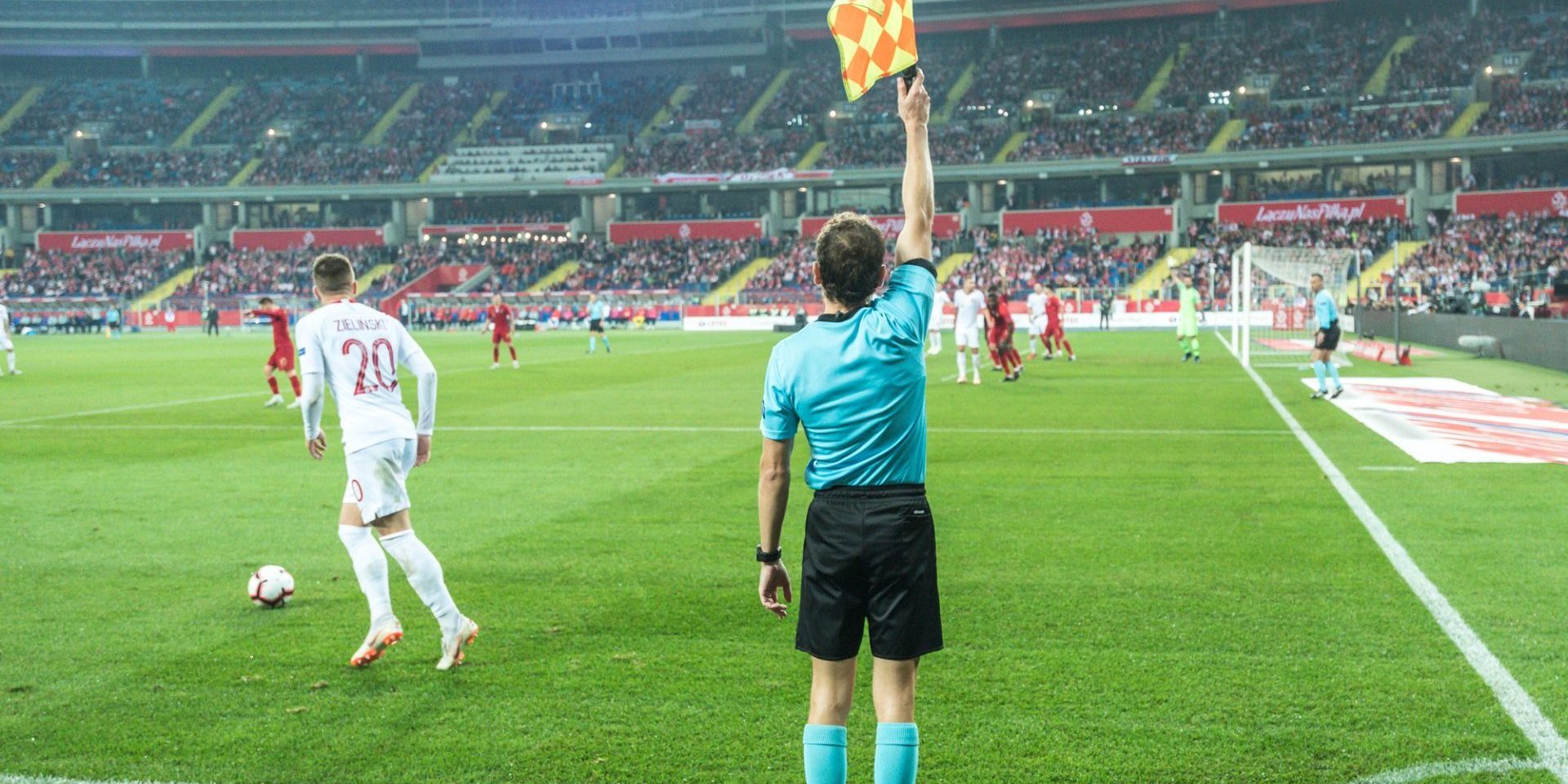

Table of Contents
Somalia is not playing at the World Cup. Yet from the scenes at Mogadishu’s airport last week, you would think the country had won the thing. A crowd of supporters, blue bereted police and jostling journalists pressed toward a plane that had just taxied to the terminal. The man who stepped off was not a striker or a captain. He was a referee, draped in the sky blue national flag, lifted onto shoulders and handed flowers, while thousands packed a stadium across the city to cheer his name.
Omar Abdulkadir Artan, 34, was meant to be the first Somali referee to officiate at a World Cup. Instead he became something nobody planned for: a symbol of what happens when the world’s biggest sporting event collides with the host nation’s hardest border policies. Artan never made it onto a pitch in the United States. He was detained, questioned for hours and sent home. And his country decided to treat him like a champion anyway.
Eleven hours in Miami
Artan landed in Miami on a Saturday, where the World Cup referees’ training base is located. He held a valid visa and, by his account, a diplomatic passport. He did not get through the airport. He says he was detained and questioned for 11 hours, repeatedly pressed about al-Shabab, the militant group that has terrorised Somalia for years. He told The New York Times he knew nothing about it. After the inspection, he was sent back the way he came.
The United States Department of Homeland Security confirmed the decision. Artan, one of FIFA’s 52 selected World Cup referees, was “determined to be inadmissible due to vetting concerns and was denied entry,” a DHS spokesperson said, without offering detail. Andrew Giuliani, head of the White House World Cup task force, said Artan was turned away for a “very good reason” but declined to explain what it was. A Customs and Border Protection spokesperson cited “vetting concerns.” Speaking anonymously, a Trump administration official told NBC News the refusal was for reasons including “association with suspected members of terror organizations,” again without providing evidence or detail.
Somalia sits on the current administration’s travel ban list, one of dozens of countries facing restrictions that range from partial limits to outright bans. Artan’s case stood out because he was an accredited official, invited by the global governing body to do a job at an event the United States had spent years promising would welcome the world.
A hero’s welcome in Mogadishu
Back home, the reaction was instant and overwhelming. The Somali Sports Ministry expressed “deep regret” over his treatment. The Somali Football Federation offered its full support while urging caution until the facts were established. Ordinary Somalis simply turned out in their thousands.
For a country that has endured decades of conflict, Artan represents a rare and uncomplicated source of pride. In an interview earlier this year, he described what it had taken just to keep refereeing at home. He said he had sometimes been forced to change his route to his local stadium because of explosions in the city.
“You cannot give up as a referee. You have to have a target. I had this target, but it was not an easy job,” he said. “You have to continue, and you have to fight if you want to go to a place like the World Cup.”
He got the target. He earned the place. Then a border officer took it away. After his return, Artan struck a notably composed tone. “Despite the circumstances, I am in a positive mood and I am focused on the next challenges in my refereeing career,” he said in a statement. He remains one of Africa’s most respected officials, and within days came reports that European football’s authorities had handed him a high profile assignment of their own, a reminder that the rest of the game still wanted him even if one airport did not.
Not an isolated case
Artan was the most visible casualty of the tournament’s border troubles, but he was not the only one. Iranian state media reported that 15 Iranian officials had also been denied entry, along with the Iraqi national team’s official photographer. Iraqi player Aymen Hussein and members of other squads have described intensive and at times invasive searches at the border. Two members of the Iraqi travelling party were pulled aside for what CBP called “additional inspection”; one was admitted, the other denied entry over vetting concerns.
Iran’s national team has had to stay in Mexico because of visa problems. The players are permitted to cross into the United States to play their matches, then must return to their base south of the border. Some staff members were refused American visas altogether, and Iran says its entire allocation of fan tickets has been revoked. Ivory Coast’s fan association told reporters it would not send supporters at all.
The backdrop is a set of travel bans and restrictions affecting citizens of 39 countries. World Cup participants Haiti and Iran fall under full bans, while Ivory Coast and Senegal face partial ones. During the past two tournaments, in Russia and Qatar, visa requirements for ticket holders were waived or dramatically streamlined. This time, even fans from countries not on any blacklist have faced steep fees and high refusal rates, in what is already the most expensive World Cup in history to attend.
The backlash
The criticism arrived from every direction. Former United States Secretary of State Hillary Clinton called it “terribly backward” for the country to be “flippantly barring officials from entering the country to do their jobs.” Retired England forward Ian Wright, in a video that spread widely, dubbed it the “World Cup of chaos” and asked: “Is this how the hosts behave really for the greatest game, the greatest tournament in the world?”
The Council on American-Islamic Relations decried the travel bans. “Our nation should not ban anyone from our shores simply because of their race or their ethnicity,” said the group’s deputy director Edward Ahmed Mitchell. “That’s especially true of a coach or referee or anyone else coming to participate in the World Cup.” Amnesty International branded the underlying policy “discriminatory, racist, and downright cruel.”
Football’s own advocates were just as blunt. “There’s a moral obligation to let people enter the country: that’s the whole point of the World Cup, that’s the universality of it,” said Ronan Evain, executive director of Football Supporters Europe. “Now it feels like the White House and FIFA have taken the world out of the World Cup.” Jules Boykoff, a politics professor at Pacific University who studies mega events, called the searches of players and officials “far outside the norm” and said they “slice mightily against the spirit of hosting the World Cup.”
The administration did not budge. White House spokesman Davis Ingle said the president was focused on making the tournament “the safest and most secure in history,” dismissing what he called “ridiculous scare tactics driven by liberal activist groups and the left-wing media.” New York mayor Zohran Mamdani, whose city hosts several matches and sits beside the New Jersey venue staging the final, pushed back. “Soccer would not exist without immigrants,” he wrote. “As the world comes to our city, we will stand proudly with our immigrant neighbors.”
What it means for the tournament
FIFA gave the United States assurances years ago that “eligible athletes, officials and fans from all countries around the world” would be able to attend. The governing body, which handed the American president its inaugural peace prize last year, stayed publicly quiet as the Artan story spread, declining repeated requests for comment.
Previous World Cups carried their own moral baggage, from the authoritarian backdrops of Russia in 2018 and Qatar in 2022 to tournaments staged under Mussolini’s Italy in 1934 and a military junta in Argentina in 1978. But refusing entry to an accredited match official is something new. “What the United States is doing here is setting a very bad precedent for these international events going forward,” said Sarah Pierce of the think tank Third Way. “I’m hoping that there’s enough backlash to help encourage nations to be more welcoming when they’re hosting these international events in the future.”
For now, the lasting image is not of Artan in the middle of a World Cup pitch, whistle to his lips, where he was supposed to be. It is of a referee carried shoulder high through a Mogadishu crowd, flowers in his arms and a flag around his neck, celebrated by a nation that never got to see him work. He fought his whole career to reach the World Cup, dodging explosions on the way to local grounds. He arrived at the door of the host country and was turned away. And somehow he went home a bigger hero than any whistle could have made him.

Leave a Comment
More in News

Trent Alexander-Arnold Returns to the England Squad for the First Time in Over a Year, and Cole Palmer Is Back Too After Their World Cup Snub

Gabriel’s Boot Caught Emiliano Martinez in the Head, and a Five-Person Premier League Panel Ruled It Was Never a Red Card

Floyd Samba Scores a Debut Double as a Teenager

Tottenham Spent £300m This Summer and Have Not Scored in Four Premier League Games for the First Time in the Club’s 144-Year History

Cyle Larin Scored Once in 15 Games on a Failed Feyenoord Loan, and Is Now Outscoring Kylian Mbappe and Erling Haaland at Southampton
Trending on Futbol Chronicle
What Is Offsides in Soccer? The Offside Rule Fully Explained

Michael Carrick admits Manchester United have “no excuses” after AC Milan defeat
Cristian Romero completes €40m move from Tottenham to Atlético Madrid
The Best World Cup YouTubers to Follow in 2026