Switzerland Built the Quietest Defence at the World Cup and Could Ruin a Favourite
Table of Contents
Every World Cup has a team nobody talks about until it is too late, the side that slips through the noise of the favourites and arrives in the last eight while the cameras are pointed elsewhere. At this tournament, that team may well be Switzerland. They do not have a Messi or a Mbappe. They do not sell shirts by the million or trend on social media. What they have is something far more useful in a knockout tournament: the meanest, most disciplined defence in the field outside of England, and a quiet belief that this is the year they finally break a barrier that has frustrated them for decades.
Switzerland have built a reputation as the tournament team that always turns up, reaching knockout stages with a regularity that bigger nations would envy. Yet the quarter-final has become their ceiling, a wall they have reached three times and never climbed beyond. Under Murat Yakin, with Granit Xhaka conducting from midfield and a back line that barely concedes, there is a growing sense that this generation is better equipped than any before it to finally smash through. The favourites would do well to look over their shoulders.
The defence nobody is talking about
Numbers do not lie, and Switzerland’s qualifying record was a masterclass in control. They came through their group unbeaten as winners, with four victories and two draws, scoring fourteen goals and conceding just two. Across an entire qualifying campaign, only England boasted a tighter defensive record. That is the kind of foundation that wins knockout football, where a single clean sheet can be worth more than a hatful of goals and where the team that does not crack tends to be the team still standing when the penalties arrive.
Defensive solidity is unglamorous. It does not produce the viral moments or the magazine covers. But it is the single most reliable predictor of a deep tournament run, because the further a competition goes, the tighter the margins become and the more a goal conceded costs. Switzerland understand this in their bones. They are not built to outscore the world. They are built to suffocate it, to turn matches into the kind of attritional, low-scoring contests in which organisation beats flair more often than the romantics would like to admit.
Murat Yakin and the most assured Switzerland in years
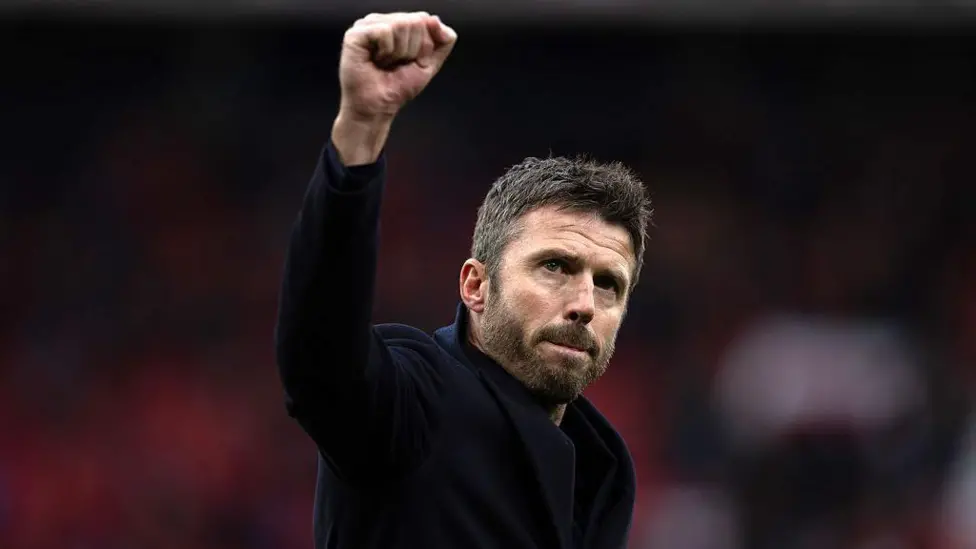
Yakin is not a coach who chases headlines, and that suits this group perfectly. He led Switzerland to the World Cup knockout rounds in 2022 and then to the quarter-finals of Euro 2024, where they pushed England all the way before falling on penalties. That run announced a team unafraid of the biggest names, capable of matching elite opposition for long stretches and trusting their structure to hold under pressure.
What has changed, by most accounts, is the temperament around the squad. For years Switzerland carried a reputation for internal friction, the sense of a team whose talent was undermined by tension. There is now a growing view that those cultural divisions have eased, that this is a more unified and tactically mature group than the ones that came before. A settled dressing room and a clear plan are exactly the ingredients that turn perennial quarter-finalists into something more, and Yakin has spent his tenure quietly assembling both.
Granit Xhaka, the manager on the pitch
At the heart of it all is Granit Xhaka. One of the most-capped players in Swiss history, he has long been the emotional and tactical reference point for the entire team. Watching him orchestrate a match is to watch a player who functions almost as an extension of the coaching staff, setting the tempo, organising those around him and dragging the side up the pitch or back into its shell as the situation demands.
Xhaka’s career has been a study in reinvention. Once cast as a hot-headed liability during his time in the Premier League, he rebuilt himself into one of Europe’s most respected deep-lying midfielders, the metronome of a title-winning side and the calm head his country leans on in the biggest moments. As captain, he is described by those around the camp as something close to Yakin’s assistant on the field, a player trusted to make decisions in real time that most managers would never delegate. In a knockout tournament, where matches turn on small calls made under enormous pressure, a leader like that can be the difference between holding firm and falling apart.
Why the quarter-final ceiling could finally crack
The recurring story of Swiss football is one of getting close and falling short. Three times they have reached the last eight of a World Cup, and three times they have gone no further. For a nation of their size, that is a record to be proud of and a frustration that gnaws all the same. The question that has followed every strong Swiss side is the same: can they take the final step from solid to special?
This group has reasons to believe they can. The defensive platform is elite. The midfield leadership is world-renowned. The temperament, so often their undoing, appears more stable than it has been in years. And the expanded format of this World Cup, for all the debate it has generated, offers a path in which a disciplined, hard-to-beat team can grind its way deep without ever needing to blow opponents away. Switzerland will not frighten anyone with their attacking flair. They will frighten teams with their refusal to lose, and in tournament football that is often the more dangerous trait.
The blueprint for an upset
Picture the kind of knockout night that suits them. A favourite arrives expecting to dominate, only to find every avenue blocked, every pass met by a body, every attack funnelled into a cul-de-sac. The minutes tick by, the frustration builds, and the crowd grows anxious. Switzerland sit deep, stay compact and wait, knowing that one moment of quality or one set piece can settle a game that the opposition has spent ninety minutes failing to win. It is not pretty. It is brutally effective, and it is precisely how smaller nations have undone giants throughout World Cup history.
The teams who should fear that scenario most are the ones built on possession and patience, the sides who expect to control matches and may not have a plan B when control does not produce goals. Against an organised, low-block Switzerland, those teams can find themselves dragged into exactly the kind of contest they least want to play. And once a match reaches the lottery of extra time and penalties, the side with the cooler heads and the better structure holds every advantage. Switzerland have made a habit of being that side.
The dark horse hiding in plain sight
So while the conversation swirls around the usual suspects, Switzerland go about their work in the quiet, building from the back, leaning on their captain and waiting for their moment. They are the team few neutrals will pick and even fewer will look forward to facing. A favourite drawn against them in the knockouts will know exactly what is coming and may still have no answer for it.
Football loves to celebrate the spectacular, but it is so often the organised and the obstinate who go furthest when the stakes are highest. Switzerland have spent years being good. This is a group that looks ready to find out whether it can be more than that. If they finally break their quarter-final curse, nobody who has watched them closely will be able to say they did not see it coming. The dark horse has been hiding in plain sight all along.
More than just a back line
It would be unfair to paint Switzerland as a purely defensive outfit with nothing to offer going forward. Fourteen goals in qualifying did not score themselves, and Yakin’s side carry a threat on the counter that is easy to underestimate precisely because they do not seek to dominate possession. When they win the ball deep and break, they do so with pace and purpose, and a team that has spent an hour camped on the edge of the Swiss box can be horribly exposed when the game suddenly turns.
Set pieces add another layer. Sides built on organisation and physical discipline tend to be well-drilled at both ends of a dead ball, and a single corner or free kick can decide the tight, cagey matches Switzerland specialise in. Xhaka’s delivery, allied to a squad full of players comfortable in the air, gives them a route to goal that does not depend on prising open a packed defence through open play. In knockout football, where chances are scarce and margins thin, that ability to manufacture a goal from a standstill is worth its weight in gold.
There is also the matter of experience. This is not a callow group learning on the job. Many of these players were part of the run to the Euro 2024 quarter-finals and the World Cup knockouts before that, and they carry the scar tissue and the self-belief that comes from having stood toe to toe with the best and refused to blink. Tournaments reward that kind of hardened familiarity, the calm that lets a team manage the closing minutes of a one-goal game without panic. Switzerland have it in abundance, and it is one more reason the favourites should treat them as a threat rather than a footnote.

Leave a Comment
More in News

Chicago man orders iPhone 18 Pro Max. Then he gets an email saying his package has been delivered—and signed for
Enzo Maresca Says Both Villa Goals Were Avoidable as Guehi Struggles Again
Kylian Mbappe’s Ballon d’Or Pitch Draws Criticism From Jean-Pierre Papin
Gianni Infantino Laughs Off Resignation Question and Claims “Vast, Vast Majority” Backing

Illinois woman gets orange soda from gas station soda fountain. Then she sees what else came with it: ‘Imagine you got a Coke’
Trending on Futbol Chronicle
Arab football federations back Gianni Infantino as FIFA president faces growing opposition

Map of All the Premier League Teams for 2025/26
Cristian Romero completes €40m move from Tottenham to Atlético Madrid
The Best Soccer Players of All Time: The 10 Greatest Ever Ranked