
Thierno Barry Was Filmed Crying In A Private Training Session Last Season, And He Has Already Scored In Three Games This Campaign
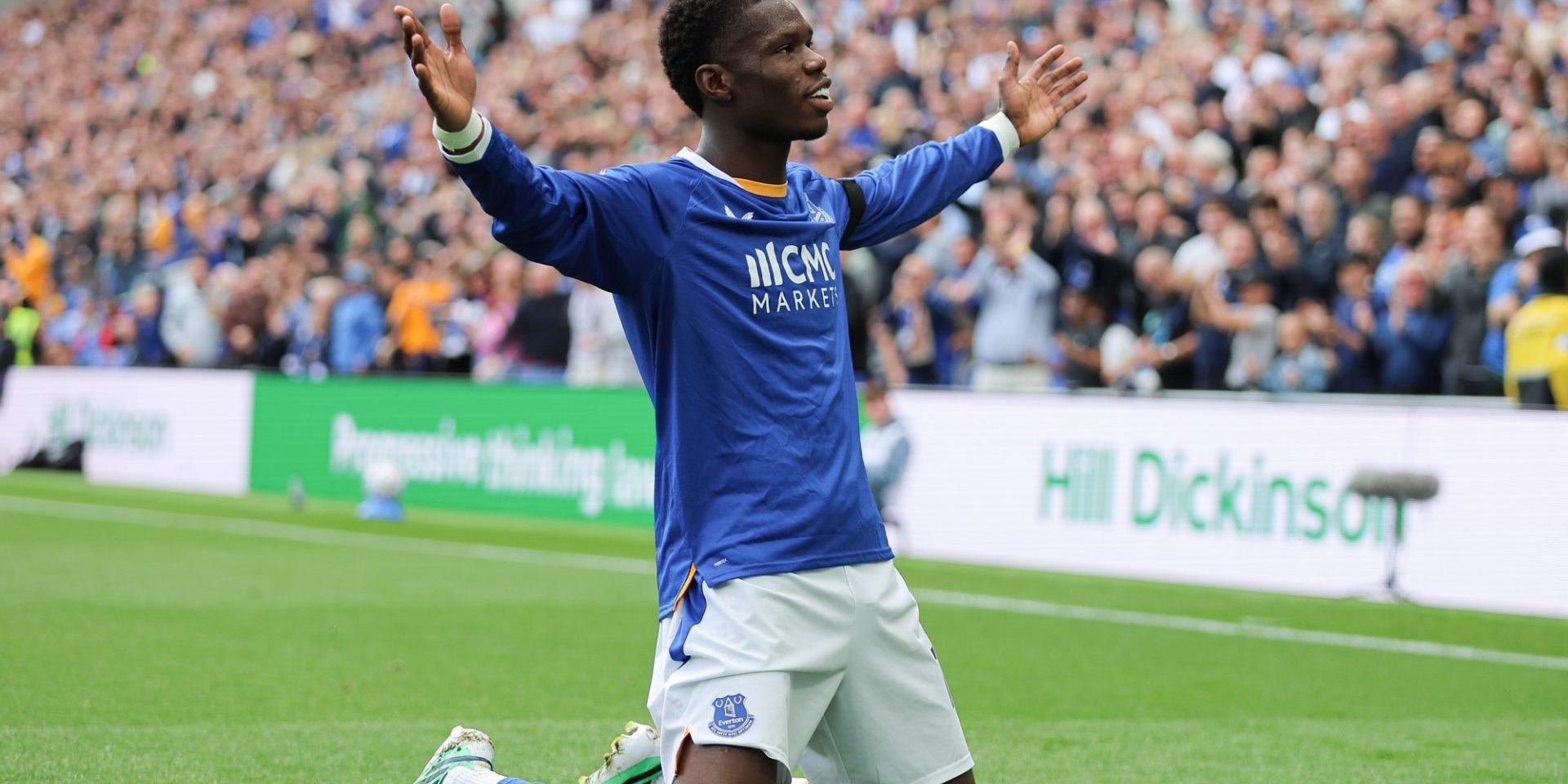

Table of Contents
- Thierno Barry was filmed in tears in a one-on-one training session last season, footage the Everton striker later chose to share himself.
- The 23-year-old has scored on the opening weekend, struck a hat-trick in the cup and netted the winner against Ipswich Town already this season.
- His individual coach, Scott Chickelday, says Barry has come back “mentally stronger” after a close-season rebuild built around one-touch finishing and resetting after a missed chance.
The Session Nobody Was Supposed to See
The footage shows a young striker alone on a training pitch, working through finishing drills with his personal coach, tears running down his face. It is not the kind of clip a Premier League club normally lets out into the world. Thierno Barry let it out himself.
Barry was in the middle of a difficult first season at Everton when the video was taken. He had arrived from Villarreal with goals expected of him, and for long stretches they were not coming. Scott Chickelday, the individual coach who has worked with Barry one on one at Finch Farm, was there for that session. “They were true tears,” Chickelday said.
What makes the clip worth revisiting now is not the struggle in it. It is what Barry has gone on to do. He has already scored in three separate matches this season: the opening weekend win over Crystal Palace, a hat-trick in the cup at Preston, and the goal that beat Ipswich Town. A player who was breaking down in private a few months earlier is now the one Everton’s attack keeps turning to.
A Season That Tested Him Before It Rewarded Him
Barry’s first year in England did not lack playing time. He featured in all 38 of Everton’s Premier League matches last season, 21 of them starts, the rest off the bench, and he still finished with eight goals. Those numbers tell a story of a manager, David Moyes, who kept faith in him even when the finishing was not matching the workload. They also tell a story of a 23-year-old given almost no break to reset mentally inside the season itself.
Barry’s route to England had already taken him through Sochaux’s reserve sides and clubs in Belgium, Switzerland and Spain before Villarreal sold him to Everton. He was not short of football experience. What Chickelday identified as the gap in his game was the ability to let go of a missed chance before the next one arrived, and that is the specific problem the two of them set out to fix once the season ended.
Rebuilding a Finisher, One Touch at a Time
Chickelday’s work with Barry over the close season had a narrow focus: one-touch finishing, and the specific kinds of chances Moyes’s team tends to create for him rather than generic shooting practice. The idea was to make the finish automatic so the mental side of the game, the part that had been breaking Barry down, had less room to interfere.
The other half of the rebuild was about recovery after failure. Chickelday has pushed Barry to reset immediately after a missed opportunity rather than carry it into the next action, the same quality he points to in Harry Kane, a forward whose longevity has been built on treating every chance as its own event. It is a mindset, not a technique, and it is the part Chickelday believes has shifted most in the months that followed that tearful afternoon. Barry, he says, has come back “mentally stronger.”
Barry’s decision to let the video become public rather than keep it buried says something about where he is now. Chickelday reads it as a sign the striker is in a place where he no longer needs to hide the difficult parts of his first season. Supporters who have seen it have responded with sympathy rather than mockery, a reaction that owes something to what Barry has put on the pitch in the weeks that followed.
The Numbers Behind the Turnaround
The eye test has a statistic behind it. Barry currently ranks among the top five players in the Premier League this season for counter-pressures and high-speed running made in the act of pressing. That is not a forward coasting on a hot run of finishing. It is a player whose work rate off the ball has risen alongside his conversion rate in front of goal, which is usually the harder of the two to coach.
This is not just a personal recovery story for Moyes either. Everton have few alternative options at centre-forward until the January window opens, which makes Barry’s form less a bonus and closer to a necessity. A striker who struggled to buy a goal for large parts of last season has become, for now, close to indispensable to how Everton attack.
Why Moyes Stuck With Him
It would have been easy for Moyes to drop Barry for long spells last season and bring in a more experienced head once a better finishing run was in hand elsewhere. He did not. Barry started 21 of his 38 Premier League appearances and came off the bench in the other 17, a pattern that suggests a manager managing a player’s confidence as much as his minutes. Moyes has built a reputation over two decades in English football on backing strikers through a lean run rather than discarding them, and Barry’s case fits that pattern closely.
The patience looks different in hindsight than it did in the moment. A manager who sticks with a misfiring forward for 38 games can just as easily be accused of stubbornness as of man-management, and Everton’s results last season did not always make the case for him. What has changed the conversation is not a single explanation from Moyes but the body of evidence Barry has produced this season: eight goals last year have become a floor rather than a ceiling, and the player underperforming his role has become the player defining it.
What It Means Beyond Merseyside
Stories like Barry’s rarely get the attention handed to a transfer fee or a scoreline, but they explain more about how players actually survive a difficult first season in England than either of those things do. The gap between a struggling import and a player clubs build an attack around is often smaller than it looks from the outside, and it is frequently closed by unglamorous work with an individual coach rather than a dramatic change of system.
It is also a reminder of how little the public usually sees of a footballer’s lowest moments. Players who miss chances in front of a packed stadium do their worst suffering somewhere else entirely, on an empty training pitch with one coach for company. Barry’s willingness to let that moment be seen, rather than scrub it from existence, is its own kind of statement about how far he feels he has come.
Everton’s season has plenty still to prove itself on. But the player supporters were being asked to be patient with twelve months ago is now the one delivering the moments that keep them competitive, and the video that once looked like evidence of a signing going wrong has turned into the starting point of the opposite story.
Barry is still only 23, still early enough in his career that this season could end up read as the moment everything clicked rather than the peak of it. Chickelday’s work with him continues on the same two tracks: sharpen the finish, shorten the time it takes him to let go of the one before it. If the counter-pressing numbers hold and the goals keep landing in the games that decide points rather than mid-table dead rubbers, Everton will have turned a player many assumed was already a mistake into one of the more reliable forwards outside the league’s traditional heavyweights.

Leave a Comment
More in News
Gravenberch’s Red Card Sparks Referee Row in Liverpool’s Defeat to City

Moise Kean Will Miss Como’s Biggest Game of the Season After Cesc Fabregas Clashed With Italy’s Doctors
Oliver Glasner Returned to Crystal Palace and Fans Turned From Applause to Taunts as Forest Lost
Vinicius Red Card for Hair Pull Leaves Mourinho Snubbing the Press
Bowen’s Saved Penalty Costs West Ham a Shot at Top Spot
Trending on Futbol Chronicle
Michael Carrick points to lack of sharpness after Manchester United draw with West Ham
Why Soccer Is The Best Sport
Josef Martinez Returns to MLS Spotlight With Columbus Crew Signing
Michael Carrick admits Manchester United have “no excuses” after AC Milan defeat