
Why the United States Carry One Holding Midfielder Into the World Cup Knockouts
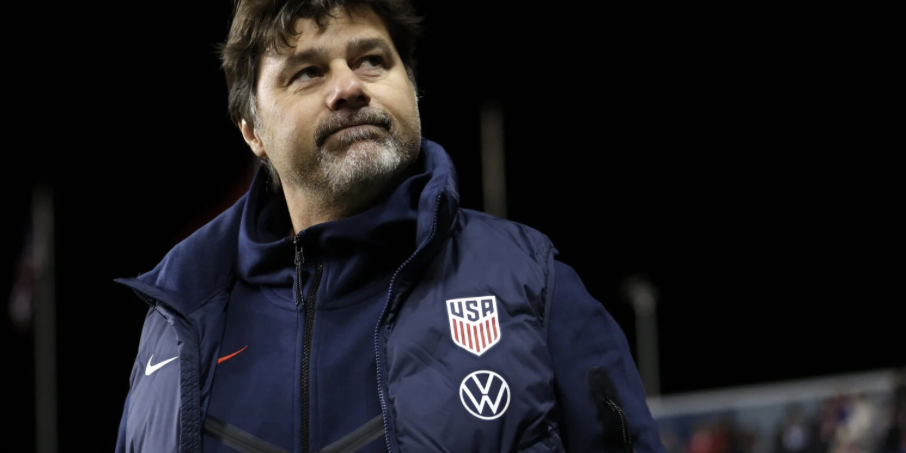

Table of Contents
When Mauricio Pochettino sat down to finalize his 26 players for a home World Cup, the most revealing decision he made was not who he picked but who he left at home. Tanner Tessmann had started each of the United States’ previous six matches. Diego Luna had torn through a tournament earlier in the year with three goals and two assists. Both stayed behind. The consequence of those cuts is a tactical reality the U.S. now carries into the knockout rounds: in a squad of 26, exactly one player is a natural defensive midfielder, and his name is Tyler Adams.
That is a remarkable position for any nation to take into the most important games of a four-year cycle, and for the host it carries an extra weight. The United States won Group D and will play their round-of-32 match on July 1 at Levi’s Stadium in Santa Clara, California. From here, one bad tackle, one yellow-card suspension or one tired performance from a single player could reshape everything Pochettino has built. Understanding why he accepted that risk, and how he plans to protect against it, explains a great deal about who this American team really is.
The Snubs That Set the Shape
Tessmann’s omission stunned much of the American soccer media. The 24-year-old had played his way into what looked like a guaranteed starting role, featuring in each of the United States’ final six matches before the squad was named, and his absence left Pochettino’s group without an obvious second option in the holding role. Few observers had Tessmann anywhere near the bubble of players fighting for a place, which is exactly why the decision to leave him home landed with such force. Luna’s exclusion was framed differently. The manager spoke about balance, specific roles and collective chemistry rather than raw talent, a clear signal that he was building a squad around function rather than reputation.
Pochettino’s explanation that the final call “wasn’t based solely on individual talent, but rather on balance, specific roles and collective chemistry” reads like a coaching philosophy in a single sentence. He wanted players who fit a system, not a collection of the most gifted names available. The cost of that conviction is depth in the one area of the field where depth is hardest to replace. A creative attacker can be covered by another attacker. A specialist screen in front of the back line cannot easily be improvised.
Why One Number Six Is a Gamble
The defensive midfielder is the least glamorous and most structurally important player in a modern team. He sits in front of the defense, breaks up opposition attacks before they reach the back four, and gives the more creative players license to push forward knowing the space behind them is guarded. Lose that player and a team does not simply weaken in one spot. It loses the balance that holds the whole shape together.
Adams is exactly the kind of player a coach builds around. He covers ground, reads danger early and sets the aggressive tone that has defined Pochettino’s United States. He has also spent large stretches of recent seasons fighting injuries, surviving three difficult years to reach this tournament at all. That history is precisely why leaning so heavily on him feels precarious. The knockout rounds are a gauntlet of high-intensity matches packed close together, and asking one body to anchor every one of them, with no like-for-like replacement waiting, is the boldest bet on Pochettino’s team sheet.
A single booking compounds the worry. Yellow cards carry over in the early knockout rounds, and a suspension for Adams would force the manager into a reshuffle he has spent months trying to avoid. There is no second orthodox holder to slot in. There is only a plan to rearrange everything around the gap.
The Back Three Built to Hide the Problem
Pochettino’s answer to all of this is structural. The United States have leaned on a flexible defensive shape, often a back four that becomes a back three when the team has the ball, with one of the wide defenders stepping inside to add an extra body in central areas. That tweak is not just about attacking width. It is also a way of shielding the single pivot, packing the middle of the pitch so that Adams is never left exposed and so that, if needed, the structure can absorb his absence without collapsing.
When a team defends with three central defenders and asks its full-backs to tuck in, the holding midfielder has more cover around him. The distances opponents must travel to reach the back line grow longer. The gaps that a lone screen would normally have to patrol alone become shared responsibilities. Pochettino has effectively designed a system that reduces how much the team depends on any one player in the most vulnerable position, which is the only sensible way to carry just one specialist there.
The contingency plans run deeper still. Weston McKennie, who discovered the game on a German air base before becoming a Champions League midfielder, has the engine and the positional sense to drop into a more disciplined deeper role if Adams is unavailable. He is not a natural number six, but he is a footballer of enough intelligence to fill in for a match. Sebastian Berhalter, a fringe selection with a real gift for set pieces, offers another body in the middle and a weapon from dead-ball situations that can swing a tight knockout tie. These are not perfect replacements. They are evidence that Pochettino thought hard about the hole he was choosing to leave.
There is a wider lesson in how Pochettino has handled the position. Great teams are often defined less by their best player than by how they cope when that player is missing, and the Argentine has clearly thought about that question more than most. Rather than carry a second specialist holder who might never play, he chose to carry extra quality in areas where he expects to need it, and to trust his coaching to paper over the one position he left thin. It is the decision of a manager who backs his ideas over his insurance, and it places enormous responsibility on the training ground to drill the alternatives until they become second nature.
Opponents will have noticed all of this. Any side facing the United States in the knockout rounds will look at the single pivot and ask how to overload it, how to drag Adams out of position and attack the space he vacates, how to force McKennie or another stand-in into an unfamiliar role. The chess match around that one position could shape every U.S. knockout game, and Pochettino’s ability to win it, to protect his anchor while still threatening at the other end, will tell us whether his bold squad-building was inspired or reckless.
A Young Squad Asked to Grow Up Fast
Context is everything here. At the opening match against Paraguay, the 26-player roster carried an average age of 26 years and 332 days, ranking as the fifth youngest squad the United States has ever sent to a World Cup. This is a team still discovering its own ceiling, and it has already shown it can win without its biggest names. The U.S. beat Australia without Christian Pulisic and looked composed doing it, a sign that the collective chemistry Pochettino prioritized over individual brilliance is real rather than rhetorical.
That depth in attack is exactly what makes the thinness in defensive midfield stand out. Pochettino has options almost everywhere else. He can rotate forwards, shuffle his creative players and trust a back line that has grown into the tournament. The one place he cannot rotate freely is the spot that decides games when a team is trying to protect a lead in the seventy-fifth minute of a knockout match in front of a home crowd desperate for history.
The broader question this raises is about the state of American player development. For all the progress the United States has made, the country still produces fewer specialist holding midfielders than it does attacking talent, and Pochettino’s squad reflects that imbalance as much as it reflects his personal preferences. A nation hosting a World Cup with one natural number six is a nation that has plenty of flair and a narrow base in the position that wins tournaments.
So the United States march into the knockout rounds with a clear strength and a single, glaring vulnerability, both of them the product of the same decisive coaching mind. Pochettino looked at his options, trusted his system over his safety net, and bet that a well-drilled structure could cover for the one place he chose not to reinforce. If Tyler Adams stays fit and stays on the field, the gamble may never be tested. If he does not, the world will find out very quickly whether a back three and a few willing volunteers can do the job of the player the United States cannot replace. For a host nation chasing the deepest run in its modern history, no single thread is pulled tighter.

Leave a Comment
More in News
‘You Ain’t Going to Win’: Carrick Was Right, United’s Numbers Show It
Gianni Infantino Gets Re-Election Boost as Asia Chief Drops His Criticism
Oliver Glasner Insists Forest Deserve More After Five Defeats in Eight Games
Xabi Alonso Turned Pedro Neto Into Chelsea’s Wing-Back After £100m Price Tag
Michael Carrick Refuses to Rule Out Dropping Bruno Fernandes in Emotional Address
Trending on Futbol Chronicle

The Best World Cup YouTubers to Follow in 2026
Mikel Arteta backs ‘warrior’ Bruno Guimarães to make Arsenal stronger
The Best Soccer Players of All Time: The 10 Greatest Ever Ranked
Josef Martinez Returns to MLS Spotlight With Columbus Crew Signing