Why American Television Turned the World Cup’s Water Breaks Into Commercial Breaks
Table of Contents
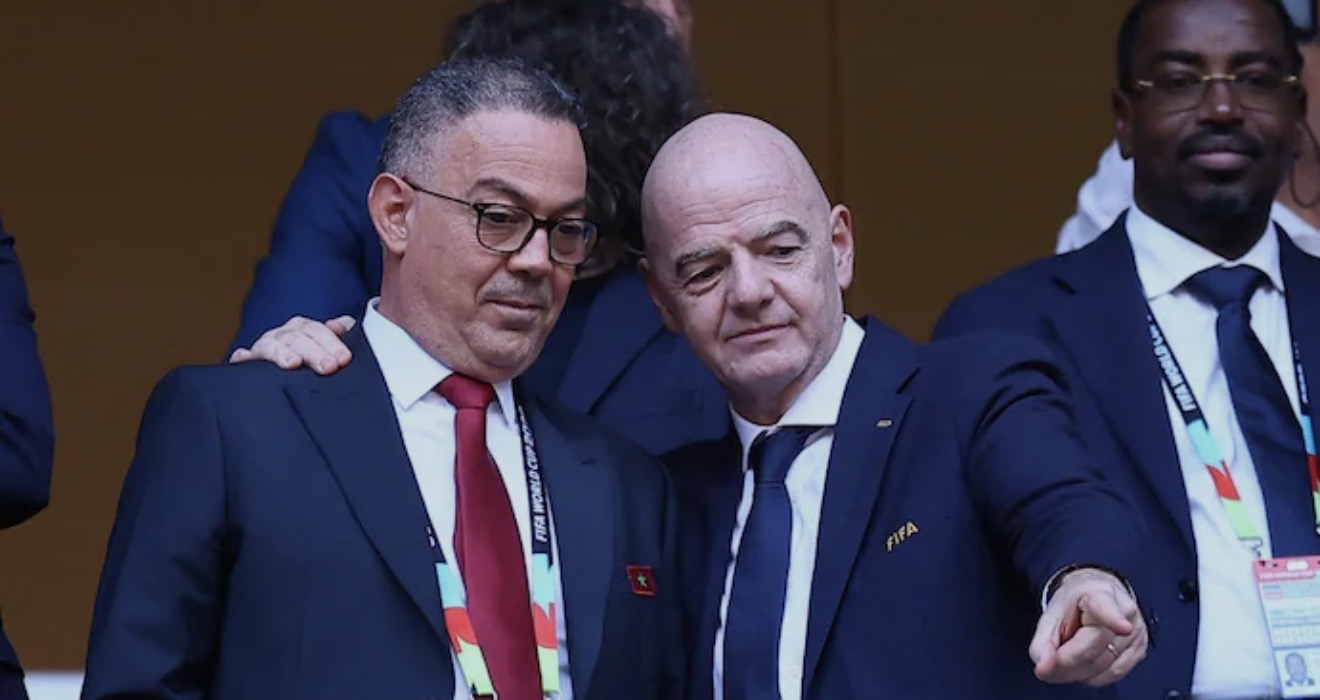
Somewhere in the second half of the 2026 World Cup opener, a referee stood with the ball under his arm and waited. Play was ready to restart after a three minute cooling break, but one of the host broadcasters was still rolling through adverts. The whistle did not blow until the commercials were closer to finishing. Then, according to viewers, the broadcast returned late anyway, and millions of people sat watching a brand spot while the match had already kicked off again.
That small, strange moment captured a bigger argument that has followed this tournament from its first day. For the first time at a men’s World Cup, the most American of television traditions has arrived in the world’s game: the mid-match commercial break. It is dressed up as a player welfare measure, and the heat across North America is real. But the way it has been used has left supporters around the world asking whether the rhythm of football itself is being sold off in three minute blocks.
A Rule Built for Heat, Sold for Advertising
The origin of the controversy is reasonable enough. In December 2025 FIFA announced that every match at the 2026 World Cup would include a mandatory three minute hydration break in each half. With games being played in punishing summer conditions in cities across the United States and Mexico, the case for letting players rest and rehydrate was hard to argue against. Virgil van Dijk and others raised concerns about how the breaks affect the flow and fairness of matches, a debate we covered in our piece on van Dijk’s questions over the hydration breaks.
The detail that turned a sensible idea into a flashpoint was buried in the small print. The three minute window would also be available for commercials at the discretion of each broadcaster. In other words, the same pause designed to protect players from heat exhaustion doubled as a guaranteed advertising slot worth a fortune. Suddenly the break was not only about hydration. It was about inventory.
The Night Fox Missed the Restart
The flashpoint came during the tournament opener. Fox, one of the major United States rights holders, aired five consecutive commercials during the first cooling break, including several spots featuring Lionel Messi, before cutting back to the action. The trouble started when the second half break did not go to plan. Referee Wilton Sampaio reportedly held up the restart because the broadcaster was still in commercials, an extraordinary sight at a World Cup, and even with that short delay the channel failed to return in time. Fans at home missed the first seconds of live football because a brand wanted a few more frames of airtime.
For supporters raised on football, the optics were jarring. The whole appeal of the sport, the thing that separates it from American football or basketball, is that it runs in two largely uninterrupted forty five minute halves. The clock does not stop for adverts. A goal can come from nothing because the action never truly pauses. The idea that a referee would stand and wait for a television director felt like a line being crossed.
Telemundo Drew a Line in the Sand
Not every broadcaster took the money. Telemundo, the Spanish language rights holder in the United States, made a point of doing the opposite. One of its commentators told viewers on air, “We are one of the only networks in the world to NOT show ads during the World Cup cooling breaks. We prefer the old school way.” It was a small act of resistance, and it drew a loud cheer from the football community online, precisely because it framed the choice so clearly. The ad break is not forced on anyone. It is a decision.
That distinction is at the heart of the backlash. FIFA created the window for hydration. Broadcasters decided what to do with it. When Telemundo kept its cameras on the pitch and Fox filled the gap with Messi adverts, viewers got a live demonstration of two different philosophies about what the World Cup is for. One treats the tournament as sport first. The other treats it as a commercial property with sport attached.
Why Football Fans See This as an American Import
The deeper unease is cultural. Outlets including Inc and Fortune framed the new breaks as the moment a uniquely American sports tradition reached the beautiful game. In gridiron football and basketball, the broadcast is built around stoppages. Timeouts, quarters and reviews create natural slots for advertising, and the games are designed to absorb them. Football has never worked that way, and many supporters fear that importing the American model will, over time, reshape the sport to fit the television schedule rather than the other way around.
There is real money behind the change. Analysts have pointed out that guaranteed in-play advertising slots across a global audience of billions represent an enormous new revenue stream, one that did not exist at previous tournaments. FIFA has expanded the World Cup to 48 teams and 104 matches, and every extra match is more inventory to sell. Seen in that light, the cooling break is not an accident of climate. It is a product.
Supporters are not naive about money in football. The game has been commercialised for decades, from shirt sponsors to perimeter boards to the naming rights on stadiums. What stings about the cooling break adverts is that they intrude on the one space that always felt protected, the live ball in play. Perimeter boards do not stop the match. A three minute commercial that delays a restart does.
What FIFA Gains and What the Game Risks
For FIFA, the calculation is simple. Hot weather gives a defensible reason for the breaks, and the breaks unlock advertising revenue that helps justify the cost of an expanded tournament. The governing body can point to player welfare while collecting the commercial upside, a neat alignment of interests that is difficult to attack head on. Who, after all, wants to argue against giving players water in extreme heat?
The risk is harder to measure but real. Football’s global appeal rests partly on its simplicity and its flow. Every time the sport bends toward the demands of advertisers, it chips at the thing that made it the most watched game on earth. If the cooling break becomes a permanent fixture, complete with guaranteed adverts, future tournaments in cooler climates may keep the commercial slot long after the heat that justified it has gone. That is the precedent supporters are worried about. A rule introduced for one reason rarely disappears once a better reason, money, takes its place.
A Break From History, Not Just From Play
To understand why this feels like a turning point, it helps to remember how recent the change is. Drinks breaks themselves are not new. They appeared at the 2014 World Cup in Brazil and have been used in hot conditions ever since, usually as a brief, low key pause around the half hour mark when a referee judged the heat dangerous. What is new in 2026 is the formalising of a fixed three minute window in every half, and the explicit decision to make that window available to advertisers. The pause has gone from a discretionary safety measure to a scheduled commercial event.
Domestic leagues have wrestled with the same tension and mostly held the line. The Premier League, La Liga and the major European competitions have resisted the kind of in play advertising that defines American sport, partly because their supporters would revolt and partly because the flow of the game is treated as something close to sacred. The fear among many fans is that the World Cup, watched by people who do not follow club football week to week, is the perfect place to introduce a habit that would never survive in a domestic league. Normalise it at the biggest tournament on earth, the thinking goes, and it becomes far harder to resist everywhere else.
Players have their own stake in this. The hydration argument is genuine, and several have welcomed the chance to cool down in extreme conditions. But a three minute stoppage also interrupts momentum, lets a tiring opponent regroup and can blunt a team that has built pressure. When the same break is then stretched or mistimed to fit a commercial schedule, the competitive cost lands on the players, not the broadcasters. That is the part of the debate that tends to get lost between the talk of heat and the talk of money.
This World Cup will be remembered for many things, from record crowds across three host nations to the romance of debutant teams. It may also be remembered as the tournament where the commercial break finally broke into the run of play. The heat will pass when the summer ends. The question is whether the adverts will pass with it, or whether a referee waiting for a television director becomes a normal part of watching football. For a sport that has always prided itself on ninety uninterrupted minutes, that is a future worth paying attention to.

Leave a Comment
More in News
Michael Carrick Must Go Tonight, Says Carragher, After Man Utd Collapse

Dealership denies woman car because of her credit. Then she tries Carvana: ‘I have bought 2 cars from Carvana, never had a problem’

McDonald’s worker accidentally gives customer 4 Monopoly stickers on cup. Then she peels them off

Nicolas Jackson Is an Upgrade on Ollie Watkins, Says Martin Keown

Florian Wirtz Created Nine Chances After Jamie Carragher Said Drop Him
Trending on Futbol Chronicle
What Is Offsides in Soccer? The Offside Rule Fully Explained
The Best World Cup YouTubers to Follow in 2026
Map of All the Premier League Teams for 2025/26
Josef Martinez Returns to MLS Spotlight With Columbus Crew Signing